
Hemorrhoids: The A-Z Guide (2026 Edition)

Last Updated: April 9, 2026 | Medically Reviewed by the HemRid Medical Team
Last Updated: April 9, 2026 | Medically Reviewed by the HemRid Medical Team
Quick Answer: Hemorrhoids are swollen blood vessels in and around the anus and rectum that affect roughly half of all adults by age 50. Most cases respond well to conservative treatment — fiber, hydration, sitz baths, and targeted over-the-counter products. This comprehensive guide covers every aspect of hemorrhoids: types, causes, symptoms, diagnosis, all treatment options, prevention, and when to seek medical care.
This is the definitive hemorrhoid resource — designed to be the single page you bookmark and return to whenever you have a question. Whether you're experiencing your first hemorrhoid flare-up or managing a chronic condition, everything you need to know is organized below.
Table of Contents
- What Are Hemorrhoids?
- Types of Hemorrhoids
- Causes and Risk Factors
- Symptoms
- Diagnosis
- Home Remedies
- Over-the-Counter Treatments
- Supplements
- Medical Procedures
- Surgical Options
- Diet and Nutrition
- Exercise and Lifestyle
- Special Populations
- Prevention
- When to See a Doctor
- Frequently Asked Questions
---
What Are Hemorrhoids?
Hemorrhoids are vascular structures — cushions of blood vessels, smooth muscle, and connective tissue — that line the anal canal. Everyone has hemorrhoidal tissue; it's a normal part of human anatomy that plays a role in continence (helping to seal the anal canal). The term "hemorrhoids" in common usage refers to when these structures become swollen, inflamed, or symptomatic.
Hemorrhoidal disease is one of the most common human ailments. According to data published in Gastroenterology Clinics of North America, approximately 50% of adults experience hemorrhoid symptoms by age 50, and an estimated 10-12 million Americans seek treatment annually.
Despite their prevalence, hemorrhoids are widely misunderstood, often undertreated, and unnecessarily stigmatized. They are a legitimate medical condition that deserves the same straightforward care as any other health issue.
Key Anatomical Facts
- Hemorrhoidal cushions are present from birth — they are normal anatomy.
- There are three primary hemorrhoidal cushions inside the anal canal (left lateral, right anterior, and right posterior positions).
- The dentate line (also called the pectinate line) is the critical anatomical landmark that divides the upper and lower anal canal and determines whether hemorrhoids are classified as internal or external.
- Above the dentate line: visceral nerve innervation (less pain-sensitive).
- Below the dentate line: somatic nerve innervation (highly pain-sensitive).
Types of Hemorrhoids
External Hemorrhoids
External hemorrhoids develop beneath the skin around the anus, below the dentate line. Because they're covered by skin with somatic nerve supply, they are typically the most symptomatic type.
Characteristics:
- Visible and palpable as lumps around the anal opening
- Can cause significant pain, especially when thrombosed
- Often itchy due to skin irritation
- May bleed if the overlying skin is eroded
- Range from pea-sized to grape-sized
For a detailed description of what external hemorrhoids feel like, see our deep dive: What Does a Hemorrhoid Feel Like? Symptoms by Type Explained.
Internal Hemorrhoids
Internal hemorrhoids develop above the dentate line, inside the anal canal. They're covered by mucosal tissue with visceral nerve supply, making them generally less painful than external hemorrhoids.
Grading System:
- Grade I: Hemorrhoids bleed but do not prolapse. Remain inside the anal canal.
- Grade II: Prolapse during straining but retract spontaneously.
- Grade III: Prolapse and require manual reduction (pushing back in).
- Grade IV: Permanently prolapsed and cannot be reduced.
Characteristics:
- Often painless (unless prolapsed or complicated)
- Most common symptom is painless bright red rectal bleeding
- May cause a sensation of incomplete bowel evacuation
- Can produce mucus discharge
Thrombosed Hemorrhoids
A thrombosed hemorrhoid occurs when a blood clot (thrombus) forms within an external hemorrhoid. This is not a separate "type" but rather a complication of external hemorrhoids.
Characteristics:
- Sudden onset of severe, constant pain
- Hard, tender, often bluish-purple lump
- Pain typically peaks at 48-72 hours
- Gradually resolves over 1-2 weeks if untreated
- Can be treated with in-office excision within the first 72 hours for rapid relief
Prolapsed Hemorrhoids
Prolapse refers to internal hemorrhoids that have descended through the anal canal to protrude externally. The degree of prolapse determines the grade (II-IV) and treatment approach.
Characteristics:
- Soft, spongy tissue felt at or protruding from the anal opening
- Mucus discharge causing perianal wetness and itching
- Sensation of incomplete evacuation
- May become incarcerated (trapped outside) or strangulated (blood supply compromised) — both are medical emergencies
What Causes Hemorrhoids? Risk Factors Explained
Hemorrhoids develop when pressure increases in the hemorrhoidal veins, causing them to swell and stretch. The most common contributing factors include:
Primary Causes
- Straining during bowel movements: The single most common cause. Straining increases intra-abdominal and pelvic pressure, engorging hemorrhoidal vessels.
- Chronic constipation: Hard stools require more straining to pass and can physically traumatize hemorrhoidal tissue.
- Chronic diarrhea: Frequent, urgent bowel movements irritate the anal canal and increase wiping-related trauma.
- Prolonged sitting on the toilet: Spending more than 5-10 minutes on the toilet (often due to phone scrolling) keeps the anal canal in a relaxed, dependent position that encourages vascular pooling.
- Pregnancy: The growing uterus compresses pelvic veins, progesterone relaxes vascular walls, and childbirth itself places enormous pressure on hemorrhoidal tissue. For a detailed guide, see our article on hemorrhoids during pregnancy.
Contributing Risk Factors
- Low-fiber diet: Leads to harder stools and more straining.
- Inadequate hydration: Compounds the effects of low fiber intake.
- Sedentary lifestyle: Prolonged sitting increases pelvic venous pressure.
- Heavy lifting: Especially with improper breathing technique (Valsalva maneuver).
- Obesity: Excess weight increases chronic pelvic pressure.
- Aging: Connective tissue supporting hemorrhoidal cushions weakens over time.
- Genetics: Some families have a higher predisposition to hemorrhoidal disease.
- Chronic cough or vomiting: Repeated increases in intra-abdominal pressure.
For more on specific causes, see our deep dives on foods that cause hemorrhoids and hemorrhoids from sitting too long.
Hemorrhoid Symptoms: How to Recognize Them
Symptoms vary based on hemorrhoid type and severity:
Bleeding
- Bright red blood on toilet paper, in the toilet bowl, or coating stool
- Typically painless with internal hemorrhoids
- May be painful with external hemorrhoids or fissures
- Ranges from occasional spots to dripping with each bowel movement
- Important: All rectal bleeding warrants at least one medical evaluation to rule out other causes
Pain
- External hemorrhoids: dull aching, worse with sitting
- Thrombosed hemorrhoids: severe, constant throbbing
- Internal hemorrhoids: usually painless unless prolapsed or complicated
- Varies from mild discomfort to debilitating (thrombosed)
For nighttime pain specifically, see How to Relieve Hemorrhoid Pain at Night.
Itching (Pruritus Ani)
- Common with both external and prolapsed internal hemorrhoids
- Caused by mucus discharge, moisture, and skin irritation
- Often worse at night and after bowel movements
- Can become a self-perpetuating cycle (itch-scratch-itch)
Swelling and Lumps
- External hemorrhoids: firm, tender lumps around the anus
- Thrombosed: hard, extremely painful, often purple-tinged
- Prolapsed: soft, spongy tissue protruding from the anal opening
Other Symptoms
- Mucus discharge (prolapsed internal hemorrhoids)
- Feeling of incomplete bowel evacuation
- Soiling of underwear
- Difficulty cleaning the perianal area
For a comprehensive symptom breakdown, see What Does a Hemorrhoid Feel Like?.
How Hemorrhoids Are Diagnosed
Self-Assessment
Many people correctly identify their hemorrhoids based on symptoms, especially if they've had them before. However, self-diagnosis has limitations — other conditions (fissures, abscesses, polyps, and rarely, malignancies) can mimic hemorrhoid symptoms.
Medical Examination
A healthcare provider typically diagnoses hemorrhoids through:
- Medical history: Questions about symptoms, bowel habits, diet, and risk factors.
- Visual inspection: External hemorrhoids and prolapsed internal hemorrhoids are visible on examination.
- Digital rectal exam (DRE): A lubricated, gloved finger inserted into the rectum to feel for internal hemorrhoids and rule out other masses.
- Anoscopy: A small, rigid tube with a light is inserted to view the anal canal directly. This is the most common in-office procedure for diagnosing internal hemorrhoids.
- Sigmoidoscopy or colonoscopy: If bleeding is present, especially in patients over 45 or those with risk factors for colorectal cancer, a more comprehensive examination may be recommended.
Home Remedies for Hemorrhoids
Conservative home treatment resolves the majority of hemorrhoid cases. Here are the most effective approaches:
Sitz Baths
Warm water soaks are the cornerstone of hemorrhoid home care:
- Sit in 3-4 inches of comfortably warm water for 15-20 minutes
- Repeat 2-3 times daily, especially after bowel movements
- Can add Epsom salt (magnesium sulfate) for additional benefit
- Relaxes sphincter muscles, increases blood flow, and promotes healing
- Recommended by the American Society of Colon and Rectal Surgeons as first-line treatment
For a detailed guide on sitz baths, see our article on how to use a sitz bath for hemorrhoids.
Cold Therapy
- Ice packs wrapped in cloth, applied for 10-15 minutes
- Reduces swelling and provides temporary numbing
- Especially helpful for thrombosed hemorrhoids
- Alternate with sitz baths for combined benefit
Proper Hygiene
- Clean with warm water after bowel movements (a handheld bidet is ideal)
- Avoid harsh toilet paper — use unscented, moistened wipes or a bidet
- Pat dry rather than rubbing
- Avoid soaps, perfumes, and alcohol-based products in the perianal area
Lifestyle Modifications
- Don't delay bowel movements. When you feel the urge, go.
- Limit toilet time. 5-10 minutes maximum. Leave the phone outside.
- Don't strain. If a bowel movement doesn't come easily, get up and try again later.
- Avoid prolonged sitting. Take breaks every 30-60 minutes.
For a comprehensive look at natural approaches, see our guide on natural hemorrhoid remedies.
Over-the-Counter Hemorrhoid Treatments
Topical Anesthetics
- Lidocaine: Provides significant numbing of hemorrhoid pain. Lidocaine Cream is specifically formulated for hemorrhoid use and provides targeted relief for external hemorrhoid pain.
- Pramoxine: Another topical anesthetic found in products like Preparation H with pramoxine.
- Benzocaine: Found in some hemorrhoid products; less commonly used due to higher allergy rates.
Skin Protectants
- Zinc oxide: Creates a moisture barrier that protects irritated skin. See our deep dive: Zinc Oxide for Hemorrhoids.
- Petroleum jelly: Simple, effective barrier protection.
- Cocoa butter: Soothes and protects. Common in suppositories.
Anti-Inflammatories
- Hydrocortisone cream (1%): Reduces inflammation and itching. Available OTC. Limit use to 1-2 weeks to avoid skin thinning.
- Witch hazel: Natural astringent with mild anti-inflammatory properties. Available as pads (Tucks) or liquid.
Vasoconstrictors
- Phenylephrine: Temporarily shrinks swollen tissue by constricting blood vessels. Found in Preparation H (regular formula).
Stool Softeners and Fiber Supplements
- Psyllium (Metamucil): Bulk-forming fiber that softens stool.
- Methylcellulose (Citrucel): Another bulk-forming fiber, often less gas-producing.
- Docusate (Colace): Stool softener that draws water into stool.
- Fiber Gummies: A convenient, palatable way to supplement daily fiber intake.
For comparisons of popular products, see our Preparation H review and guide to hemorrhoid creams.
Supplements for Hemorrhoids
Flavonoid Supplements
Flavonoids — particularly diosmin, hesperidin, and related compounds — have the strongest evidence base of any supplement for hemorrhoids.
A landmark meta-analysis published in the British Journal of Surgery (Perera et al.) analyzed 14 randomized trials and found that flavonoid supplementation significantly reduced:
- Bleeding risk by 67%
- Pain by 65%
- Itching by 35%
- Recurrence by 47%
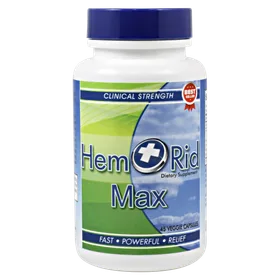
HemRid Max contains clinically studied flavonoid compounds formulated specifically for hemorrhoid support. It works from the inside to support healthy vascular function and reduce hemorrhoid symptoms.
Other Supplements
- Horse chestnut extract (Aescin): Contains compounds that may strengthen venous walls and reduce swelling.
- Butcher's broom (Ruscus aculeatus): Traditional use for venous insufficiency; limited evidence for hemorrhoids specifically.
- Psyllium husk: Well-studied for stool-softening effects.
These statements have not been evaluated by the Food and Drug Administration. These products are not intended to diagnose, treat, cure, or prevent any disease.
For a deeper look at supplement evidence, see our guide on vitamins and supplements for hemorrhoids.
Medical Procedures for Hemorrhoids
When conservative treatment fails after 4-6 weeks, or for Grade II-III internal hemorrhoids, office-based procedures are the next step:
Rubber Band Ligation (RBL)
- How it works: A small rubber band is placed around the base of an internal hemorrhoid, cutting off its blood supply. The tissue dies and falls off in 5-7 days.
- Effectiveness: 60-80% success rate for Grade I-III internal hemorrhoids.
- Recovery: Mild discomfort for 24-48 hours. Most patients resume normal activities immediately.
- Most common procedure for internal hemorrhoids worldwide.
For details, see our guide on hemorrhoid banding.
Sclerotherapy
- How it works: A chemical solution (typically phenol in oil or sodium tetradecyl sulfate) is injected into the hemorrhoidal tissue, causing it to shrink.
- Effectiveness: Best for Grade I-II internal hemorrhoids. Less effective than RBL for larger hemorrhoids.
- Recovery: Minimal discomfort. No restrictions.
- Advantage: Very low complication rate.
Infrared Coagulation (IRC)
- How it works: A device delivers focused infrared light to the hemorrhoidal tissue, causing coagulation and scarring that reduces blood flow.
- Effectiveness: Best for Grade I-II internal hemorrhoids.
- Recovery: Minimal. May require multiple sessions.
- Advantage: Less post-procedure pain than RBL.
Thrombectomy
- How it works: For thrombosed external hemorrhoids seen within 72 hours, the clot is removed through a small incision under local anesthesia.
- Effectiveness: Provides immediate, dramatic pain relief.
- Recovery: 1-2 weeks for the incision to heal.
- When indicated: Best when performed within 72 hours of symptom onset.
Surgical Treatment for Hemorrhoids
Surgery is reserved for severe cases, failed office procedures, or specific situations:
Excisional Hemorrhoidectomy
- How it works: Surgical removal of hemorrhoidal tissue under anesthesia.
- Effectiveness: Highest success rate of any treatment (95%+). Lowest recurrence rate.
- Recovery: 2-4 weeks. Significant post-operative pain.
- When indicated: Grade III-IV internal hemorrhoids, large external hemorrhoids, mixed hemorrhoids, or failed previous treatments.
- Techniques: Open (Milligan-Morgan), closed (Ferguson), or stapled (PPH/STARR).
For a detailed overview, see our article on hemorrhoid surgery recovery.
Stapled Hemorrhoidopexy (PPH)
- How it works: A circular stapling device removes a ring of mucosa above the hemorrhoids, lifting the prolapsed tissue back into position and reducing blood supply.
- Effectiveness: Good for prolapsing internal hemorrhoids.
- Recovery: Less painful than traditional hemorrhoidectomy; faster return to normal activities.
- Limitation: Higher recurrence rate than excisional hemorrhoidectomy.
Hemorrhoidal Artery Ligation (HAL/THD)
- How it works: Using Doppler ultrasound guidance, the arteries feeding the hemorrhoids are identified and sutured (tied off), reducing blood flow.
- Effectiveness: Good for Grade II-III internal hemorrhoids.
- Recovery: Less post-operative pain than excisional surgery.
- Advantage: Minimally invasive with precise targeting.
Laser Hemorrhoidoplasty
- How it works: A laser fiber is inserted into the hemorrhoidal tissue, delivering energy that causes shrinkage.
- Recovery: Relatively low pain compared to excisional surgery.
- Status: Growing evidence base, increasingly available.
The Hemorrhoid Diet: Foods That Help and Hurt
Diet plays a fundamental role in hemorrhoid prevention and management.
Foods That Help
High-fiber foods are the cornerstone:
- Legumes: Lentils (15g fiber/cup), black beans (15g/cup), chickpeas (12g/cup)
- Whole grains: Oats, quinoa, brown rice, whole wheat bread
- Vegetables: Broccoli, Brussels sprouts, artichokes, sweet potatoes
- Fruits: Raspberries (8g/cup), pears (6g each), apples (4g each), prunes
- Nuts and seeds: Almonds, chia seeds, flaxseeds
Target fiber intake: 25-35 grams daily (gradually increase to avoid bloating). If diet alone isn't sufficient, Fiber Gummies can help bridge the gap.
Hydration: Aim for 8+ glasses of water daily. Fiber without adequate water can actually worsen constipation.
Foods to Limit or Avoid
- Highly processed, low-fiber foods: White bread, pastries, fast food
- Excessive dairy: Can contribute to constipation in some individuals
- Spicy foods: May worsen symptoms during active flare-ups (though they don't cause hemorrhoids)
- Alcohol: Dehydrating and can worsen constipation
- Excessive caffeine: Mild dehydrating effect in large quantities
- Red meat: Low in fiber and slow to digest
For a comprehensive dietary guide, see Foods That Cause Hemorrhoids and our article on fiber and hemorrhoids.
Exercise and Lifestyle for Hemorrhoid Prevention
Beneficial Activities
- Walking: 20-30 minutes daily improves circulation and bowel motility.
- Swimming: Low-impact, excellent for circulation without straining.
- Yoga: Certain poses improve pelvic blood flow and reduce constipation.
- Kegel exercises: Strengthen pelvic floor muscles and improve circulation.
- Moderate cardio: Cycling (with a padded seat), elliptical, dancing.
Activities to Modify or Avoid During Flare-Ups
- Heavy weightlifting: Can worsen hemorrhoids due to Valsalva maneuver. Modify by exhaling during exertion and avoiding maximal lifts during flare-ups. See our guide on hemorrhoids and weightlifting.
- Prolonged cycling: Direct pressure on the perineum can aggravate symptoms.
- Excessive sitting: Stand desks and regular movement breaks help.
- High-impact activities: Running on hard surfaces may worsen symptoms during acute flare-ups.
Hemorrhoids in Special Populations
Pregnancy and Postpartum
Hemorrhoids affect up to 35-40% of pregnant women, particularly in the third trimester and during delivery. Management focuses on safe treatments (sitz baths, fiber, witch hazel, and certain topical products). Many medications commonly used for hemorrhoids require pregnancy-safety verification.
Deep dive: Hemorrhoids During Pregnancy and Postpartum Hemorrhoid Treatment.
Children and Toddlers
Pediatric hemorrhoids are rare but occur, almost always due to constipation. Treatment focuses on dietary changes, hydration, and gentle home care. Adult hemorrhoid medications should NOT be used on children without pediatric guidance.
Deep dive: Hemorrhoids in Toddlers & Kids.
Older Adults
Hemorrhoids become more prevalent with age as supporting connective tissue weakens. Treatment considerations include medication interactions, mobility limitations, and coexisting conditions.
People with Chronic Conditions
Conditions like inflammatory bowel disease (IBD), liver disease (portal hypertension), and chronic cough or respiratory conditions can complicate hemorrhoid management and require specialized approaches.
How to Prevent Hemorrhoids
Prevention is far easier than treatment. The core strategies:
The Big Five Prevention Habits
- Eat 25-35 grams of fiber daily. This is the single most impactful preventive measure. Supplement with Fiber Gummies if needed.
- Drink plenty of water. At least 8 glasses daily. More if you're active, in hot climates, or increasing fiber intake.
- Don't strain or linger on the toilet. Go when you feel the urge, limit time to 5-10 minutes, and never force a bowel movement.
- Stay physically active. Regular exercise promotes healthy bowel function and reduces pelvic venous pressure.
- Respond to the urge. When you need to go, go. Delaying bowel movements leads to harder stools and more straining.
Additional Prevention Strategies
- Maintain a healthy weight
- Avoid prolonged sitting (use a standing desk, take breaks)
- Use a toilet stool (Squatty Potty) to optimize positioning
- Practice proper lifting technique (exhale during exertion)
- Consider proactive supplementation with HemRid Max if you have a history of recurrent hemorrhoids
These statements have not been evaluated by the Food and Drug Administration. These products are not intended to diagnose, treat, cure, or prevent any disease.
When to See a Doctor About Hemorrhoids
Schedule a Routine Appointment If:
- Home treatment hasn't improved symptoms within 1-2 weeks
- This is your first episode of rectal bleeding (to confirm the diagnosis)
- Hemorrhoids are recurring frequently
- You have persistent external hemorrhoids that don't resolve
- Prolapsed tissue requires repeated manual reduction
Seek Prompt Medical Attention If:
- You have severe, sudden-onset pain with a hard lump (thrombosed hemorrhoid — best treated within 72 hours)
- Heavy bleeding — soaking pads, dripping into the toilet, or blood mixed with stool
- Signs of infection: Fever, pus, spreading redness, or increasing warmth
- Prolapsed tissue that won't reduce (go back in) — possible incarceration or strangulation
- Anemia symptoms: Fatigue, dizziness, shortness of breath from chronic hemorrhoidal bleeding
- Rectal bleeding with weight loss, change in bowel habits, or family history of colorectal cancer — these symptoms require colorectal evaluation
What to Expect at Your Appointment
Your doctor will likely:
- Take a detailed history
- Perform a visual examination
- Possibly perform a digital rectal exam
- Discuss treatment options appropriate for your situation
- May refer to a colorectal specialist for advanced cases
Don't be embarrassed — healthcare providers see hemorrhoid patients every day. It's a routine medical issue that's entirely treatable.
Frequently Asked Questions
How long do hemorrhoids last?
Mild hemorrhoid flare-ups typically resolve within 3-7 days with conservative treatment. More significant cases may take 2-4 weeks. Thrombosed hemorrhoids usually resolve within 2-3 weeks. Chronic hemorrhoids may persist or recur without addressing underlying causes.
Can hemorrhoids go away on their own?
Yes — many mild hemorrhoid flare-ups resolve without treatment. However, the underlying susceptibility remains, and without lifestyle changes, recurrence is common.
Are hemorrhoids dangerous?
Hemorrhoids are almost never dangerous. Rarely, chronic hemorrhoidal bleeding can cause anemia. Thrombosed hemorrhoids are extremely painful but not life-threatening. The main concern with rectal symptoms is ensuring the correct diagnosis, as other conditions (including colorectal pathology) can mimic hemorrhoid symptoms.
Can you pop a hemorrhoid?
You should never attempt to pop or lance a hemorrhoid at home. This can cause severe bleeding, infection, and scarring. If a thrombosed hemorrhoid needs drainage, a healthcare provider can do it safely under sterile conditions.
Do hemorrhoids cause cancer?
No. Hemorrhoids do not cause cancer and do not increase cancer risk. However, hemorrhoid symptoms (especially bleeding) can overlap with symptoms of colorectal cancer, which is why medical evaluation is important.
What is the fastest way to get rid of hemorrhoids?
For most people, the fastest conservative approach combines: increased fiber and water intake, sitz baths 2-3 times daily, topical treatment like Lidocaine Cream for pain, and HemRid Max for vascular support. For thrombosed hemorrhoids, in-office excision provides the fastest relief. For chronic internal hemorrhoids, rubber band ligation is the most efficient office procedure.
Can I exercise with hemorrhoids?
Yes — in fact, moderate exercise helps. Walking, swimming, and yoga are excellent. Avoid heavy lifting and high-impact activities during acute flare-ups. See our deep dive on hemorrhoids and exercise.
Is it hemorrhoids or something else?
If you're unsure, see a doctor. Conditions commonly confused with hemorrhoids include anal fissures, perianal abscesses, skin tags, polyps, and (rarely) malignancies. A quick examination provides clarity.
Your Hemorrhoid Action Plan
If you're dealing with hemorrhoids right now, here's your step-by-step plan:
- Today: Start increasing fiber intake. Begin Fiber Gummies and drink at least 8 glasses of water.
- Today: Take your first sitz bath (15-20 minutes in warm water).
- Today: Apply Lidocaine Cream for immediate pain relief.
- This week: Start HemRid Max for ongoing vascular support.
- This week: Modify bathroom habits — limit toilet time, don't strain, use a stool under your feet.
- Ongoing: Maintain high-fiber diet, regular exercise, and adequate hydration.
- If no improvement in 1-2 weeks: See your healthcare provider.
These statements have not been evaluated by the Food and Drug Administration. These products are not intended to diagnose, treat, cure, or prevent any disease.
Hemorrhoids are common, treatable, and manageable. With the right combination of lifestyle changes, targeted treatments, and proactive prevention, most people can significantly reduce or eliminate their symptoms. Don't suffer in silence — take action today.
---
This article is for informational purposes only and does not constitute medical advice. Always consult with a qualified healthcare provider for diagnosis and treatment of any medical condition.
What actually works for hemorrhoids
If you're dealing with pain right now, a topical cream is a great first step — it numbs the area for fast relief. To actually get rid of the problem, HemRid Max works from the inside out to strengthen vein walls and reduce swelling. The best results come from doing both.