
Exercises for Hemorrhoids: 8 Safe Workouts & 4 to Avoid

Last Updated: April 9, 2026 | Medically Reviewed by the HemRid Medical Team
Last Updated: April 9, 2026 | Medically Reviewed by the HemRid Medical Team
Quick Answer: Regular exercise actually helps prevent and manage hemorrhoids by improving circulation, promoting healthy bowel movements, and reducing the venous pressure that causes hemorrhoidal swelling. The best exercises are low-impact activities like walking, swimming, and yoga. The worst are heavy lifting movements that dramatically increase intra-abdominal pressure, such as heavy deadlifts and squats.
If you're wondering about exercises for hemorrhoids, you're asking exactly the right question. Physical activity is one of the most powerful tools for hemorrhoid management and prevention, yet many people with hemorrhoids avoid exercise entirely out of fear of making things worse.
The truth is that the right exercises can significantly improve your hemorrhoid condition, while the wrong ones can indeed make it worse. This guide identifies the 8 best exercises for hemorrhoids and the 4 exercises to avoid, with practical guidance on how to work out safely.
How Exercise Helps Hemorrhoids
Before diving into specific exercises, it's important to understand why exercise matters for hemorrhoid health:
Improved Venous Circulation
Exercise promotes blood flow throughout the body, including the pelvic and rectal regions. Better circulation means blood moves more efficiently through hemorrhoidal veins rather than pooling and causing swelling.
Reduced Constipation
Physical activity stimulates intestinal motility — the contractions that move stool through the digestive tract. Regular exercisers have more regular, easier bowel movements, which means less straining (a primary cause of hemorrhoids).
Healthy Weight Management
Excess body weight increases pressure on pelvic floor veins, contributing to hemorrhoid development. Exercise helps maintain a healthy weight, reducing this chronic pressure.
Stronger Pelvic Floor
Certain exercises strengthen the pelvic floor muscles that support the rectal area. A strong pelvic floor provides better venous support and reduces the likelihood of hemorrhoidal vein dilation.
Reduced Sitting Time
Every minute you spend exercising is a minute you're not sitting, which means less sustained pressure on hemorrhoidal tissue.
8 Safe Exercises for Hemorrhoids
1. Walking
Walking is the single best exercise for hemorrhoid sufferers. It's accessible, free, adjustable in intensity, and provides significant benefits with virtually zero hemorrhoid risk.
Why it helps:
- Promotes gentle, rhythmic pelvic muscle engagement without excessive pressure
- Stimulates intestinal motility to prevent constipation
- Improves overall circulation, including pelvic blood flow
- Keeps you off the chair (reducing sitting pressure)
How to do it:
- Aim for 20-30 minutes of brisk walking most days of the week
- Start at a comfortable pace and increase gradually
- Walking after meals is particularly beneficial for digestive motility
Hemorrhoid safety: Excellent. Walking poses essentially no risk to hemorrhoids and provides consistent benefit.
2. Swimming
Swimming is an ideal exercise for people with active hemorrhoid symptoms because the water eliminates gravitational pressure on the pelvic floor.
Why it helps:
- Buoyancy removes body weight from the perineal area
- Provides a full-body cardiovascular workout without impact
- Water pressure gently supports venous return from the lower body
- Cool water may have a mild anti-inflammatory effect on the perianal area
How to do it:
- Any swimming style works — choose what's comfortable
- Aim for 20-40 minutes of swimming, 2-3 times per week
- Water aerobics classes are an excellent alternative if lap swimming isn't appealing
Hemorrhoid safety: Excellent. Swimming is arguably the most hemorrhoid-friendly exercise because it eliminates gravitational stress entirely.
3. Yoga
Yoga offers a unique combination of physical activity, pelvic floor engagement, and stress reduction — all beneficial for hemorrhoid management.
Why it helps:
- Many poses improve pelvic circulation
- Breathing practices reduce intra-abdominal pressure
- Stress reduction decreases the muscle tension that can worsen hemorrhoids
- Gentle stretching improves overall blood flow
Best poses for hemorrhoids:
- Child's Pose (Balasana): Relieves pelvic pressure and stretches the lower back
- Legs Up the Wall (Viparita Karani): Promotes venous return from the lower body and reduces hemorrhoidal engorgement
- Wind-Relieving Pose (Pawanmuktasana): Aids digestion and gas release
- Bound Angle Pose (Baddha Konasana): Opens the hips and improves pelvic circulation
- Malasana (Garland Pose): Strengthens the pelvic floor in a natural squatting position
Poses to modify or avoid during flare-ups:
- Deep backbends that increase intra-abdominal pressure
- Prolonged seated poses if sitting is painful
- Inversions that require heavy Valsalva maneuver (breath-holding with bearing down)
Hemorrhoid safety: Very good. Most yoga is beneficial, with minor modifications needed for a few poses.
4. Kegel Exercises (Pelvic Floor Contractions)
Kegels directly strengthen the pelvic floor muscles that support hemorrhoidal veins. They're discreet, can be done anywhere, and require no equipment.
Why they help:
- Strengthen the muscles that support rectal veins
- Improve blood flow in the pelvic region through muscle contraction and relaxation
- Help prevent prolapse of internal hemorrhoids
- Can be performed multiple times daily for cumulative benefit
How to do them correctly:
- Identify the right muscles: Imagine you're trying to stop urinating mid-stream. The muscles you contract are your pelvic floor muscles.
- Contract: Squeeze these muscles and hold for 5 seconds.
- Release: Fully relax the muscles for 5 seconds.
- Repeat: Perform 10-15 repetitions per set.
- Frequency: Do 3 sets throughout the day.
Common mistakes:
- Don't hold your breath (breathe normally during Kegels)
- Don't squeeze your buttocks, thighs, or abdominals instead
- Don't push down — the motion is an upward squeeze, not a bearing down
Hemorrhoid safety: Excellent. Kegels are one of the most targeted exercises for hemorrhoid prevention and carry no risk of worsening symptoms.
5. Pilates
Pilates focuses on core stability, pelvic alignment, and controlled movement, all of which benefit hemorrhoid management.
Why it helps:
- Emphasizes pelvic floor engagement as a core principle
- Controlled breathing reduces intra-abdominal pressure spikes
- Improves posture, which affects pelvic floor positioning
- Builds core strength without the extreme intra-abdominal pressure of heavy weightlifting
How to do it:
- Beginner mat Pilates classes are ideal for hemorrhoid sufferers
- Focus on exercises emphasizing pelvic floor integration
- Reformer Pilates is also excellent, with the resistance being adjustable
Hemorrhoid safety: Very good. Pilates' emphasis on controlled movement and pelvic floor engagement makes it inherently hemorrhoid-friendly.
6. Stationary Cycling
Stationary cycling provides cardiovascular benefits with a seated position that can actually be more comfortable than sitting in a regular chair, thanks to the seat design and weight distribution.
Why it helps:
- Cardiovascular conditioning improves overall circulation
- The cycling motion engages leg muscles that promote venous return
- Recumbent bikes distribute weight away from the perineum
- Indoor cycling eliminates the jarring impact of outdoor road cycling
How to do it:
- Start with 15-20 minutes and build to 30-40 minutes
- Use a comfortable, well-padded seat
- Recumbent bikes are ideal as they reduce perineal pressure compared to upright bikes
- Moderate intensity — avoid extremely intense sprint intervals
Adjustments for comfort:
- Use a gel seat cover if needed
- Wear padded cycling shorts
- Stand on the pedals briefly every 10-15 minutes to relieve pressure
Hemorrhoid safety: Good. Stationary cycling is safe with appropriate seat comfort measures. Recumbent bikes are the best option.
7. Light Jogging
Light jogging provides cardiovascular benefits and promotes intestinal motility. The key word is "light" — intense running can be jarring.
Why it helps:
- Stimulates digestive motility more effectively than walking
- Improves cardiovascular fitness and circulation
- Engages core and pelvic floor muscles in a dynamic way
- Helps with weight management
How to do it:
- Start with a walk-jog interval approach (walk 2 minutes, jog 2 minutes)
- Keep the pace conversational — you should be able to talk while jogging
- Run on softer surfaces (tracks, trails) rather than concrete when possible
- Limit to 20-30 minutes initially
When to skip jogging:
- During acute flare-ups with significant swelling or pain
- If you have a thrombosed hemorrhoid
- If the bouncing motion causes discomfort (switch to walking or swimming)
Hemorrhoid safety: Good with modifications. Light jogging is generally safe; reduce intensity or switch activities during flare-ups.
8. Bodyweight Squats
This may seem counterintuitive since heavy squats are on the "avoid" list. However, bodyweight squats — performed correctly with proper breathing — actually benefit hemorrhoid management.
Why they help:
- Strengthen the glutes, hamstrings, and pelvic floor without excessive intra-abdominal pressure
- The squatting motion promotes pelvic blood flow
- Helps develop the lower body strength needed for daily activities without straining
- The natural squatting position is the biomechanically optimal position for bowel movements
How to do them safely:
- Stand with feet shoulder-width apart
- Exhale as you lower into the squat (this is critical — exhaling prevents intra-abdominal pressure buildup)
- Lower until thighs are roughly parallel to the floor
- Inhale as you return to standing
- Perform 10-15 repetitions for 2-3 sets
Key safety point: The breathing technique is what separates safe bodyweight squats from dangerous heavy squats. Never hold your breath during the movement.
Hemorrhoid safety: Good with proper breathing. Bodyweight squats are safe when you maintain proper breathing and don't add heavy weight.
4 Exercises to Avoid with Hemorrhoids
1. Heavy Deadlifts
Heavy deadlifts are the single worst exercise for hemorrhoids. They combine maximum intra-abdominal pressure with a bent-over position that concentrates pelvic venous pressure.
Why they're harmful:
- Require a Valsalva maneuver (breath-holding with bearing down) at heavy weights
- Generate extreme intra-abdominal pressure that transmits directly to hemorrhoidal veins
- Can cause immediate hemorrhoid flare-ups, prolapse, or even thrombosis
- The bent-over starting position already increases pelvic venous pressure before the lift even begins
If you're a dedicated lifter: Reduce weight significantly (50-60% of max) and focus on breathing through the movement rather than holding your breath. Consider Romanian deadlifts at moderate weight as a compromise, or substitute hip thrusts, which provide glute activation without the extreme intra-abdominal pressure.
2. Heavy Barbell Squats
Heavy loaded squats share many of the same risks as heavy deadlifts.
Why they're harmful:
- Require breath-holding under heavy load
- The deep squat position under heavy weight compresses pelvic veins
- Extreme intra-abdominal pressure spikes with each repetition
- Recovery from heavy squat sessions involves prolonged sitting (compounding the problem)
Alternative: Bodyweight squats, goblet squats with moderate weight (focusing on breathing), or leg press at moderate weight with careful breathing.
3. Leg Press (Heavy)
The leg press machine places you in a position where heavy loads create significant intra-abdominal pressure while your body is compressed.
Why it's harmful:
- The reclined position already increases blood flow to the pelvic area
- Heavy loads require bearing down that dramatically increases intra-abdominal pressure
- The compressed body position restricts venous return
- Some lifters hold their breath on leg press more than any other exercise
Alternative: Moderate-weight leg press with strict breathing (exhale during the push), or substitute with walking lunges using light dumbbells.
4. Intense HIIT During Active Flare-Ups
High-intensity interval training combines jumping, rapid transitions, heavy breathing, and intense effort that can aggravate hemorrhoids during an active flare-up.
Why it's harmful during flare-ups:
- Jumping and plyometric movements create jarring impact on already inflamed tissue
- The intense effort leads to breath-holding and pressure spikes
- Rapid heart rate increases blood flow to the pelvic area, potentially worsening engorgement
- Post-HIIT inflammation can compound existing hemorrhoidal inflammation
Important distinction: HIIT is fine when you're not in an active flare-up. Regular HIIT training can actually help prevent hemorrhoids through improved cardiovascular fitness and weight management. Just avoid it during periods of active symptoms, and substitute walking, swimming, or light cycling until the flare-up resolves.
Breathing Technique During Exercise: The Critical Detail
Proper breathing is the single most important technique for exercising safely with hemorrhoids. The breath determines how much intra-abdominal pressure each exercise generates.
The Wrong Way: Valsalva Maneuver
The Valsalva maneuver involves taking a deep breath, closing the glottis (throat), and bearing down against the closed airway. This generates extreme intra-abdominal pressure, which is why powerlifters use it for maximum strength output. For hemorrhoid sufferers, it's the worst possible breathing pattern.
The Right Way: Exhale During Effort
- Exhale during the exertion phase (pushing, pulling, lifting)
- Inhale during the relaxation phase (lowering, returning to start)
- Never hold your breath during any exercise movement
- Keep breathing rhythmic and controlled
Practical Examples
- Squats: Exhale as you stand up; inhale as you lower down
- Push-ups: Exhale as you push up; inhale as you lower
- Cycling: Breathe continuously and rhythmically
- Walking: Natural breathing (don't overthink it)
- Yoga: Follow the instructor's breathing cues; generally exhale into effort
How Exercise Prevents Hemorrhoids Long-Term
The long-term preventive benefits of exercise for hemorrhoid health cannot be overstated:
Consistent Bowel Regularity
People who exercise regularly have significantly lower rates of constipation. A study in the Scandinavian Journal of Gastroenterology found that physical activity was independently associated with reduced constipation risk, with moderate exercise reducing risk by approximately 35%.
Improved Venous Health
Regular cardiovascular exercise strengthens the venous system throughout the body, including the hemorrhoidal veins. Better venous tone means less dilation, less pooling, and less risk of hemorrhoid formation.
Maintained Healthy Weight
The Centers for Disease Control and Prevention identify obesity as a risk factor for hemorrhoids. Regular exercise that maintains a healthy BMI reduces chronic pelvic pressure and lowers hemorrhoid risk.
Reduced Sitting Time
Active people simply sit less. Given that prolonged sitting is a major hemorrhoid risk factor, the indirect benefit of exercise replacing sedentary time is substantial.
Stress Reduction
Chronic stress contributes to digestive dysfunction, muscle tension, and inflammatory processes that can worsen hemorrhoids. Regular exercise is one of the most effective stress management tools available.
Combining Exercise with Comprehensive Hemorrhoid Management
Exercise is most effective as part of a complete hemorrhoid management strategy:
Internal Support
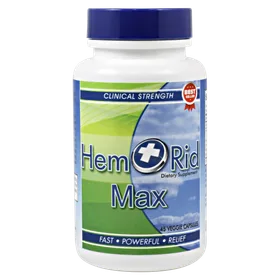
HemRid Max provides clinically studied bioflavonoids that strengthen the veins you're supporting through exercise. Think of it as nutrition for your vascular system — exercise improves circulation, while HemRid Max improves the vessel walls themselves.
Pain Management for Active Days
If hemorrhoid discomfort makes you hesitant to exercise, HemRid Lidocaine Cream applied 15-20 minutes before your workout can provide sufficient pain relief to get you moving. Don't let hemorrhoid pain keep you sedentary, as inactivity worsens the condition.
Fiber for Regularity
Fiber Gummies complement the digestive benefits of exercise. Together, exercise and fiber create the optimal conditions for regular, strain-free bowel movements.
Frequently Asked Questions
Can exercise cure hemorrhoids? Exercise alone doesn't "cure" hemorrhoids, but regular physical activity significantly reduces symptoms, promotes healing, and prevents recurrence. It's one of the most important components of a comprehensive management plan.
Should I exercise during a hemorrhoid flare-up? Yes, but modify your activities. Switch from high-intensity to low-intensity exercise (walking, swimming, gentle yoga). Avoid heavy lifting and jumping. Even gentle movement during a flare-up is better than complete rest, as it promotes circulation and reduces constipation.
Can running cause hemorrhoids? Moderate running typically does not cause hemorrhoids and may actually help prevent them. However, extreme endurance running (ultramarathons) with associated dehydration and physical stress can contribute to hemorrhoid development in some individuals.
How soon after hemorrhoid surgery can I exercise? Follow your surgeon's specific guidance. Generally, light walking is encouraged within days of surgery, while more intense exercise is typically restricted for 2-6 weeks depending on the procedure. Never resume heavy lifting without explicit medical clearance.
Do Kegels actually help hemorrhoids? Yes. Pelvic floor strengthening through Kegel exercises improves venous support in the rectal area, enhances blood flow through muscle contraction cycles, and can help prevent hemorrhoid prolapse. Consistent daily practice produces the best results.
The Bottom Line
Exercise is medicine for hemorrhoids. The 8 safe exercises outlined above — walking, swimming, yoga, Kegels, Pilates, stationary cycling, light jogging, and bodyweight squats — all promote the circulation, digestive regularity, and pelvic floor health that keep hemorrhoids under control. Meanwhile, avoiding heavy deadlifts, heavy squats, heavy leg press, and intense HIIT during flare-ups protects you from exercises that spike intra-abdominal pressure.
Combine regular exercise with HemRid Max for internal vein support, HemRid Lidocaine Cream for pain management, and Fiber Gummies for digestive regularity, and you have a comprehensive hemorrhoid management plan that addresses the condition from every angle.
These statements have not been evaluated by the Food and Drug Administration. These products are not intended to diagnose, treat, cure, or prevent any disease. Consult your healthcare provider before beginning any exercise program, especially after hemorrhoid surgery or procedures.
What actually works for hemorrhoids
If you're dealing with pain right now, a topical cream is a great first step — it numbs the area for fast relief. To actually get rid of the problem, HemRid Max works from the inside out to strengthen vein walls and reduce swelling. The best results come from doing both.