
Prolapsed Hemorrhoids: Grades, Treatment & When to See a Doctor (2026)
Prolapsed hemorrhoids are more common than many people realize. According to a landmark study in *Gastroenterology Clinics of North America*, hemorrhoidal disease affects approximately 10 million Americans annually, and prolapse is the primary reason patients eventually seek medical treatment (Madof
What are prolapsed hemorrhoids? A prolapsed hemorrhoid is an internal hemorrhoid that has stretched and pushed through the anal opening to the outside of the body. They are classified into four grades based on severity, ranging from Grade I (slight bulging inside the rectum) to Grade IV (permanently protruding tissue that cannot be pushed back in). Treatment ranges from simple home care for mild cases to surgical intervention for advanced grades.
Prolapsed hemorrhoids are more common than many people realize. According to a landmark study in Gastroenterology Clinics of North America, hemorrhoidal disease affects approximately 10 million Americans annually, and prolapse is the primary reason patients eventually seek medical treatment (Madoff & Fleshman, 2004). Understanding what grade of prolapse you are dealing with is essential for choosing the right treatment.
See a doctor for a Grade III or IV prolapse (one you cannot push back in), for heavy or persistent rectal bleeding, for severe pain, or if home care has not helped within 2 to 4 weeks. Mayo Clinic advises evaluating rectal bleeding rather than assuming it is a hemorrhoid.
What Are Prolapsed Hemorrhoids?
To understand prolapsed hemorrhoids, it helps to know the basic anatomy. Everyone has hemorrhoidal cushions -- soft clusters of blood vessels, smooth muscle, and connective tissue lining the anal canal. These cushions are normal and play a role in continence.
Hemorrhoidal disease occurs when these cushions become abnormally enlarged, inflamed, or symptomatic. When the supporting connective tissue weakens and the hemorrhoidal cushion slides downward, it can protrude through the anal opening -- this is prolapse.
Prolapsed hemorrhoids originate from internal hemorrhoids, which form above the dentate line inside the rectum. External hemorrhoids, by contrast, form under the skin around the anus and do not prolapse in the traditional sense.
A study in Diseases of the Colon & Rectum identified several key factors that contribute to the connective tissue degradation leading to prolapse, including chronic straining, aging, low-fiber diet, and prolonged sitting on the toilet (Thomson, 1975; Loder et al., 1994).
The Four Grades of Prolapsed Hemorrhoids
The Goligher classification system is the standard medical grading system used worldwide to categorize prolapsed hemorrhoids. Understanding your grade helps determine the most appropriate treatment.
Grade I: No Prolapse (Internal Only)
What it looks like: Nothing visible externally. The hemorrhoid bleeds but stays inside the rectum.
Symptoms:
- Painless bright red blood during or after bowel movements
- Blood may appear on toilet paper, in the toilet bowl, or coating the stool surface
- No lump or tissue felt outside the anus
- Occasional mild itching or moisture
Prevalence: Grade I accounts for the majority of hemorrhoid diagnoses. A population-based study in Alimentary Pharmacology & Therapeutics estimated that approximately 40% of all hemorrhoid patients present with Grade I disease (Riss et al., 2012).
Treatment approach: Conservative management is highly effective at this stage. Dietary fiber, increased hydration, proper toilet habits, and oral supplements like HemRid Max can resolve symptoms and prevent progression to Grade II.
These statements have not been evaluated by the Food and Drug Administration. This product is not intended to diagnose, treat, cure, or prevent any disease.
Grade II: Prolapse with Spontaneous Reduction
What it looks like: Soft, moist, pink or reddish tissue that briefly protrudes through the anus during straining but pulls back in on its own.
Symptoms:
- Bright red bleeding during bowel movements
- Sensation of tissue pushing out during straining
- Tissue retracts spontaneously after the bowel movement
- Increased mucus discharge and perianal moisture
- Mild to moderate itching
- Feeling of incomplete bowel evacuation
What patients often describe: "I feel something come out when I push, but it goes back in by itself." This self-reduction is the hallmark of Grade II.
Treatment approach: Conservative treatment remains effective for most Grade II cases. Fiber supplementation with products like Fiber Gummies to prevent straining, combined with HemRid Max for vein support, can manage symptoms effectively. If conservative measures fail after 4-6 weeks, office-based procedures like rubber band ligation are the next step.
These statements have not been evaluated by the Food and Drug Administration. This product is not intended to diagnose, treat, cure, or prevent any disease.
Grade III: Prolapse Requiring Manual Reduction
What it looks like: A noticeable bulge of soft, moist tissue that protrudes after bowel movements and must be manually pushed back inside with a finger.
Symptoms:
- Visible tissue prolapse that does not retract on its own
- Need to manually push tissue back inside
- More significant bleeding
- Mucus discharge and perianal soiling
- Moderate discomfort and a persistent sense of fullness
- Difficulty with perianal hygiene
- Occasional pain if tissue becomes trapped or swollen
What patients often describe: "I have to push it back in with my finger after going to the bathroom." This need for manual reduction distinguishes Grade III from Grade II.
Treatment approach: Grade III prolapse usually requires procedural intervention. Rubber band ligation is the most common first-line office procedure, with a success rate of approximately 70-80% for this grade (Shanmugam et al., 2005). Stapled hemorrhoidopexy or traditional hemorrhoidectomy may be necessary for larger or more symptomatic Grade III hemorrhoids.
Grade IV: Irreducible Prolapse
What it looks like: Permanently prolapsed tissue that remains outside the anus at all times and cannot be pushed back inside. The tissue may be pink, dark pink, or purplish. In severe cases, the tissue can become strangulated.
Symptoms:
- Constant visible tissue outside the anus
- Cannot be manually pushed back inside
- Persistent pain and discomfort
- Significant mucus discharge and hygiene challenges
- Frequent or constant bleeding
- Risk of strangulation (blood supply cut off) causing severe pain
- Risk of ulceration and infection of exposed tissue
Complications unique to Grade IV:
- Strangulation: The anal sphincter traps the prolapsed tissue, cutting off blood supply. This causes intense pain and the tissue turns dark purple or black. Strangulated hemorrhoids are a medical emergency.
- Thrombosis: Blood clots can form in prolapsed tissue, compounding pain and swelling.
- Ulceration: Chronically exposed tissue can develop surface ulcers.
A study in the World Journal of Surgery found that Grade IV hemorrhoids account for approximately 5-10% of all hemorrhoid cases but represent the majority of cases requiring surgical intervention (Eu et al., 1994).
Treatment approach: Surgical hemorrhoidectomy is the standard treatment for Grade IV prolapse. This provides the most definitive results with a long-term success rate exceeding 95%, though recovery is the most involved of all hemorrhoid procedures.
What Causes Hemorrhoids to Prolapse?
Understanding why hemorrhoids prolapse is key to prevention. The prolapse occurs due to weakening and deterioration of the connective tissue that normally holds hemorrhoidal cushions in place.
Primary causes of prolapse:
- Chronic straining: The number one contributor. Straining during bowel movements places repeated downward pressure on hemorrhoidal cushions. Research in Diseases of the Colon & Rectum links straining directly to connective tissue degradation in the anal canal (Loder et al., 1994).
- Low-fiber diet: A diet lacking fiber leads to hard stools and the need to strain. The average American consumes only 15 grams of fiber per day -- roughly half the recommended 25-35 grams.
- Prolonged sitting on the toilet: Sitting on the toilet for more than 5 minutes increases pressure on hemorrhoidal tissue. Phone use on the toilet has been linked to increased hemorrhoid prevalence in recent studies.
- Aging: Connective tissue naturally weakens with age, which is why prolapse is more common in adults over 45.
- Pregnancy and childbirth: Hormonal changes loosen connective tissue, while the weight of the uterus and the pushing during delivery directly strain hemorrhoidal cushions.
- Chronic diarrhea: Frequent loose bowel movements irritate and weaken the anal canal lining.
- Heavy lifting: Improper lifting technique that involves holding the breath (Valsalva maneuver) transmits pressure directly to the pelvic floor and hemorrhoidal tissue.
- Obesity: Excess body weight increases chronic intra-abdominal pressure on pelvic floor structures.
Home Treatment Options for Prolapsed Hemorrhoids
Conservative home treatment is the first-line approach for Grade I and Grade II prolapsed hemorrhoids and can be a useful supplement to medical treatment for Grade III cases.
Dietary Fiber Supplementation
Fiber is the foundation of hemorrhoid management. A Cochrane systematic review found that fiber supplementation reduced the risk of hemorrhoid symptoms by 47% and bleeding by 50% compared to placebo (Alonso-Coello et al., 2006).
Target: 25-35 grams of fiber per day from a combination of dietary sources and supplements.
Fiber Gummies provide a convenient way to supplement daily fiber intake, particularly for people who struggle to eat enough high-fiber foods consistently.
Oral Vein-Support Supplements
Flavonoid supplements have the strongest clinical evidence of any conservative hemorrhoid treatment. A meta-analysis of 14 randomized trials published in the British Journal of Surgery found that oral flavonoids significantly reduced bleeding (67% reduction), pain, itching, and recurrence in hemorrhoid patients (Perera et al., 2012).
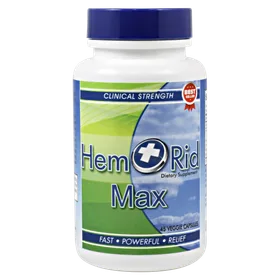
HemRid Max contains diosmin, hesperidin, horse chestnut, and witch hazel extract -- ingredients shown to strengthen venous walls and support healthy blood flow in hemorrhoidal tissue.
These statements have not been evaluated by the Food and Drug Administration. This product is not intended to diagnose, treat, cure, or prevent any disease.
Sitz Baths
Warm sitz baths (100-104 degrees Fahrenheit for 15-20 minutes, 2-3 times daily) help relax the anal sphincter, increase blood flow to the area, and reduce swelling. This is particularly helpful after manually reducing a Grade III hemorrhoid.
Topical Treatments
For external discomfort associated with prolapsed hemorrhoids, Lidocaine Cream provides numbing relief from pain and itching.
These statements have not been evaluated by the Food and Drug Administration. This product is not intended to diagnose, treat, cure, or prevent any disease.
Proper Toilet Habits
- Respond to the urge promptly -- do not delay bowel movements
- Limit time on the toilet to 5 minutes or less
- Use a footstool to elevate the knees above the hips (squatting position)
- Never strain or push forcefully
- Use moist wipes or a bidet instead of dry toilet paper
Medical Procedures for Prolapsed Hemorrhoids
When conservative treatment is insufficient, several medical procedures can treat prolapsed hemorrhoids. The choice depends on the grade of prolapse and patient factors.
Rubber Band Ligation (Grade I-III)
Rubber band ligation is the most widely performed office procedure for hemorrhoids. A small rubber band is placed at the base of the hemorrhoid, cutting off blood supply. The hemorrhoid shrinks and falls off within 5-7 days.
- Success rate: 70-80% for Grade I-III hemorrhoids
- Recovery time: Mild discomfort for 2-3 days; full healing in 1-2 weeks
- Sessions needed: 1-3 sessions, typically spaced 4-6 weeks apart
- Advantages: Performed in-office, no anesthesia needed, minimal recovery time
- Complications: Mild pain, bleeding (1-2% risk of significant bleeding), rare infection
According to a comparative study in Diseases of the Colon & Rectum, rubber band ligation has the best balance of effectiveness and patient comfort among office-based procedures (Shanmugam et al., 2005).
Sclerotherapy (Grade I-II)
A chemical solution is injected into the hemorrhoidal tissue, causing it to shrink.
- Success rate: 70-75% for Grade I-II
- Recovery time: Minimal; most patients resume normal activities immediately
- Best for: Small, bleeding internal hemorrhoids
Infrared Coagulation (Grade I-II)
Infrared light is applied to the hemorrhoid base, causing coagulation that reduces blood flow.
- Success rate: 65-75% for Grade I-II
- Recovery time: Minimal
- Sessions needed: May require multiple treatments
Stapled Hemorrhoidopexy (Grade II-III)
A circular stapling device lifts prolapsed hemorrhoidal tissue back into its normal anatomical position and removes a ring of excess tissue.
- Success rate: 85-90% initially, though long-term recurrence is higher than traditional surgery
- Recovery time: 1-2 weeks; significantly less painful than traditional hemorrhoidectomy
- Advantages: Less postoperative pain, faster return to work
- Disadvantages: Higher recurrence rate (up to 15% at 5 years) compared to hemorrhoidectomy
Surgical Hemorrhoidectomy (Grade III-IV)
The gold standard for advanced prolapsed hemorrhoids. The hemorrhoidal tissue is surgically excised under anesthesia.
- Success rate: Greater than 95% long-term
- Recovery time: 2-4 weeks; most painful recovery of all hemorrhoid procedures
- Best for: Grade III-IV hemorrhoids, failed prior procedures, very large hemorrhoids
- Pain management: Requires prescription pain medication for 7-14 days
A randomized trial in the Annals of Surgery comparing hemorrhoidectomy to stapled hemorrhoidopexy found that while hemorrhoidectomy had a more painful recovery, it had significantly lower recurrence rates at 5-year follow-up (Jayaraman et al., 2006).
Recovery Timelines After Prolapsed Hemorrhoid Treatment
| Treatment | Days Off Work | Pain Duration | Full Recovery | Recurrence Rate |
|---|---|---|---|---|
| Conservative only | 0-1 | 3-7 days | 1-4 weeks | 30-50% at 5 years |
| Rubber band ligation | 0-1 | 2-5 days | 1-2 weeks | 20-30% at 5 years |
| Sclerotherapy | 0 | 1-2 days | 1 week | 30-40% at 5 years |
| Stapled hemorrhoidopexy | 3-7 | 5-10 days | 2-3 weeks | 10-15% at 5 years |
| Hemorrhoidectomy | 7-14 | 10-21 days | 3-6 weeks | Less than 5% at 5 years |
Preventing Prolapsed Hemorrhoids from Getting Worse
Whether you are dealing with early-stage prolapse or recovering from treatment, these prevention strategies are critical for long-term management:
- Maintain daily fiber intake of 25-35 grams through diet and Fiber Gummies
- Drink at least 8 glasses of water daily to keep stools soft
- Exercise regularly -- 30 minutes of moderate activity most days
- Practice proper toilet habits -- no straining, no phone on the toilet
- Maintain a healthy weight to reduce chronic pelvic pressure
- Use ongoing vein support with HemRid Max to maintain vascular health
- Avoid prolonged sitting -- take standing breaks every 30-60 minutes
- Use proper lifting form -- exhale during exertion rather than holding breath
These statements have not been evaluated by the Food and Drug Administration. This product is not intended to diagnose, treat, cure, or prevent any disease.
When to See a Doctor for Prolapsed Hemorrhoids
Seek medical evaluation if you experience any of the following:
- Grade III or IV prolapse that interferes with daily activities
- Inability to reduce (push back in) prolapsed tissue
- Severe pain suggesting strangulation or thrombosis
- Heavy bleeding or bleeding that does not stop
- Dark purple or black tissue indicating compromised blood supply (seek emergency care)
- Fever or signs of infection including increasing redness, warmth, or discharge
- Prolapse accompanied by fecal incontinence
- Symptoms not improving after 4 weeks of conservative treatment
- Rectal bleeding in anyone over age 45 without recent colonoscopy
The American Society of Colon and Rectal Surgeons recommends that all patients with symptomatic hemorrhoids receive a proper examination, as symptoms of hemorrhoids can overlap with more serious conditions including colorectal cancer (Davis et al., 2018).
Take the First Step Toward Prolapsed Hemorrhoid Relief
For Grade I-II prolapsed hemorrhoids, conservative treatment with dietary changes, proper habits, and targeted supplements offers the best starting point. HemRid Max delivers clinically studied ingredients that support vein health from the inside, Fiber Gummies help prevent the straining that causes prolapse, and Lidocaine Cream provides immediate external comfort.
For Grade III-IV prolapse, consult a colorectal specialist to discuss procedural options. Even after procedures, continuing preventive measures is essential to avoid recurrence.
These statements have not been evaluated by the Food and Drug Administration. This product is not intended to diagnose, treat, cure, or prevent any disease.
---
References:
- Madoff, R. D., & Fleshman, J. W. (2004). American Gastroenterological Association technical review on the diagnosis and treatment of hemorrhoids. Gastroenterology, 126(5), 1463-1473.
- Thomson, W. H. (1975). The nature of hemorrhoids. British Journal of Surgery, 62(7), 542-552.
- Loder, P. B., et al. (1994). Hemorrhoids: Pathology, pathophysiology, and aetiology. British Journal of Surgery, 81(7), 946-954.
- Riss, S., et al. (2012). The prevalence of hemorrhoids in adults. International Journal of Colorectal Disease, 27(2), 215-220.
- Shanmugam, V., et al. (2005). Systematic review of randomized trials comparing rubber band ligation with excisional hemorrhoidectomy. British Journal of Surgery, 92(12), 1481-1487.
- Eu, K. W., et al. (1994). Ambulatory treatment of hemorrhoids. World Journal of Surgery, 18(6), 875-878.
- Alonso-Coello, P., et al. (2006). Fiber for the treatment of hemorrhoids complications. Cochrane Database of Systematic Reviews, (4), CD006304.
- Perera, N., et al. (2012). Phlebotonics for hemorrhoids. Cochrane Database of Systematic Reviews, (8), CD004322.
- Jayaraman, S., et al. (2006). Stapled versus conventional surgery for hemorrhoids. Cochrane Database of Systematic Reviews, (4), CD005393.
- Davis, B. R., et al. (2018). Clinical practice guidelines for the management of hemorrhoids. Diseases of the Colon & Rectum, 61(3), 284-292.
What actually works for hemorrhoids
If you're dealing with pain right now, a topical cream is a great first step — it numbs the area for fast relief. To actually get rid of the problem, HemRid Max works from the inside out to strengthen vein walls and reduce swelling. The best results come from doing both.