
What Does a Hemorrhoid Feel Like? Symptoms by Type Explained
Last Updated: April 9, 2026 | Medically Reviewed by the HemRid Medical Team
Last Updated: April 9, 2026 | Medically Reviewed by the HemRid Medical Team
Quick Answer: What a hemorrhoid feels like depends entirely on the type. External hemorrhoids feel like a firm, tender lump near the anus with pressure and pain when sitting. Internal hemorrhoids often produce no sensation at all — just painless bleeding. Thrombosed hemorrhoids cause sudden, intense throbbing pain with a hard lump. Prolapsed hemorrhoids create a feeling of tissue protruding from the anus and a sensation of incomplete evacuation.
"What does a hemorrhoid feel like?" is one of the most searched hemorrhoid questions online — and for good reason. If you've never had one, you might not recognize what's happening. And even if you have had one before, hemorrhoids can present differently depending on their type, severity, and location. This guide breaks down the specific sensations associated with each type of hemorrhoid so you can identify what you're experiencing and take the right next step.
What Does an External Hemorrhoid Feel Like?
External hemorrhoids develop under the skin around the anus, below the dentate line (the anatomical boundary between the upper and lower anal canal). Because this area is richly supplied with somatic nerves — the same type of nerves that give you sensation in your skin — external hemorrhoids are the type you feel most distinctly.
The Characteristic Sensations
A firm or rubbery lump: The most common description is feeling a lump near the anus that wasn't there before. It typically feels:
- Round or oval-shaped
- Firm but slightly compressible (like a grape or small marble under the skin)
- Smooth-surfaced
- Attached to the surrounding skin (not freely mobile)
- Ranging from pea-sized to marble-sized, sometimes larger during a flare-up
Pressure and fullness: Many people describe a sensation of "something being there" — a persistent feeling of pressure or fullness around the anus, even when they're not sitting on it. This sensation often increases with:
- Sitting, especially on hard surfaces
- Standing for prolonged periods
- After bowel movements
- During physical exertion (lifting, coughing, straining)
Pain when sitting: External hemorrhoids can make sitting genuinely uncomfortable. The pain is typically:
- A dull, aching pressure rather than sharp (unless thrombosed)
- Worse on hard, flat surfaces
- Better on soft surfaces or donut pillows
- More noticeable the longer you sit
Itching: External hemorrhoids frequently cause perianal itching (pruritus ani). This itching tends to be:
- Intermittent rather than constant
- Worse after bowel movements
- Aggravated by moisture (sweat, mucus)
- Sometimes described as a "burning itch" rather than a simple itch
- Worse at night
Tenderness to touch: The area around an external hemorrhoid is typically tender. You may notice sensitivity when:
- Wiping after a bowel movement
- Cleaning the area during bathing
- Sitting in certain positions
- Wearing tight underwear
Skin irritation: The skin around external hemorrhoids can become red, raw, and irritated, especially if there's mucus discharge. This feels like:
- A chafing or rubbing sensation
- Rawness similar to a mild burn
- Sensitivity to soap, toilet paper, or clothing
What Does an Internal Hemorrhoid Feel Like?
Internal hemorrhoids develop above the dentate line, inside the anal canal and lower rectum. This area is lined with visceral nerves, which are much less sensitive to pain, touch, and temperature than somatic nerves. This is why internal hemorrhoids often produce very different — or no — sensations compared to external hemorrhoids.
The Characteristic Sensations (or Lack Thereof)
Often, you feel nothing at all. This is the defining feature of internal hemorrhoids. Many people have internal hemorrhoids for years without any awareness. They're frequently discovered during routine colonoscopy or evaluation for rectal bleeding.
Painless bleeding: The most common sign of internal hemorrhoids isn't a feeling — it's something you see. Typical presentations include:
- Bright red blood on toilet paper after wiping
- Blood dripping into the toilet bowl
- Blood coating the surface of stool
- Blood on underwear
The bleeding is characteristically painless, which distinguishes it from anal fissures (which cause bleeding WITH pain).
A sense of incomplete evacuation: Some people with internal hemorrhoids describe feeling like they haven't fully emptied their bowels after a bowel movement. This is because swollen internal hemorrhoidal tissue can create a sensation of residual fullness in the rectum.
Mild discomfort or pressure: While internal hemorrhoids typically don't cause true pain, some people notice:
- A vague sense of pressure in the rectum
- Mild discomfort during bowel movements
- An occasional aching sensation deep in the rectal area
Internal Hemorrhoid Grades
Internal hemorrhoids are classified into four grades based on the degree of prolapse, and the sensations change with each grade:
- Grade I: Hemorrhoids remain inside the anal canal. Usually no symptoms beyond occasional painless bleeding. You likely feel nothing.
- Grade II: Hemorrhoids prolapse (push out) during straining but retract on their own. You may feel a brief bulging sensation during bowel movements that resolves afterward.
- Grade III: Hemorrhoids prolapse and require manual pushing back in. You'll feel tissue protruding after bowel movements (see "prolapsed hemorrhoids" below).
- Grade IV: Hemorrhoids are permanently prolapsed and can't be pushed back in. Constant sensation of tissue outside the anus.
What Does a Thrombosed Hemorrhoid Feel Like?
A thrombosed hemorrhoid occurs when a blood clot forms inside an external hemorrhoid. This is often the most painful hemorrhoid presentation and the one that sends people to the emergency room.
The Characteristic Sensations
Sudden, intense onset: Thrombosed hemorrhoids typically appear rapidly. You may go from having mild or no symptoms to severe pain within hours. Patients frequently describe the onset as:
- "I woke up and suddenly there was this painful lump"
- "It came on during a bowel movement and got worse within hours"
- "It felt like something suddenly swelled up and hardened"
Throbbing, severe pain: The pain from a thrombosed hemorrhoid is qualitatively different from a regular external hemorrhoid:
- Throbbing or pulsating quality — patients often describe the pain as having a "heartbeat"
- Constant — unlike regular hemorrhoid pain that comes and goes, thrombosed hemorrhoid pain is relentless, even at rest
- Severe — many patients rate it 7-10 on a pain scale
- Worse with sitting, walking, or bowel movements — any activity that puts pressure on the area amplifies the pain
- Can radiate — pain may spread to the buttocks, perineum, or lower abdomen
A hard, tender lump: The clot within the hemorrhoid creates a distinctly different feel compared to a regular hemorrhoid:
- Hard — much firmer than a non-thrombosed hemorrhoid, often described as "like a hard pebble"
- Extremely tender to any touch
- May appear bluish or purplish if visible — this is the blood clot showing through the stretched skin
- Doesn't reduce or push back in — the clot makes the tissue rigid
- May feel warm to the touch due to inflammation
Difficulty with daily activities: Thrombosed hemorrhoids can be debilitating:
- Sitting is extremely painful
- Walking causes jolting pain
- Bowel movements can feel excruciating
- Sleep is disrupted by constant throbbing
- Even changing positions in bed can trigger pain
When Thrombosis Resolves
If left untreated, thrombosed hemorrhoids typically begin to improve after 48-72 hours as the body gradually reabsorbs the clot. The pain peaks in the first 2-3 days, then gradually subsides over 1-2 weeks. However, the initial pain can be severe enough that many people seek medical intervention — and if you're seen within the first 72 hours, an in-office excision (removal of the clot) can provide immediate relief.
Using Lidocaine Cream can help manage thrombosed hemorrhoid pain alongside sitz baths and oral pain relievers, particularly for those managing the condition conservatively.
What Does a Prolapsed Hemorrhoid Feel Like?
A prolapsed hemorrhoid is an internal hemorrhoid that has extended beyond the anal opening. The sensation is distinct and often alarming for people experiencing it for the first time.
The Characteristic Sensations
Tissue protruding from the anus: The defining sensation of a prolapsed hemorrhoid is feeling tissue outside the anal opening:
- Soft, spongy mass that can be felt with fingers
- May emerge during bowel movements and then retract on its own (Grade II)
- May require gentle manual pushing back into the anal canal (Grade III)
- May remain permanently outside (Grade IV)
- Described by patients as "something hanging out" or "a bulge I can feel"
Incomplete evacuation: A persistent feeling of not having fully emptied the bowels is common with prolapsed hemorrhoids. The protruding tissue creates a physical sensation of "something still there" even after a complete bowel movement.
Mucus discharge: Prolapsed internal hemorrhoids secrete mucus, which causes:
- A wet, slimy sensation around the anus
- Staining on underwear
- Increased itching as the mucus irritates perianal skin
- A need to clean the area more frequently
Difficulty with hygiene: Prolapsed tissue makes thorough cleaning after bowel movements challenging, which can lead to:
- Persistent soiling
- Skin irritation and breakdown
- Embarrassment and social anxiety
- Recurrent itching
Pain (variable): The prolapsed portion of tissue that was originally internal may not be painful (since it's lined with less pain-sensitive mucosa). However, pain can occur when:
- The prolapsed tissue becomes swollen (edematous) from being outside the body
- The anal sphincter squeezes around the prolapsed tissue (incarceration)
- The tissue becomes thrombosed
- The surrounding perianal skin becomes irritated
The "Crawling" Sensation: What Is It?
Some hemorrhoid sufferers describe a peculiar "crawling" or "tickling" sensation around the anus. This can be unsettling and is worth addressing:
This sensation is typically caused by:
- Nerve irritation: Swollen hemorrhoidal tissue can press on or irritate nearby nerve endings, creating unusual sensations like crawling, tingling, or tickling.
- Mucus movement: Small amounts of mucus discharge from internal hemorrhoids can trickle along the perianal skin, creating a crawling or wet sensation.
- Skin healing: As hemorrhoidal tissue shrinks or heals, the stretching and contraction of skin can produce crawling or itching sensations.
- Heightened awareness: Once you're aware of hemorrhoids, the perianal area becomes a focus of attention, and normal sensations that you'd previously ignore become noticeable.
The crawling sensation is not dangerous, but it can be distracting and uncomfortable. Keeping the area clean, dry, and protected with a zinc oxide barrier can help reduce these sensations.
Itching Patterns: What Different Types of Hemorrhoid Itching Feel Like
Hemorrhoid-related itching varies in character depending on the cause:
External Hemorrhoid Itching
- Localized to the area immediately around the hemorrhoid
- Often accompanied by a burning quality
- Worse after bowel movements and at night
- Exacerbated by wiping, moisture, and friction
- May be relieved temporarily by cold application
Internal Hemorrhoid/Prolapse-Related Itching
- More diffuse, covering a larger perianal area
- Caused by mucus discharge irritating the skin
- Often described as a "wet itch"
- Worse between bowel movements (continuous mucus production)
- Responds well to moisture barriers like zinc oxide
Post-Treatment Itching
- Occurs during healing from hemorrhoid flare-ups or procedures
- Often a "tight" or "pulling" quality
- Indicates tissue repair (similar to a healing wound)
- Generally a positive sign, though uncomfortable
- Typically resolves within days to weeks
How to Tell If What You're Feeling Is a Hemorrhoid
While this article describes typical hemorrhoid sensations, other conditions can produce similar symptoms. Consider whether your symptoms might be something else:
| Symptom | Hemorrhoid | Anal Fissure | Abscess | Polyp/Tumor |
|---|---|---|---|---|
| Lump | Soft to firm | No | Hard, hot, tender | Firm, may be higher up |
| Pain | Variable | Sharp, during BM | Constant, severe | Usually painless |
| Bleeding | Bright red | Bright red, with pain | Minimal | May be dark or bright |
| Itching | Common | Sometimes | Uncommon | Uncommon |
| Discharge | Mucus (prolapse) | Minimal | Pus possible | Mucus possible |
| Fever | No | No | Possible | No (usually) |
When What You Feel Means You Need a Doctor
Schedule a medical evaluation if:
- You feel a lump that is getting larger over several days
- You have persistent or heavy bleeding — any rectal bleeding should be evaluated at least once
- The pain is severe and constant (possible thrombosed hemorrhoid — treatable in-office)
- You feel tissue protruding that won't go back in (incarcerated prolapse)
- Your symptoms haven't improved within 2 weeks of home treatment
- You have fever, pus, or spreading redness (possible infection/abscess)
- You're over 40 and experiencing rectal bleeding for the first time — colorectal screening may be recommended
- Your symptoms are different from typical hemorrhoid descriptions in this article
Managing Hemorrhoid Symptoms While You Heal
Regardless of the type of hemorrhoid you're experiencing, a consistent treatment approach helps:
- Sitz baths (15-20 minutes in warm water, 2-3 times daily) help with all hemorrhoid types.
- Lidocaine Cream provides targeted pain relief for external and thrombosed hemorrhoids.
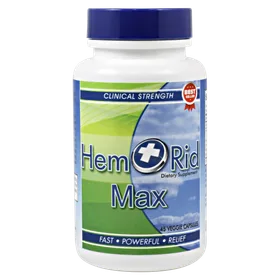
- HemRid Max supports vascular health with clinically studied flavonoid compounds to help reduce hemorrhoid symptoms from the inside.
- Fiber Gummies address the constipation and straining that cause most hemorrhoids to develop in the first place.
- Ice packs (10-15 minutes, wrapped in cloth) help reduce swelling, especially for thrombosed hemorrhoids.
- Proper hygiene — gentle cleaning with water and soft materials, avoiding harsh wiping.
These statements have not been evaluated by the Food and Drug Administration. These products are not intended to diagnose, treat, cure, or prevent any disease.
The Bottom Line
What a hemorrhoid feels like is highly variable — from barely noticeable to genuinely debilitating. The key takeaways:
- External hemorrhoids feel like a firm, tender lump with pressure and itching.
- Internal hemorrhoids often feel like nothing at all — just painless bleeding.
- Thrombosed hemorrhoids feel like a sudden, hard, intensely painful lump with constant throbbing.
- Prolapsed hemorrhoids feel like soft tissue protruding from the anus with mucus discharge.
If you can identify which type of hemorrhoid you're dealing with based on these descriptions, you're better equipped to choose the right treatment approach. And remember — when in doubt, see your healthcare provider. A quick examination can provide a definitive diagnosis and personalized treatment plan.
---
This article is for informational purposes only and does not constitute medical advice. Always consult with a qualified healthcare provider for diagnosis and treatment of any medical condition.
What actually works for hemorrhoids
If you're dealing with pain right now, a topical cream is a great first step — it numbs the area for fast relief. To actually get rid of the problem, HemRid Max works from the inside out to strengthen vein walls and reduce swelling. The best results come from doing both.