
Rubber Band Ligation: Procedure, Recovery, Cost & Alternatives (2026)
Last Updated: April 9, 2026 | Medically Reviewed by the HemRid Medical Team
Last Updated: April 9, 2026 | Medically Reviewed by the HemRid Medical Team
Quick Answer: Rubber band ligation (hemorrhoid banding) is a minimally invasive office procedure where a doctor places a small rubber band around the base of an internal hemorrhoid to cut off its blood supply, causing it to shrink and fall off within one to two weeks. It has an approximately 80% success rate for Grade I through III internal hemorrhoids and costs between $500 and $1,500 per session.
If your hemorrhoids have not responded to conservative treatments like fiber supplementation, topical creams, and lifestyle changes, your doctor may recommend rubber band ligation. This is the most commonly performed office procedure for internal hemorrhoids, and understanding what to expect can help you prepare and make an informed decision about your care.
What Is Rubber Band Ligation?
Rubber band ligation, also known as hemorrhoid banding, is a procedure in which a gastroenterologist or colorectal surgeon places a tiny, tight rubber band around the base of an internal hemorrhoid. The band cuts off the hemorrhoid's blood supply, causing the tissue to die (necrose), shrink, and detach within 5 to 14 days. The hemorrhoid and the band pass during a normal bowel movement, often without the patient noticing.
This technique was first described by Barron in 1963 and has since become the gold standard office-based treatment for symptomatic internal hemorrhoids. A meta-analysis in the British Journal of Surgery confirmed that rubber band ligation is the most effective non-surgical treatment for hemorrhoids, with superior outcomes compared to sclerotherapy and infrared coagulation (MacRae & McLeod, 1995).
Who Is a Candidate for Hemorrhoid Banding?
Rubber band ligation is appropriate for:
- Grade I internal hemorrhoids that bleed but do not prolapse
- Grade II internal hemorrhoids that prolapse during bowel movements but retract on their own
- Grade III internal hemorrhoids that prolapse and require manual reduction (pushing back in)
It is generally not recommended for:
- Grade IV internal hemorrhoids that are permanently prolapsed and cannot be pushed back in (these typically require surgical hemorrhoidectomy)
- External hemorrhoids (the band cannot be placed on external tissue due to the high density of pain-sensing nerves)
- Patients on blood thinners who cannot temporarily discontinue them
- Patients with bleeding disorders
- Those with active anorectal infections
Try Conservative Treatment First
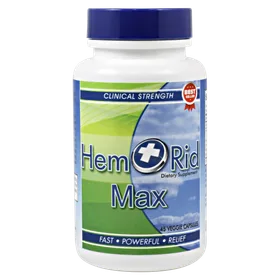
For Grade I and Grade II internal hemorrhoids, it is worth trying conservative measures before proceeding to banding. Many patients find significant relief with a combination of increased fiber intake using Fiber Gummies, internal hemorrhoid support from HemRid Max, and topical care with Lidocaine Cream. The American Gastroenterological Association recommends a trial of conservative therapy for at least four to six weeks before considering procedures (Wald et al., 2014).
These statements have not been evaluated by the Food and Drug Administration. This product is not intended to diagnose, treat, cure, or prevent any disease.
How the Rubber Band Ligation Procedure Works
Understanding the step-by-step process helps reduce anxiety about the procedure.
Before the Procedure
- No special bowel preparation is typically required
- You may be asked to stop blood-thinning medications several days before
- Eat normally the day of the procedure
- You do not need someone to drive you home (no sedation is used)
- The procedure is performed in the doctor's office, not a hospital or surgical center
During the Procedure
- Positioning: You lie on your side on the exam table in a fetal position, or you may be asked to kneel on the table.
- Anoscope insertion: The doctor inserts an anoscope (a short, hollow tube) into the rectum to visualize the internal hemorrhoids. This may cause pressure but should not be painful.
- Band placement: Using a special ligator instrument, the doctor grasps the hemorrhoid tissue and places one or two small rubber bands tightly around its base. The bands are placed above the dentate line, where there are few pain-sensing nerves.
- Completion: The anoscope is removed. Most doctors band only one to two hemorrhoids per session to minimize complications.
The entire procedure takes approximately 5 to 10 minutes.
What It Feels Like
Most patients report feeling pressure or a dull ache during and immediately after the procedure, but not sharp pain. The sensation is often described as similar to the urge to have a bowel movement. If you feel sharp pain during band placement, tell your doctor immediately, as the band may be placed too close to the nerve-rich area and should be repositioned.
Recovery After Rubber Band Ligation
Immediate Recovery (First 24 to 48 Hours)
- Discomfort: A dull ache or feeling of fullness in the rectal area is normal and typically mild. Over-the-counter pain relievers like acetaminophen or ibuprofen are usually sufficient.
- Activity: Most patients return to work the same day or the next day. Avoid heavy lifting for 48 hours.
- Diet: Eat a high-fiber diet and drink plenty of fluids to ensure soft stools. This is the most important aspect of recovery.
- Sitz baths: Warm sitz baths for 15 to 20 minutes several times per day can ease discomfort.
Week One
- The banded hemorrhoid begins to shrink
- You may notice some spotting or light bleeding, which is normal
- Some patients feel an increased urge to have bowel movements
- Continue high-fiber intake with supplements like Fiber Gummies
Week Two
- The hemorrhoid and rubber band typically fall off between days 5 and 14
- You may notice a small amount of bleeding when this happens (this is normal)
- Most discomfort has resolved by this point
Weeks Three to Four
- The area where the hemorrhoid was heals completely
- Symptoms that the hemorrhoid was causing (bleeding, prolapse) should be resolved
- If you have additional hemorrhoids to treat, your doctor may schedule the next banding session
Full Recovery Timeline
| Time Frame | What to Expect |
|---|---|
| Day 1 | Dull ache, fullness sensation, mild discomfort |
| Days 2-5 | Decreasing discomfort, possible spotting |
| Days 5-14 | Band and hemorrhoid tissue fall off |
| Day 14+ | Healing complete, symptoms resolved |
Hemorrhoid Banding Cost in 2026
The cost of rubber band ligation varies based on several factors:
- Without insurance: $500 to $1,500 per session
- With insurance: Typically covered as an outpatient procedure with a copay ranging from $20 to $200, depending on your plan
- Number of sessions needed: Most patients require one to three sessions if multiple hemorrhoids need treatment, with sessions spaced two to four weeks apart
Cost Breakdown
| Component | Estimated Cost |
|---|---|
| Office visit / consultation | $150 - $300 |
| Procedure fee | $250 - $800 per hemorrhoid |
| Follow-up visit | $100 - $200 |
| Total per session | $500 - $1,500 |
Most insurance plans, including Medicare and Medicaid, cover rubber band ligation for symptomatic hemorrhoids. Check with your insurance provider before scheduling.
Cost Comparison with Alternatives
| Treatment | Estimated Cost | Sessions |
|---|---|---|
| Conservative (HemRid Max + fiber) | $30 - $60/month | Ongoing |
| Rubber band ligation | $500 - $1,500/session | 1-3 sessions |
| Infrared coagulation | $400 - $1,000/session | 1-4 sessions |
| Sclerotherapy | $300 - $800/session | 1-3 sessions |
| Surgical hemorrhoidectomy | $4,000 - $10,000 | Single procedure |
| Stapled hemorrhoidopexy | $3,000 - $8,000 | Single procedure |
Success Rates and Effectiveness
Rubber band ligation has well-documented success rates:
- Overall success rate: Approximately 80% of patients experience resolution of symptoms
- Bleeding control: Up to 90% of patients report cessation of hemorrhoidal bleeding
- Recurrence rate: Approximately 10% to 30% over five years, depending on lifestyle factors and hemorrhoid grade
- Need for repeat banding: About 20% of patients require additional sessions
- Need for surgical intervention after banding: Only 5% to 10% of patients ultimately need surgery
A large study published in Diseases of the Colon & Rectum found that 80% of patients treated with rubber band ligation did not require further surgical intervention at five-year follow-up (Iyer et al., 2004).
Risks and Complications
Rubber band ligation is considered very safe, but like any procedure, it carries some risks:
Common (occurring in 5% to 20% of patients)
- Mild pain or aching for one to three days
- Minor bleeding when the band falls off
- Feeling of rectal fullness or urgency
Uncommon (occurring in less than 5% of patients)
- Moderate bleeding requiring medical attention
- Band slippage (requiring re-banding)
- Vasovagal reaction (feeling faint during the procedure)
- Urinary retention (difficulty urinating after the procedure)
Rare but Serious (less than 1%)
- Severe bleeding requiring hospitalization
- Pelvic sepsis (serious infection) — extremely rare but potentially life-threatening. Seek immediate medical attention for fever, severe pain, or inability to urinate after the procedure
- Thrombosed external hemorrhoid developing after internal banding
Warning signs to contact your doctor immediately after banding:
- Fever above 100.4 degrees Fahrenheit
- Severe pain not controlled by over-the-counter medications
- Heavy bleeding (more than a tablespoon at a time)
- Inability to urinate for more than 6 to 8 hours
- Signs of infection (increasing redness, swelling, or discharge)
Alternatives to Rubber Band Ligation
If banding is not right for you, or if you want to try other options first, several alternatives exist:
Conservative Management
For Grade I and II hemorrhoids, a consistent regimen of fiber supplementation with Fiber Gummies, internal support from HemRid Max, and topical relief with Lidocaine Cream resolves symptoms for many patients without any procedure. This approach is the safest, most affordable, and should be the first line of treatment.
These statements have not been evaluated by the Food and Drug Administration. This product is not intended to diagnose, treat, cure, or prevent any disease.
Infrared Coagulation (IRC)
A probe that emits infrared light is applied to the hemorrhoid, causing the tissue to coagulate and scar. Less effective than banding for larger hemorrhoids but associated with less pain. Often requires more sessions.
Sclerotherapy
A chemical solution is injected into the hemorrhoid to shrink it. Best for smaller, Grade I hemorrhoids. Less painful than banding but higher recurrence rates.
Surgical Hemorrhoidectomy
Complete surgical removal of hemorrhoids. The most definitive treatment with the lowest recurrence rates (less than 5%) but involves more pain, longer recovery (two to four weeks), and higher cost. Reserved for Grade III to IV hemorrhoids or recurrent cases.
Stapled Hemorrhoidopexy (PPH)
A surgical stapling device repositions prolapsing hemorrhoids back to their normal position. Less painful than traditional hemorrhoidectomy but has a higher recurrence rate. Suitable for circumferential (all-around) prolapsing hemorrhoids.
Doppler-Guided Hemorrhoidal Artery Ligation (DG-HAL)
Uses ultrasound to identify and ligate the arteries feeding the hemorrhoids. A newer technique with promising results and less post-operative pain than traditional surgery.
What to Do Before and After Banding
Before Your Appointment
- Discuss your medications with your doctor, especially blood thinners
- Start increasing fiber intake at least one week before the procedure
- Stay well hydrated
- Prepare questions for your doctor about the procedure
After Your Procedure
- Take over-the-counter pain medication as needed
- Perform sitz baths three to four times daily
- Maintain high fiber intake with Fiber Gummies
- Drink at least eight glasses of water daily
- Avoid straining during bowel movements
- Avoid heavy lifting for one week
- Contact your doctor if you experience any warning signs
Frequently Asked Questions
Is rubber band ligation painful? Most patients report mild to moderate discomfort described as a dull ache or pressure, but not severe pain. The bands are placed in an area with few pain nerves. Over-the-counter pain relievers are usually sufficient.
How many hemorrhoids can be banded at once? Most doctors band one to two hemorrhoids per session to minimize discomfort and complications. If you have three or more hemorrhoids, multiple sessions spaced two to four weeks apart are typically recommended.
Can hemorrhoids come back after banding? Yes, new hemorrhoids can develop if the underlying causes (straining, low fiber, prolonged sitting) are not addressed. Maintaining a high-fiber diet, staying active, and using HemRid Max can help prevent recurrence.
How long does it take to see results? Bleeding typically stops within a few days. Full symptom resolution occurs within two to four weeks as the banded tissue falls off and heals.
These statements have not been evaluated by the Food and Drug Administration. This product is not intended to diagnose, treat, cure, or prevent any disease.
The Bottom Line
Rubber band ligation is an effective, well-studied procedure for Grade I through III internal hemorrhoids that have not responded to conservative treatment. With an 80% success rate, minimal downtime, and a cost of $500 to $1,500 per session, it represents a middle ground between conservative management and surgery. For many patients, however, starting with a comprehensive conservative approach using HemRid Max, Fiber Gummies, and Lidocaine Cream is the right first step before considering any procedure.
This article is for informational purposes only and does not constitute medical advice. Always consult your healthcare provider for diagnosis and treatment of any medical condition.
References:
- Iyer, V. S., et al. (2004). Long-term results of rubber band ligation for symptomatic hemorrhoids. Diseases of the Colon & Rectum, 47(8), 1364-1370.
- MacRae, H. M., & McLeod, R. S. (1995). Comparison of hemorrhoidal treatment modalities. British Journal of Surgery, 82(8), 1034-1038.
- Wald, A., et al. (2014). ACG clinical guideline: management of benign anorectal disorders. American Journal of Gastroenterology, 109(8), 1141-1157.
What actually works for hemorrhoids
If you're dealing with pain right now, a topical cream is a great first step — it numbs the area for fast relief. To actually get rid of the problem, HemRid Max works from the inside out to strengthen vein walls and reduce swelling. The best results come from doing both.