
When to See a Doctor for Hemorrhoids: 8 Warning Signs
The majority of hemorrhoid cases — roughly 80% — resolve with home treatment within 1-2 weeks. But sometimes hemorrhoids need professional medical attention, either because they're too severe for OTC remedies or because the symptoms could indicate something else entirely.
Last Updated: April 3, 2026 | Medically Reviewed by the HemRid Medical Team
Quick Answer: See a doctor for hemorrhoids if you experience heavy or persistent rectal bleeding, severe pain that doesn't respond to OTC treatment, a hemorrhoid that won't retract, symptoms lasting more than 2 weeks despite treatment, fever or signs of infection, or if you're over 40 with rectal bleeding for the first time. Most hemorrhoids can be treated at home, but these warning signs indicate you need professional evaluation.
The majority of hemorrhoid cases — roughly 80% — resolve with home treatment within 1-2 weeks. But sometimes hemorrhoids need professional medical attention, either because they're too severe for OTC remedies or because the symptoms could indicate something else entirely.
Here are the specific situations where you should stop self-treating and see a healthcare provider.
8 Warning Signs You Need to See a Doctor
1. Heavy or Persistent Rectal Bleeding
Some bleeding with hemorrhoids is normal — a few drops of bright red blood on toilet paper or in the bowl after a bowel movement. But you should see a doctor if:
- Bleeding is heavy — filling the toilet bowl or dripping steadily - Blood is dark red, maroon, or black (could indicate bleeding higher in the digestive tract) - You see blood clots in your stool - Bleeding doesn't stop after a bowel movement - Bleeding continues for more than a week despite treatment
Why it matters: While hemorrhoids are the most common cause of rectal bleeding, the same symptom can occur with colorectal polyps, inflammatory bowel disease, anal fissures, or — rarely — colorectal cancer. Only a medical examination can confirm the source.
2. Severe Pain That Won't Respond to OTC Treatment
Hemorrhoid pain ranges from mild discomfort to severe. If you've tried home remedies — lidocaine cream, sitz baths, ice packs, oral supplements — and the pain is still unbearable after 2-3 days, see a doctor.
Severe, sudden pain often indicates a thrombosed hemorrhoid (a blood clot inside the hemorrhoid). A doctor can perform an in-office procedure to drain the clot and provide immediate relief, but this is most effective within the first 48-72 hours.
3. A Hemorrhoid That Won't Retract (Prolapse)
Internal hemorrhoids are graded by severity:
- Grade I-II: Stay inside or prolapse during straining but retract on their own — usually treatable at home - Grade III: Prolapse and must be manually pushed back in — should be evaluated by a doctor - Grade IV: Permanently prolapsed, cannot be pushed back in — requires medical treatment
A prolapsed hemorrhoid that stays outside the anus is at risk of becoming strangulated — where the anal sphincter cuts off blood supply, causing severe pain and tissue death. This is a medical emergency.
4. Symptoms Lasting More Than 2 Weeks
If you've been consistently treating hemorrhoids at home for 2 weeks without improvement, the hemorrhoid may be too advanced for OTC treatment, or the diagnosis may be wrong. A doctor can:
- Confirm the diagnosis (rule out other conditions) - Recommend office procedures like rubber band ligation - Prescribe stronger medications if needed
5. First-Time Rectal Bleeding Over Age 40
If you're over 40 and experiencing rectal bleeding for the first time, see a doctor even if you suspect hemorrhoids. Colorectal cancer screening is recommended starting at age 45 (or earlier with family history), and new rectal bleeding warrants evaluation to rule out more serious causes.
This doesn't mean you have cancer — hemorrhoids are far more likely. But it's a situation where professional confirmation matters.
6. Fever or Signs of Infection
Hemorrhoids themselves don't cause fever. If you have hemorrhoid symptoms along with:
- Fever (temperature above 100.4°F / 38°C) - Increasing redness, warmth, or swelling around the anus - Pus or foul-smelling discharge - Pain that's getting progressively worse rather than better
You may have an anal abscess (a pocket of infection) rather than or in addition to hemorrhoids. Abscesses require medical drainage and often antibiotics — they don't resolve on their own.
7. Changes in Bowel Habits
Hemorrhoids don't cause changes in how your bowels work. If you notice:
- Persistent diarrhea or constipation (new onset) - Pencil-thin or ribbon-like stools - Unexplained weight loss - Feeling that your bowel doesn't empty completely (beyond what hemorrhoids explain) - Alternating constipation and diarrhea
These symptoms warrant medical evaluation because they could indicate inflammatory bowel disease, irritable bowel syndrome, or — in rare cases — colorectal cancer.
8. Recurrent Hemorrhoids Despite Treatment
If hemorrhoids keep coming back despite proper treatment and lifestyle changes (high fiber, hydration, not straining), a doctor can evaluate whether:
- A medical procedure would provide more lasting results - There's an underlying condition contributing to recurrence - Your current treatment approach needs adjustment
What Type of Doctor Treats Hemorrhoids?
- Primary care physician (PCP) — Good starting point. Can diagnose hemorrhoids, prescribe treatment, and refer to specialists - Gastroenterologist — Specialist in digestive system disorders. Can perform diagnostic procedures like colonoscopy - Colorectal surgeon (proctologist) — Specialist in conditions of the colon, rectum, and anus. Best for severe hemorrhoids requiring procedures or surgery
Start with your PCP. They'll refer you to a specialist if needed.
What to Expect at Your Appointment
Many people delay seeing a doctor for hemorrhoids because they're embarrassed. Remember: doctors see hemorrhoid patients every day. It's one of the most common conditions they treat.
The examination typically includes:
- Medical history — Your symptoms, duration, bowel habits, diet, and what treatments you've tried - External visual exam — The doctor examines the outside of the anal area for external hemorrhoids, skin tags, or other visible issues - Digital rectal exam (DRE) — The doctor inserts a gloved, lubricated finger to check for internal hemorrhoids, muscle tone, and any abnormalities. Brief and usually not painful - Anoscopy (if needed) — A small, lighted tube is inserted to view the lower rectum. Allows direct visualization of internal hemorrhoids
If there's concern about other conditions, the doctor may recommend a colonoscopy — a more comprehensive exam of the entire colon. This is especially likely if you're over 45, have a family history of colorectal cancer, or have symptoms that don't fit typical hemorrhoids.
Common Medical Treatments for Hemorrhoids
If home treatment isn't enough, your doctor may recommend:
Office Procedures (No Hospital Required)
- Rubber band ligation — Most common. A band is placed around the hemorrhoid base, cutting off blood flow. It shrinks and falls off in about a week. ~80% success rate for Grade I-III - Sclerotherapy — A chemical solution is injected to shrink the hemorrhoid - Infrared coagulation — Heat is used to coagulate and shrink hemorrhoid tissue - Thrombectomy — For thrombosed hemorrhoids within 48-72 hours. The clot is drained under local anesthesia
Surgical Options (For Severe Cases)
- Hemorrhoidectomy — Surgical removal. Most effective for severe (Grade IV) hemorrhoids. 2-4 week recovery - Stapled hemorrhoidopexy — Repositions prolapsed tissue. Less painful than hemorrhoidectomy but higher recurrence rate
For more detail, see our complete hemorrhoid treatment guide.
What You Can Do While Waiting for Your Appointment
If you've decided to see a doctor but your appointment is a few days away:
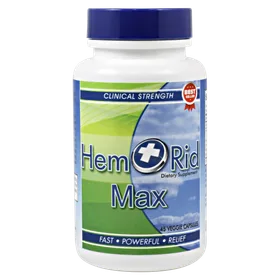
- Continue using 5% lidocaine cream for pain management - Take warm sitz baths 2-3 times daily - Take an oral hemorrhoid supplement like HemRid Max to begin addressing the underlying issue - Increase fiber and water intake - Avoid straining — if a bowel movement isn't happening easily, try again later - Apply ice packs (wrapped in cloth) for 15-20 minutes to reduce swelling
Go to the emergency room immediately if you experience:
- Heavy, continuous rectal bleeding that won't stop - Severe pain with a prolapsed hemorrhoid that can't be pushed back in - High fever with rectal symptoms - Feeling faint or dizzy from blood loss
The Bottom Line
Most hemorrhoids don't need a doctor — a combination of oral supplements, topical treatment, fiber, and sitz baths resolves the majority of cases within 1-2 weeks. But when symptoms are severe, persistent, or unusual, professional evaluation is the smart move. Early treatment of serious hemorrhoids prevents complications and gets you to relief faster.
This article is for informational purposes only and does not constitute medical advice. If you're experiencing any of the warning signs described above, consult a healthcare provider promptly.
What actually works for hemorrhoids
If you're dealing with pain right now, a topical cream is a great first step — it numbs the area for fast relief. To actually get rid of the problem, HemRid Max works from the inside out to strengthen vein walls and reduce swelling. The best results come from doing both.