
When to See a Doctor for Hemorrhoids: Warning Signs Guide
Many people delay seeking medical care for hemorrhoids due to embarrassment, assuming symptoms will resolve on their own, or simply not knowing when home treatment is no longer sufficient. This guide provides clear, specific criteria for when professional medical evaluation is necessary.
Last Updated: April 10, 2026 | Medically Reviewed by the HemRid Medical Team
While most hemorrhoids can be managed at home, certain symptoms are warning signs that require prompt medical evaluation — especially rectal bleeding that could mask a more serious condition. Knowing when to see a doctor versus when to continue home treatment can protect your health and give you peace of mind.
Many people delay seeking medical care for hemorrhoids due to embarrassment, assuming symptoms will resolve on their own, or simply not knowing when home treatment is no longer sufficient. This guide provides clear, specific criteria for when professional medical evaluation is necessary.
Warning Signs That Require Medical Attention
1. Rectal Bleeding That Is New or Changing
When to be concerned:
- You have never experienced rectal bleeding before
- Bleeding is heavier than usual or increasing over time
- Blood is dark red, maroon, or black rather than bright red
- Blood is mixed into the stool rather than on the surface or toilet paper
- Bleeding occurs without a bowel movement
- Bleeding does not stop within one week of home treatment
Why it matters: While hemorrhoids are the most common cause of rectal bleeding, other conditions — including colorectal polyps, inflammatory bowel disease, and colorectal cancer — can cause similar symptoms. Only a medical evaluation can definitively determine the source of bleeding.
Bright red blood on toilet paper or dripping into the bowl after a bowel movement is the typical hemorrhoid pattern. Any deviation from this pattern warrants medical evaluation.
2. Severe Pain
When to be concerned:
- Pain is sudden, intense, and localized to a firm lump near the anus (suggests a thrombosed hemorrhoid)
- Pain interferes with your ability to sit, walk, or perform daily activities
- Pain is not relieved by over-the-counter treatments, sitz baths, or HemRid Lidocaine Cream
- Pain is accompanied by fever
- Pain worsens over several days rather than improving
Why it matters: Severe anal pain may indicate a thrombosed hemorrhoid that could benefit from medical drainage (particularly within the first 72 hours), an anal abscess requiring surgical drainage, or an anal fissure that may need prescription treatment.
3. Prolapsed Hemorrhoid That Cannot Be Pushed Back
When to be concerned:
- An internal hemorrhoid protrudes from the anus and cannot be manually repositioned
- A prolapsed hemorrhoid is accompanied by severe pain
- The tissue appears dark or discolored (blue, purple, or black)
- There are signs of tissue death (necrosis): foul odor, increasing pain, or darkening color
Why it matters: A Grade IV prolapsed hemorrhoid (permanently prolapsed) or an incarcerated hemorrhoid (trapped and swollen) may require urgent medical intervention. Strangulated hemorrhoids where blood supply is cut off are a medical emergency.
4. Symptoms That Do Not Improve After Two Weeks
When to be concerned:
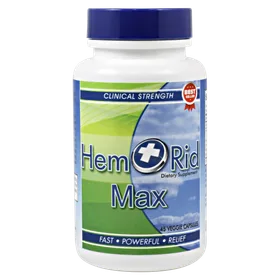
- You have consistently followed home treatment recommendations (fiber, hydration, sitz baths, supplements like HemRid Max*) for at least two weeks without meaningful improvement
- Symptoms fluctuate but never fully resolve
- Hemorrhoids keep recurring despite preventive measures
Why it matters: Persistent symptoms may indicate that you need a stronger treatment approach (such as rubber band ligation or other procedures) or that your symptoms are caused by a different condition altogether.
5. Changes in Bowel Habits
When to be concerned:
- New onset of constipation or diarrhea lasting more than two weeks
- Stools that are narrower than usual (pencil-thin)
- A feeling of incomplete bowel emptying that persists
- Unexplained changes in stool frequency
Why it matters: While hemorrhoids themselves do not typically cause changes in bowel habits, these symptoms can indicate other conditions that require evaluation, including colorectal polyps or tumors.
6. Unexplained Weight Loss or Fatigue
When to be concerned:
- Weight loss without intentional dieting
- Persistent fatigue or weakness
- These symptoms occur alongside rectal bleeding
Why it matters: Chronic rectal bleeding can lead to iron deficiency anemia, causing fatigue and weakness. Unexplained weight loss combined with rectal bleeding may also warrant investigation for more serious conditions.
7. Age-Related Screening Considerations
When to be concerned:
- You are 45 or older and have never had a colonoscopy
- You have rectal bleeding and a family history of colorectal cancer
- You are under 45 but have multiple risk factors for colorectal cancer (family history, inflammatory bowel disease, previous polyps)
Why it matters: The American Cancer Society recommends colorectal cancer screening beginning at age 45 for average-risk individuals. Rectal bleeding in this age group should always prompt a discussion with your doctor about screening status.
What to Expect at the Doctor's Office
Understanding what happens during a hemorrhoid evaluation can reduce anxiety about the visit:
The Consultation
Your doctor will ask about:
- Your specific symptoms (pain, bleeding, itching, swelling)
- Duration and severity of symptoms
- What makes symptoms better or worse
- Your bowel habits (frequency, consistency, straining)
- Diet and fluid intake
- Previous hemorrhoid episodes
- Family medical history
- Current medications and treatments you have tried
The Physical Examination
A hemorrhoid examination typically includes:
Visual inspection: The doctor will visually examine the external anal area for signs of external hemorrhoids, skin tags, fissures, or other abnormalities.
Digital rectal exam (DRE): The doctor will insert a gloved, lubricated finger into the rectum to feel for internal hemorrhoids, masses, or other abnormalities. This takes approximately 10-15 seconds and may cause mild discomfort but should not be painful.
Anoscopy: A small, hollow tube (anoscope) approximately 3 inches long is inserted into the anal canal to directly visualize internal hemorrhoids. This may cause pressure but is generally well tolerated.
Proctoscopy/sigmoidoscopy: If needed, a longer scope may be used to examine more of the rectum and lower colon.
Possible Diagnostic Tests
Depending on your symptoms and risk factors, your doctor may recommend:
- Complete blood count (CBC) — To check for anemia from chronic bleeding
- Colonoscopy — A comprehensive examination of the entire colon, typically recommended for patients over 45 or those with concerning symptoms
- Fecal occult blood test — To detect blood not visible to the naked eye
Which Doctor Should You See?
Primary Care Physician (PCP)
Start here if: This is your first episode, symptoms are mild to moderate, or you need a referral.
Your PCP can diagnose hemorrhoids, provide initial treatment recommendations, and refer you to a specialist if needed.
Gastroenterologist
See this specialist if: You need a colonoscopy, have persistent symptoms, or have a history of digestive disorders.
Gastroenterologists specialize in the entire digestive tract and can perform diagnostic procedures and some hemorrhoid treatments.
Colorectal Surgeon (Proctologist)
See this specialist if: You need a hemorrhoid procedure (rubber band ligation, hemorrhoidectomy), have recurrent hemorrhoids despite treatment, or have complex anorectal conditions.
Colorectal surgeons are the most specialized practitioners for hemorrhoid treatment and perform both office-based procedures and surgical interventions.
Medical Treatment Options Your Doctor May Recommend
Office-Based Procedures
- Rubber band ligation — The most common procedure for internal hemorrhoids. A small rubber band is placed around the base of the hemorrhoid to cut off blood supply. The hemorrhoid withers and falls off within a week.
- Sclerotherapy — Injection of a chemical solution into the hemorrhoid to shrink it.
- Infrared coagulation — Heat applied to the hemorrhoid to reduce blood flow and shrink the tissue.
- Thrombectomy — Drainage of a blood clot from a thrombosed external hemorrhoid (most effective within 72 hours of onset).
Surgical Options
- Hemorrhoidectomy — Surgical removal of hemorrhoid tissue. Most effective for large or severe hemorrhoids but has a longer, more painful recovery.
- Stapled hemorrhoidopexy — Stapling device repositions prolapsed internal hemorrhoids and cuts off blood supply.
- Hemorrhoidal artery ligation — Uses ultrasound guidance to locate and tie off blood vessels feeding the hemorrhoids.
Continuing Home Care Alongside Medical Treatment
Even if you need medical intervention, maintaining home care practices ensures the best possible outcome:
- Continue HemRid Max supplementation for ongoing vein health support*
- Maintain daily fiber intake with diet and HemRid Fiber Gummies*
- Use Medicated Wipes for gentle post-procedure cleansing
- Follow all post-procedure care instructions from your doctor
- Maintain healthy bathroom habits to prevent recurrence
Key Takeaways
- New, heavy, dark, or persistent rectal bleeding always warrants medical evaluation
- Severe pain, prolapsed hemorrhoids that cannot be repositioned, and signs of tissue death require urgent care
- If home treatment has not improved symptoms after two weeks, see a doctor
- Adults 45 and older should have up-to-date colonoscopy screening, especially if experiencing rectal bleeding
- A hemorrhoid evaluation is quick, straightforward, and far less uncomfortable than most people fear
- Multiple effective medical procedures exist for hemorrhoids that do not respond to conservative treatment
*These statements have not been evaluated by the Food and Drug Administration. This product is not intended to diagnose, treat, cure, or prevent any disease.
What actually works for hemorrhoids
If you're dealing with pain right now, a topical cream is a great first step — it numbs the area for fast relief. To actually get rid of the problem, HemRid Max works from the inside out to strengthen vein walls and reduce swelling. The best results come from doing both.