
Hemorrhoid Bleeding: When It's Normal & When to Worry
Seeing blood in the toilet or on toilet paper understandably causes anxiety. Many people immediately worry about serious conditions like colorectal cancer. While it is always wise to take rectal bleeding seriously, hemorrhoids are by far the most common cause — and hemorrhoid bleeding is highly trea
Last Updated: April 10, 2026 | Medically Reviewed by the HemRid Medical Team
Bleeding is the most common symptom of hemorrhoids — especially internal hemorrhoids — and in most cases it is not dangerous, though it can be alarming when you first notice it. Understanding what hemorrhoid bleeding looks like, how to manage it, and when it signals something more serious empowers you to respond appropriately.
Seeing blood in the toilet or on toilet paper understandably causes anxiety. Many people immediately worry about serious conditions like colorectal cancer. While it is always wise to take rectal bleeding seriously, hemorrhoids are by far the most common cause — and hemorrhoid bleeding is highly treatable.
What Does Hemorrhoid Bleeding Look Like?
Hemorrhoid bleeding has characteristic features that help distinguish it from other causes of rectal bleeding:
Typical Hemorrhoid Bleeding
- Color: Bright red (not dark red, maroon, or black)
- Timing: During or immediately after a bowel movement
- Pattern: Blood drips into the toilet bowl, is seen on toilet paper after wiping, or coats the surface of stool
- Separation: Blood is separate from the stool (on the surface, not mixed in)
- Pain: Internal hemorrhoid bleeding is typically painless; external hemorrhoid bleeding may be associated with pain
- Amount: Usually a small amount — drops to a tablespoon — though it can look like more when mixed with toilet water
- Consistency: Liquid blood, not clots (though thrombosed hemorrhoids may bleed clotted blood if they rupture)
Why Do Hemorrhoids Bleed?
Hemorrhoids bleed because the swollen, engorged blood vessels are close to the surface and are easily damaged by:
- Passing hard stool — Hard, dry stool scrapes against the swollen hemorrhoid tissue, breaking fragile blood vessels
- Straining — Increased pressure during straining causes the hemorrhoidal vessels to engorge further and sometimes rupture
- Wiping — Rough or aggressive wiping with dry toilet paper can abrade the thin tissue covering hemorrhoids
- Diarrhea — Frequent, acidic liquid stools can erode hemorrhoid surfaces
- Sitting — Prolonged toilet sitting causes blood to pool in hemorrhoids, increasing rupture risk
Internal vs External Hemorrhoid Bleeding
Internal Hemorrhoid Bleeding
Internal hemorrhoids are the more common source of bleeding. Because they are located above the dentate line where there are few pain nerves, the bleeding is typically painless. This is why many people are surprised to see blood without feeling any discomfort.
Internal hemorrhoid bleeding patterns by grade:
- Grade I — Bleeding is often the only symptom. Blood is noticed on toilet paper or dripping into the bowl.
- Grade II — Bleeding during bowel movements, often with prolapse that retracts on its own.
- Grade III-IV — May bleed more frequently, including between bowel movements, especially if prolapsed tissue is irritated.
External Hemorrhoid Bleeding
External hemorrhoids bleed less frequently than internal ones. When they do bleed, it is usually because:
- The skin covering the hemorrhoid has been irritated or abraded
- A thrombosed (clotted) hemorrhoid ruptures, releasing dark blood
- Aggressive wiping has damaged the tissue
External hemorrhoid bleeding is more likely to be accompanied by pain due to the abundant nerve endings in the perianal skin.
How to Stop Hemorrhoid Bleeding
Immediate Steps
- Stay calm — Hemorrhoid bleeding almost always stops on its own
- Apply gentle pressure — Press a clean cloth, gauze pad, or Medicated Wipe against the area for 5-10 minutes
- Apply a cold compress — A cloth-wrapped ice pack constricts blood vessels and slows bleeding
- Apply witch hazel — Its astringent properties help constrict blood vessels
- Take a sitz bath — If bleeding occurs after a bowel movement, a warm sitz bath can soothe the area and reduce ongoing irritation
Short-Term Management (Days to Weeks)
- Soften your stool immediately
- Start a stool softener (docusate sodium) today - Dramatically increase water intake (aim for 80+ ounces daily) - Add fiber through diet and supplements like HemRid Fiber Gummies*
- Eliminate straining
- Use a toilet footstool for proper positioning - If stool does not pass easily within 5 minutes, stand up and try later - Never force a bowel movement
- Switch to gentle cleansing
- Replace toilet paper with Medicated Wipes - Blot gently rather than wiping - Consider installing a bidet attachment for the gentlest possible cleansing
- Take sitz baths regularly
- 10-15 minutes in warm water, 2-3 times daily - Add Epsom salt for additional soothing effect
- Start vein health support
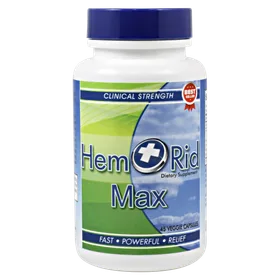
- HemRid Max supports the strength and integrity of hemorrhoidal veins, which may help reduce bleeding episodes over time*
Long-Term Prevention
Once bleeding has stopped, focus on preventing recurrence:
- Maintain daily fiber intake of 25-35 grams
- Stay consistently hydrated
- Exercise regularly to promote healthy bowel function
- Continue daily HemRid Max supplementation for ongoing vein support*
- Maintain proper bathroom habits (no straining, limited toilet time, footstool use)
When Hemorrhoid Bleeding Is Normal
In the context of known hemorrhoids, the following bleeding patterns are generally considered normal (not emergencies), though they still benefit from treatment:
- Small amounts of bright red blood on toilet paper after wiping
- A few drops of bright red blood in the toilet bowl after a bowel movement
- Occasional spotting that resolves within a few days of improved bowel habits
- Brief bleeding episodes that coincide with constipation or straining
- Bleeding that responds to conservative treatment (fiber, sitz baths, supplements)
When to Worry: Danger Signs
Seek medical evaluation promptly if you experience any of these warning signs:
Seek Same-Day or Next-Day Medical Evaluation
- Bleeding that persists for more than one week despite appropriate home treatment
- Increasing bleeding — Episodes are becoming more frequent or the amount of blood is increasing
- Blood mixed into the stool rather than on the surface
- Rectal bleeding without a known hemorrhoid diagnosis — Do not assume it is hemorrhoids
- Bleeding accompanied by significant pain (internal hemorrhoid bleeding should be painless)
- New rectal bleeding in anyone over age 45 who has not had a recent colonoscopy
Seek Immediate/Emergency Medical Attention
- Heavy bleeding — Filling the toilet bowl with blood, soaking through pads, or passing large blood clots
- Dark red, maroon, or black blood — Suggests bleeding from higher in the digestive tract
- Black, tarry stools (melena) — Indicates upper GI bleeding and requires urgent evaluation
- Bleeding with dizziness, lightheadedness, or fainting — May indicate significant blood loss
- Bleeding with fever — May indicate infection
- Bleeding with severe, sudden abdominal pain — Could indicate a serious abdominal condition
Hemorrhoid Bleeding vs Other Causes
Anal Fissure Bleeding
- Usually bright red, like hemorrhoid bleeding
- Accompanied by sharp, tearing pain during bowel movements
- Blood often appears as streaks on the stool surface
- Typically smaller amounts than hemorrhoid bleeding
Colorectal Polyp or Cancer Bleeding
- May be bright red (if low in the colon) or darker red (if higher)
- Often intermittent and unpredictable
- May be accompanied by changes in bowel habits
- Blood may be mixed into the stool
- May cause iron deficiency anemia over time
- Risk increases with age and family history
Inflammatory Bowel Disease (IBD) Bleeding
- Often accompanied by diarrhea, abdominal pain, and urgency
- Blood and mucus mixed with stool
- May be associated with weight loss and fatigue
- Chronic and recurring pattern
Diverticular Bleeding
- Typically sudden onset of painless, large-volume bright red bleeding
- Often stops spontaneously
- More common in older adults
- Can be dramatic and alarming
The Importance of Diagnosis
If you have never been formally diagnosed with hemorrhoids by a healthcare provider, do not assume that rectal bleeding is from hemorrhoids. While hemorrhoids are the most likely cause, a proper medical evaluation is important to:
- Confirm the diagnosis — Ensure your symptoms are actually from hemorrhoids
- Rule out other conditions — Particularly important for patients over 45
- Determine severity — Internal hemorrhoids range from Grade I to Grade IV, and treatment varies by grade
- Establish a baseline — So that future changes in bleeding pattern can be properly assessed
- Guide treatment — Your doctor can recommend the most appropriate treatment for your specific situation
Iron Deficiency and Chronic Hemorrhoid Bleeding
Chronic, repeated hemorrhoid bleeding — even in small amounts — can lead to iron deficiency anemia over time. Symptoms of anemia include:
- Fatigue and weakness
- Pale skin
- Shortness of breath with mild exertion
- Dizziness
- Cold hands and feet
- Brittle nails
- Unusual cravings (pica)
If you experience these symptoms alongside chronic hemorrhoid bleeding, ask your doctor to check your iron levels with a complete blood count (CBC) and iron studies. Iron supplementation may be necessary while you work on resolving the hemorrhoid bleeding.
Key Takeaways
- Hemorrhoid bleeding is typically bright red, painless (for internal hemorrhoids), and occurs during or after bowel movements
- Most hemorrhoid bleeding responds well to fiber supplementation, hydration, sitz baths, and vein health support
- Dark blood, blood mixed into stool, heavy bleeding, and bleeding with fever are warning signs requiring medical attention
- Never assume rectal bleeding is from hemorrhoids without a medical diagnosis — especially if you are over 45
- Chronic hemorrhoid bleeding can cause iron deficiency anemia and should be actively treated
- Prevention through consistent fiber intake, hydration, and healthy bathroom habits is the best long-term strategy
*These statements have not been evaluated by the Food and Drug Administration. This product is not intended to diagnose, treat, cure, or prevent any disease.
What actually works for hemorrhoids
If you're dealing with pain right now, a topical cream is a great first step — it numbs the area for fast relief. To actually get rid of the problem, HemRid Max works from the inside out to strengthen vein walls and reduce swelling. The best results come from doing both.