Strongest Hemorrhoid Cream: Lidocaine, Steroids, and Label Limits
When a hemorrhoid flare is burning, itching, or swollen, it is normal to look for the strongest cream you can find. The problem is that "strongest" can mean several different things: more numbing, a steroid, a shrinkage claim, a thicker barrier, or simply louder packaging. Those are not interchangeable, and the wrong strong product can irritate already sensitive skin.
A stronger label is not automatically a better match. A numbing cream can help external burning or tenderness for a short window. A steroid may help itching tied to inflammation, but it is usually meant for limited use. A barrier can protect raw skin from rubbing. None of those fix constipation, repeated straining, heavy bleeding, severe pain, fever, drainage, black stool, or a hard sudden lump that should be checked.
Quick answer
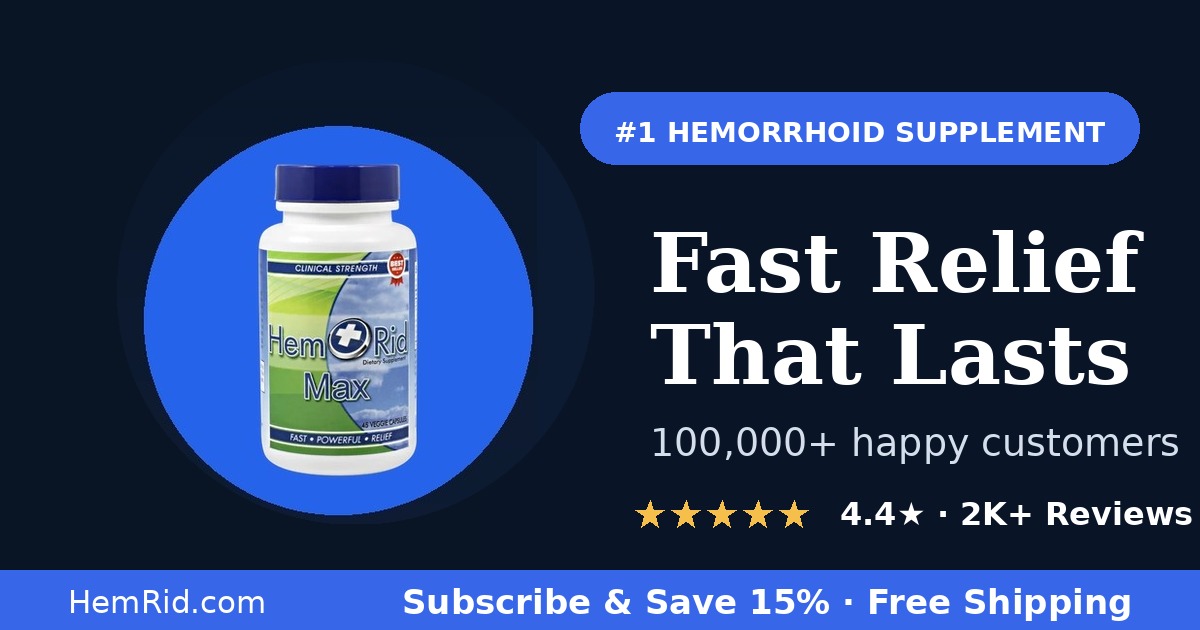
Choose a hemorrhoid cream by active ingredient and symptom, not by the biggest strength claim on the box. If the outside skin is burning, stinging, or tender, HemRid Lidocaine Cream is the most direct HemRid topical fit because lidocaine temporarily numbs external discomfort. If itching is the main issue, short-use hydrocortisone may fit some shoppers, but the label matters. If hard stools or straining keep triggering flares, compare bowel-habit changes and HemRid Max. If you want topical comfort plus recurring-flare support, compare the Complete Care Bundle.
What "strongest" usually means on a hemorrhoid label
Shoppers often use the word strongest to mean "the one that will calm this down fastest." Product labels do not work that cleanly. They usually describe an active ingredient and a use limit.
| Label claim or ingredient type | What it may help | What it does not solve |
|---|---|---|
| Lidocaine or another topical anesthetic | Temporary numbing for external burning, itching, or tenderness | Constipation, internal pressure, bleeding, or the cause of repeat flares |
| Hydrocortisone | Itching or inflammation for limited use when the label fits | Long-term daily use, severe pain, infection, or unexplained bleeding |
| Phenylephrine-style shrinkage claims | Temporary local symptom relief for some products | Bowel habits, clots, prolapse, or recurring pressure |
| Petrolatum, zinc oxide, or other barriers | Raw skin, moisture, and friction around the anus | Deep rectal pain, bleeding, or swollen tissue inside the rectum |
| Supplements or fiber support | Stool consistency and pressure patterns over time | Fast numbing relief for sore external skin |
That is why the "strongest" option can still feel useless if it does not match the symptom. If your main problem is raw skin from wiping, a high-strength steroid may irritate things. If the problem is a painful external flare, a barrier alone may not give enough comfort. If the flare keeps returning after hard stools, another tube of cream may only cover the surface.
When a numbing cream makes sense
A topical anesthetic is most useful when the outside area is burning, stinging, itchy, or tender and you need temporary comfort. Lidocaine is not meant to make hemorrhoids disappear, shrink every lump, or fix bowel pressure. Its job is narrower: it numbs irritated external skin for a limited window.
That is where HemRid Lidocaine Cream fits best. It is a topical comfort product, not a diagnosis and not a reason to ignore bleeding or severe pain. Use it exactly as the label says. Do not stack it with another lidocaine product just because both packages use different wording.
If the area is also raw from wiping, numbing can help you stop the itch-scratch-wipe cycle, but cleanup still matters. Gentle rinsing, patting dry, softer paper, and avoiding fragranced wipes can make a real difference. For that comparison, see Hemorrhoid Wipes vs Cream.
When hydrocortisone is the better fit
Hydrocortisone can be useful when itching or inflammation is the main problem. The catch is that steroid creams are not meant to become an open-ended daily habit around thin, irritated anal skin. Many over-the-counter labels limit how long you should use them and tell you when to stop and ask a doctor.
Use hydrocortisone only when the label fits your situation. Do not combine multiple steroid products. Do not keep escalating strength if the itch returns every time you stop. That usually means you need to look at wiping, moisture, stool consistency, diet, toilet time, or a different condition that feels similar.
For a cleaner ingredient comparison, read Lidocaine Cream vs Hydrocortisone for Hemorrhoids and Hydrocortisone for Hemorrhoids: How Long to Use It Safely.
Why stronger creams can backfire
More product is not always safer. Applying too often can irritate skin, especially when the product has a steroid, fragrance, alcohol, menthol, or several active ingredients. Switching between creams, wipes, pads, and ointments in the same day also makes it hard to know what helped and what made the area worse.
A strong cream can also hide the wrong problem for a while. Hemorrhoids can cause itching, pain, swelling, and bleeding, but other anal and rectal problems can overlap. You do not need to panic over every flare. You do need to take red flags seriously.
Get medical guidance if you have rectal bleeding, blood mixed into stool, black stool, severe pain, fever, drainage, dizziness, a hard sudden lump, symptoms after a new medication, or symptoms that keep returning despite basic care. Persistent bleeding or pain needs a doctor, not a supplement.
Match the cream to the flare
Use the most obvious symptom to choose the next step.
| What you feel right now | Better first move | HemRid fit |
|---|---|---|
| External burning, stinging, or tenderness | Temporary numbing plus gentle cleanup | HemRid Lidocaine Cream |
| Itching with mild inflammation | Short-use hydrocortisone if the label fits | Compare ingredient guidance before stacking products |
| Raw skin from wiping, sweat, or diarrhea | Gentler cleaning, drying, and possibly a barrier | Pair topical comfort with cleanup changes |
| Flares that return with hard stools or straining | Fiber, fluids, bathroom timing, and pressure support | HemRid Max may fit the recurring-flare conversation |
| Surface pain plus repeat flare pattern | Topical comfort and internal support | Complete Care Bundle |
| Bleeding, severe pain, fever, drainage, black stool, or sudden swelling | Medical guidance first | Do not treat this as a shopping problem |
What if the cream is not working?
If a cream helped for a day and then the flare came back, the cream may not be the failure. The trigger may still be there. Hard stools, diarrhea, long bathroom sessions, sitting too long, heavy lifting, pregnancy, postpartum changes, and low fiber intake can keep pressure on the area.
The NIDDK hemorrhoids overview describes hemorrhoids as swollen veins around the anus or lower rectum. Its symptoms and causes page names constipation, diarrhea, straining, sitting on the toilet too long, pregnancy, aging, and low fiber intake as common contributors. That matters because a cream can calm skin and still leave the pressure pattern untouched.
If flares keep returning, compare Hemorrhoids Keep Coming Back, Do Hemorrhoid Supplements Work?, and HemRid Max vs Hemorrhoid Creams. HemRid Max is not fast numbing relief, but it may be relevant when the repeat pattern is tied to bowel habits, pressure, and daily support.
What if it feels like a hemorrhoid popped or burst?
Do not try to pop a hemorrhoid, and do not use a strong cream to numb yourself into squeezing, cutting, or poking the area. If it feels like a hemorrhoid popped or burst, the practical question is what you are seeing now: a small smear of bright red blood, heavier bleeding, drainage, severe pain, dizziness, fever, black stool, or blood mixed into stool.
A thrombosed external hemorrhoid can sometimes bleed if the skin over it breaks. That is not the same as a safe pressure release you should recreate at home. Use gentle pressure for minor bleeding, keep the area clean, and get medical care for heavy bleeding, worsening pain, fever, pus, dizziness, black stool, blood mixed into stool, or repeated bleeding. For the full safety discussion, read Can Hemorrhoids Pop? and Bleeding Hemorrhoids.
Simple buying rules
Read the Drug Facts label before you buy. Look for the active ingredient, directions, age limits, warnings, and how many days the product is meant to be used. If two products share the same active ingredient, do not use both unless a clinician tells you to.
Avoid anything that makes the area burn more. Stop using fragranced wipes or harsh pads if they sting. Do not scratch if you can help it. Scratching irritated anal skin can create tiny tears and keep the itch going.
If you are pregnant, postpartum, breastfeeding, taking blood thinners, managing a chronic condition, or using prescription rectal medication, ask a clinician or pharmacist before adding a stronger over-the-counter product. That is especially important with bleeding, severe pain, or symptoms that do not improve.
Source notes
This update was checked against the NIDDK hemorrhoids overview, NIDDK symptoms and causes, NIDDK treatment information, MedlinePlus hemorrhoids, Cleveland Clinic hemorrhoids, and Harvard Health's hemorrhoids overview. I used those sources for symptom boundaries, self-care limits, bowel-habit guidance, and red-flag language.
Bottom line
The best cream is the one that matches the symptom. Use numbing cream for temporary external burning or tenderness. Use hydrocortisone carefully when itching and inflammation are the issue. Use cleanup and barrier changes when raw skin is driving the flare. Look beyond creams when hard stools, straining, or repeat pressure keep bringing symptoms back.
Frequently Asked Questions
What is the strongest hemorrhoid cream?
There is no single strongest hemorrhoid cream for every symptom. Lidocaine products focus on temporary numbing, hydrocortisone products may help itching or inflammation for limited use, and barrier products protect irritated skin from friction. The right choice depends on the active ingredient and the symptom.
Is stronger hemorrhoid cream always better?
No. Stronger packaging can still be the wrong fit if the symptom is caused by wiping, moisture, hard stools, straining, or another rectal problem. Using too much product or stacking similar active ingredients can irritate skin or hide a problem that needs medical care.
When does lidocaine cream make sense for hemorrhoids?
Lidocaine cream makes the most sense for temporary external burning, stinging, itching, or tenderness. It is not meant to make hemorrhoids disappear, fix constipation, or replace medical care for bleeding, severe pain, fever, drainage, black stool, or sudden swelling.
When should I stop using hemorrhoid cream and ask a doctor?
Ask for medical guidance if you have rectal bleeding, blood mixed into stool, black stool, severe pain, fever, drainage, dizziness, sudden swelling, a hard lump, or symptoms that keep returning despite basic care.
References
- NIDDK hemorrhoids overview: https://www.niddk.nih.gov/health-information/digestive-diseases/hemorrhoids
- NIDDK symptoms and causes: https://www.niddk.nih.gov/health-information/digestive-diseases/hemorrhoids/symptoms-causes
- NIDDK treatment information: https://www.niddk.nih.gov/health-information/digestive-diseases/hemorrhoids/treatment
- MedlinePlus hemorrhoids: https://medlineplus.gov/hemorrhoids.html
- Cleveland Clinic hemorrhoids: https://my.clevelandclinic.org/health/diseases/15120-hemorrhoids
- Harvard Health hemorrhoids overview: https://www.health.harvard.edu/diseases-and-conditions/hemorrhoids_and_what_to_do_about_them
Ready for relief?
Try HemRid Max — fast-acting hemorrhoid relief from the inside out.
Try HemRid Max →