Do Hemorrhoid Supplements Work? Relief, Fiber, and Realistic Expectations
Hemorrhoid supplements can make sense when the job is recurring support, not same-hour pain relief. If you are bleeding, dealing with severe anal pain, or worried that a hemorrhoid popped or burst, a capsule is not the answer. If your flares keep showing up around hard stool, straining, travel, long toilet sits, dehydration, or repeat pressure, then an internal support routine is at least worth comparing.
The useful split is simple. Fiber and fluids help the stool problem. HemRid Lidocaine Cream helps short-term outside burning, stinging, soreness, or tenderness. HemRid Max fits the internal-support side for familiar repeat flares. The Complete Care Bundle makes sense when you want topical comfort for bad days and internal support between flares.
Persistent bleeding or pain needs a doctor, not a supplement.
Do not use supplements to explain away rectal bleeding, black stool, dizziness, fever, pus, drainage, unexplained weight loss, or a hard painful lump that is getting worse. Those are reasons to get medical guidance.
Quick answer
Hemorrhoid supplements may help as part of a daily routine for recurring flares, especially when bowel habits and pressure keep setting off symptoms. They do not numb pain, shrink a painful external lump overnight, stop bleeding, diagnose rectal symptoms, or replace fiber when stool is hard.
NIDDK describes hemorrhoids as swollen veins around the anus or lower rectum, and its treatment guidance includes fiber, fluids, avoiding straining, topical medicines, and procedures when needed. MedlinePlus lists rectal pain, itching, and bleeding as symptoms, which is why the next step needs to match what is actually happening.
| What is happening | Supplement fit | Better first step |
|---|---|---|
| Hard stool or straining | Possible add-on | Fiber, fluids, shorter toilet sits |
| Burning or tender outside skin | Limited | Label-directed topical comfort such as HemRid Lidocaine Cream |
| Flares keep coming back | More relevant | HemRid Max plus bowel-habit checks |
| Low-fiber diet | Partial | Fix fiber intake before expecting a capsule to carry the routine |
| Bleeding, fever, severe pain, drainage, or black stool | Wrong tool | Get medical guidance |
What a supplement can realistically help
A hemorrhoid supplement is not a rescue product. It belongs in the slower routine category. That means it may support consistency around recurring flares, stool comfort, and pressure triggers, but it should not be treated like a numbing cream or a cure.
That slower job can still matter. Flares often repeat because the same triggers keep hitting the area: hard bowel movements, straining, sitting too long, wiping irritation, low water intake, lifting pressure, coughing, diarrhea, or travel. If you only treat the outside discomfort after each flare, the trigger can stay untouched.
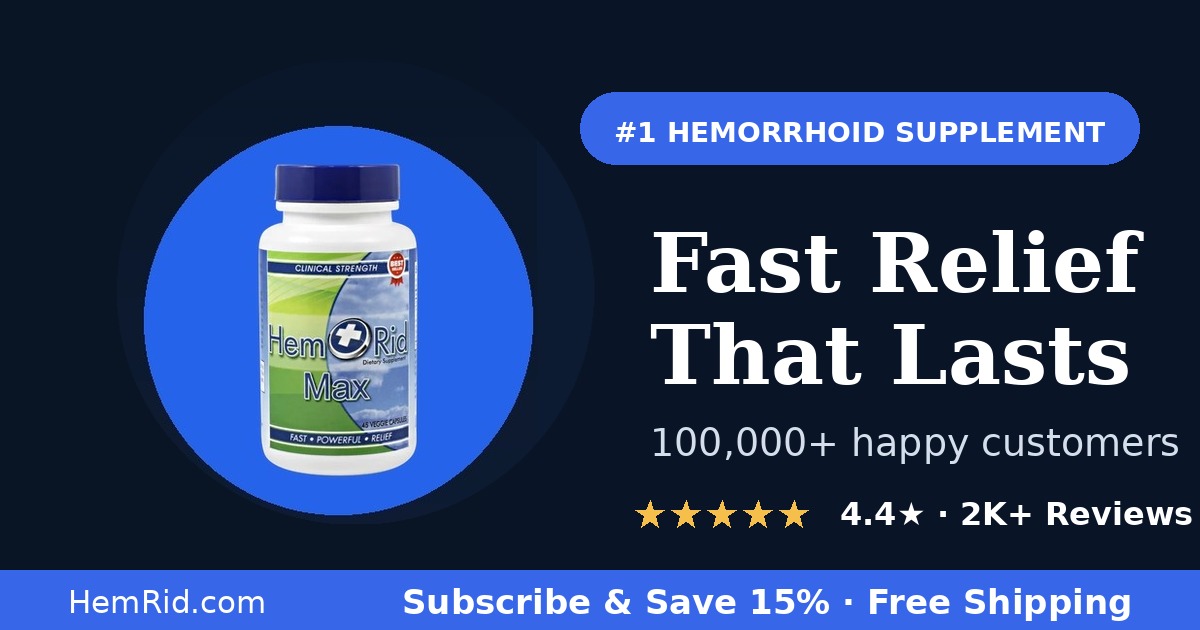
HemRid Max is the HemRid product to compare for this internal-support role. It is not for emergency symptoms. It is not a laxative. It is not a replacement for fiber, fluids, movement, and a less stressful bathroom routine. If you want to inspect the formula before buying, read HemRid Max Ingredients and compare the label with your medications, pregnancy status, chronic conditions, and surgery plans.
What a supplement will not do
A supplement will not numb raw skin. If the area burns when you sit, stings after wiping, or feels tender on the outside, topical comfort is the more direct category. HemRid Lidocaine Cream fits short-term external discomfort when used as directed.
A supplement also will not tell you why you are bleeding. Bright red blood can happen with hemorrhoids, but it can also come from fissures, inflammation, infection, polyps, or other bowel problems. Cleveland Clinic notes that rectal bleeding and severe pain deserve evaluation. Do not keep adding products if bleeding is heavy, repeated, dark, mixed into stool, or paired with dizziness.
It also will not make a thrombosed lump disappear on command. If the outside lump is hard, very painful, or getting worse, read Thrombosed Hemorrhoid and get care if symptoms are severe or changing quickly.
Supplements versus fiber
If stool is hard, dry, or painful to pass, fiber usually comes before a hemorrhoid supplement. Fiber helps stool hold water and pass more easily, which can reduce straining. The NIDDK constipation treatment page points to fiber, fluids, and regular bowel habits for constipation care.
That does not mean fiber fixes everything. Fiber can cause bloating or discomfort if you jump too fast, and it will not calm burning skin the way a topical product can. Add it gradually, drink enough fluid, and watch whether bowel movements get easier. If fiber makes constipation worse, slow down and ask a clinician or pharmacist what fits your situation.
For a closer comparison, read Hemorrhoid Supplements vs Fiber. The short version: fiber handles the stool side first, while a supplement belongs later if flares keep returning after the basics are more consistent.
Supplements versus cream
Creams and supplements solve different problems. Cream works on the surface. Supplements work as part of an internal routine. If the main symptom is burning, itching, soreness, or irritated outside skin, cream is usually the faster comparison. If the issue keeps repeating after hard stool, long toilet sits, or straining, internal support may be worth adding.
For the full category split, read Hemorrhoid Cream vs Supplement. If you want both sides in one HemRid order, compare the Complete Care Bundle. That keeps the jobs separate: topical comfort for outside symptoms and HemRid Max for internal support.
Avoid stacking several products just because symptoms feel urgent. Read labels. Do not duplicate active ingredients. Ask a clinician before using supplements if you are pregnant, breastfeeding, taking blood thinners, managing liver or kidney disease, taking daily prescriptions, or preparing for surgery.
When HemRid Max may fit
HemRid Max may fit when flares keep coming back and you want a hemorrhoid-focused internal support product. It makes the most sense when you already understand the basics: keep stool softer, avoid straining, limit toilet time, clean gently, and do not ignore bleeding or severe pain.
It may be worth comparing if your pattern looks familiar. You have a hard bowel movement, strain, feel pressure, wipe more than usual, and then spend the next few days dealing with swelling, irritation, or tenderness. In that setting, relying only on cream after each flare may feel incomplete.
If you are comparing supplement options, read Best Hemorrhoid Pills, Hemorrhoid Supplements That Work, and Hemorrhoid Supplement Ingredients. If the same flare keeps returning, Hemorrhoids Keep Coming Back is the better trigger check.
If you are worried it popped or burst
Searches about supplements often overlap with panic searches after bleeding. If it feels like a hemorrhoid popped or burst, do not squeeze the area and do not try to drain a lump at home. Minor bright red spotting can happen with irritated hemorrhoid tissue, but that does not make every bleeding episode safe.
Use gentle pressure for minor spotting, clean with water, pat dry, and watch what happens next. Get medical care if bleeding is heavy, keeps coming back, is dark, is mixed into stool, or comes with dizziness, fever, pus, drainage, severe pain, or a hard lump that is worsening.
For that exact fear, read Can Hemorrhoids Pop or Burst?. Plain words like pop and burst are useful here because that is usually how the worry shows up. The safe answer is direct: do not squeeze it, and do not use a supplement as the response to risky bleeding.
A safer way to choose
Match the next step to what is bothering you right now. For fast outside burning, compare a topical product. For hard stool, fix fiber, fluids, and toilet habits first. For recurring flares after those basics are in place, compare HemRid Max or another internal support supplement. For bleeding, severe pain, fever, drainage, black stool, dizziness, or a changing hard lump, get checked.
Harvard Health's hemorrhoid self-care guidance emphasizes fiber, fluids, and avoiding prolonged toilet sitting for routine cases. NHS piles advice also keeps self-care tied to symptoms and when to seek help. That is the right frame for supplements too. They can support a routine, but they should not distract from the thing your body is telling you.
Bottom line
Hemorrhoid supplements can help when expectations are realistic. They fit recurring-support decisions better than urgent pain decisions. If your stool is hard, start there. If your skin hurts now, compare topical comfort. If the same flare keeps returning, HemRid Max may be worth a closer look.
If bleeding repeats, pain gets severe, fever or drainage appears, or a hard lump gets worse, stop shopping and get medical care.
Frequently Asked Questions
Do hemorrhoid supplements work?
They may help as part of a recurring support routine, especially when hard stool, straining, or repeat pressure is part of the flare. They do not provide fast numbing relief or replace medical care for red flags.
Are hemorrhoid supplements better than fiber?
Not when stool is hard or your diet is low in fiber. Fiber, fluids, and better toilet habits usually come first. Supplements make more sense after those basics are addressed.
Can HemRid Max stop hemorrhoid pain right away?
No. HemRid Max is an internal support supplement. For immediate outside burning or tenderness, compare a topical option such as HemRid Lidocaine Cream.
Should I use a supplement if a hemorrhoid popped or burst?
Do not squeeze or drain the area. Minor bright red spotting can happen, but heavy, repeated, dark, or painful bleeding needs medical guidance instead of another supplement.
When should I see a doctor instead of using supplements?
Get medical guidance for repeated bleeding, black stool, blood mixed into stool, dizziness, fever, pus, drainage, severe pain, unexplained weight loss, or a hard painful lump that gets worse.
References
- NIDDK hemorrhoids overview: https://www.niddk.nih.gov/health-information/digestive-diseases/hemorrhoids
- NIDDK hemorrhoid treatment information: https://www.niddk.nih.gov/health-information/digestive-diseases/hemorrhoids/treatment
- MedlinePlus hemorrhoids: https://medlineplus.gov/hemorrhoids.html
- NIDDK constipation treatment: https://www.niddk.nih.gov/health-information/digestive-diseases/constipation/treatment
- Cleveland Clinic hemorrhoids overview: https://my.clevelandclinic.org/health/diseases/15120-hemorrhoids
- Harvard Health hemorrhoids self-care: https://www.health.harvard.edu/diseases-and-conditions/hemorrhoids_and_what_to_do_about_them
- NHS piles hemorrhoids: https://www.nhs.uk/conditions/piles-haemorrhoids/
Ready for relief?
Try HemRid Max — fast-acting hemorrhoid relief from the inside out.
Try HemRid Max →