Hemorrhoids Keep Coming Back: Why Flares Repeat and What to Change
If hemorrhoids keep coming back, the trigger is usually still in your week somewhere. It may be hard stool, straining, long toilet sits, heavy lifting, travel constipation, diarrhea, pregnancy pressure, or wiping that keeps the outside skin angry. Cream can calm the outside. A supplement may support a recurring routine. Neither one fixes a toilet habit or bowel pattern you keep repeating.
That is the first thing to check before buying another product. If the flare shows up after hard stool or a long bathroom session, work on stool softness and less straining. If it shows up after leg day or heavy bracing, adjust breathing, load, and recovery. If the main problem is burning, stinging, or tenderness on the outside, a topical numbing product may make more sense today than an oral supplement.
Persistent bleeding or pain needs a doctor, not a supplement. If bleeding is heavy, repeated, mixed into stool, or paired with black stool, dizziness, fever, pus, drainage, unexplained weight loss, sudden bowel habit changes, or a hard painful lump that keeps getting worse, stop treating it like a routine flare and get medical guidance. If it feels like a hemorrhoid popped or burst, those are normal words to use. What matters is what happened next: how much bleeding there is, whether pain is worsening, and whether signs of infection or clotting are present.
The NIDDK hemorrhoids overview describes hemorrhoids as swollen veins around the anus or lower rectum. Its treatment information puts fiber, fluids, bowel habits, and medical care near the center of relief. MedlinePlus lists pain, itching, swelling, and bleeding as common symptoms. Those sources all point back to the same boring but useful point: recurring flares usually need trigger control, not only stronger cream.
Quick answer
Hemorrhoids often keep coming back because the pressure or irritation that started them never changed. Common repeat triggers include constipation, hard stool, straining, low fiber intake, dehydration, diarrhea, sitting on the toilet too long, heavy lifting with breath-holding, pregnancy pressure, and aggressive wiping.
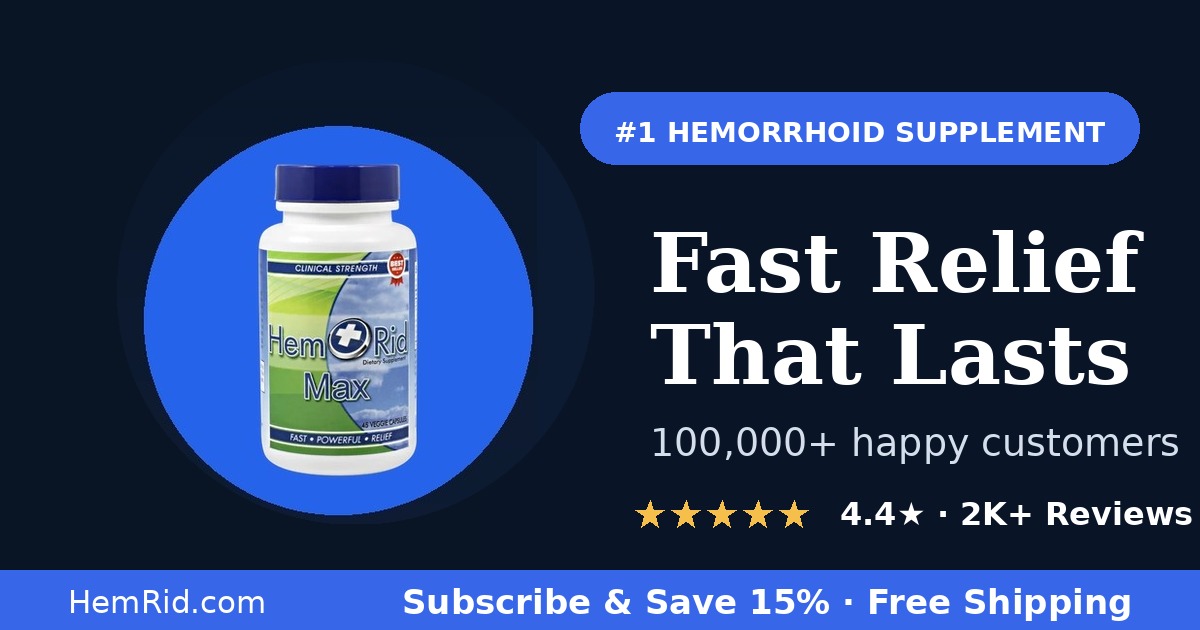
Use HemRid Lidocaine Cream when the outside area is burning, raw, stinging, or tender and you want temporary topical numbing. Use HemRid Max when you want daily internal support for familiar recurring flare-ups. Compare the Complete Care Bundle if you need both outside comfort and internal support, but do not use a bundle to delay care for bleeding, severe pain, fever, drainage, or a worsening lump.
| Repeat flare clue | Likely thing to check | Better next move |
|---|---|---|
| Flares after hard stool | Constipation, low fluid intake, low fiber, straining | Soften stool and shorten bathroom time |
| Flares after lifting | Breath-holding, bracing, pressure spikes | Exhale through effort and reduce load temporarily |
| Burning after wiping | Friction, overcleaning, irritated skin | Gentle cleaning and topical comfort |
| Swelling returns every few weeks | Multiple triggers stacking up | Track stool, training, sitting, travel, and diet together |
| Bleeding or severe pain repeats | Possible non-routine issue | Get medical guidance instead of guessing |
Why hemorrhoids come back after they calm down
Hemorrhoids can shrink enough to feel better, then flare again when the same pressure returns. A few pain-free days do not mean the underlying trigger is gone. If your stool gets hard again, if you strain again, or if you sit on the toilet scrolling for twenty minutes, the same vein and surrounding tissue can get irritated again.
Hard stool is a big one. When stool is dry or difficult to pass, you push more, sit longer, and create more pressure around the anus and lower rectum. That pressure can bring swelling, tenderness, itching, or bleeding back even if the last flare seemed finished.
Diarrhea can do it too. Loose stool and repeated wiping can irritate the outside skin. That can feel like the hemorrhoid itself is getting worse, but sometimes the skin around it is the part that is raw, itchy, or burning.
Bathroom habits that matter more than another cream
Start with the bathroom routine because it is often the easiest place to find the repeat trigger. Do not force a bowel movement. Do not sit and wait for one. Keep toilet time short, avoid straining, and leave if nothing is happening.
Fiber and fluids matter because stool that passes easily usually means less pressure. The Mayo Clinic hemorrhoids information includes high-fiber foods, fluids, and not straining among common self-care steps. Fiber can help, but adding too much too fast can cause gas or bloating, so it is smarter to build up gradually.
If hard stool is the main pattern, compare Hemorrhoids After Hard Stool and Hemorrhoid Supplements vs Fiber. If the flare keeps returning even when stool is soft, look at other triggers instead of blaming fiber alone.
Exercise, lifting, and pressure triggers
Some flares come back after workouts, especially heavy sets, deep squats, deadlifts, leg press, HIIT, or anything that makes you brace hard and hold your breath. The issue is usually pressure, not the exercise itself. Breath-holding during effort can drive pressure downward, and that can irritate tissue that was already sensitive.
You may not need to stop training completely. You may need a short reset: lighter load, slower reps, no grinding, exhale through the hard part, and avoid max-effort sets while symptoms are hot. If the flare started after squats, deadlifts, or leg day, read Hemorrhoids After Squats, Hemorrhoids After Deadlifts, and Hemorrhoids After Leg Day.
Exercise can also help indirectly when it supports regular bowel movements, weight control, and circulation. The problem is not movement. The problem is repeatedly stacking pressure on irritated tissue before it has a chance to settle.
When a topical product fits
A topical cream fits best when the outside skin is the loudest symptom. Burning, stinging, soreness, and tenderness are different from internal pressure or a pattern of repeat swelling. Lidocaine can temporarily numb external discomfort, which can be a big relief when wiping, sitting, or walking feels miserable.
Topical relief has limits. It does not make hard stool softer. It does not fix long toilet sits. It does not change workout bracing. If you keep using cream while the same trigger keeps happening, the flare may quiet down and then return again.
For cream comparisons, use HemRid Max vs Hemorrhoid Creams, Hemorrhoid Cream Not Working?, and Best Hemorrhoid Creams. The goal is to match the product to the symptom you have today, not to keep adding products until something sticks.
When daily internal support fits
Daily internal support fits better when flares are familiar, mild to moderate, and keep returning around the same triggers. HemRid Max is an oral supplement, so it belongs in the recurring-support lane. It is not a fast numbing cream and should not be used as a substitute for medical care.
Before using any supplement, check the Supplement Facts panel, serving directions, other ingredients, and warnings. Ask a clinician or pharmacist first if you take blood thinners, blood pressure medicine, diabetes medicine, heart medication, stimulants, or several daily medications. Ask first if you are pregnant, breastfeeding, managing kidney disease, managing liver disease, managing heart disease, or have a bowel condition.
The NCCIH supplement safety information is a useful reminder that natural does not automatically mean safe. If you are comparing ingredients, start with HemRid Max Ingredients and Hemorrhoid Supplement Ingredients.
A simple repeat-flare reset
For the next week, track the unglamorous stuff: stool hardness, water intake, fiber, time on the toilet, straining, wiping, workout pressure, travel, alcohol, spicy meals, and long sitting. Patterns are easier to fix when you can see them.
Then choose one or two changes instead of changing everything at once. Make stool easier to pass. Cut bathroom time. Stop straining. Use topical comfort for outside pain when needed. Consider daily internal support only if the flare pattern is familiar and product safety checks make sense for you.
Bottom line
Hemorrhoids keep coming back when the same pressure or irritation keeps returning. Calm the symptom, yes, but also find the repeat trigger. If bleeding, severe pain, fever, drainage, black stool, dizziness, or a worsening lump is part of the picture, get medical care instead of trying to out-shop the problem.
Frequently Asked Questions
Why do my hemorrhoids keep coming back?
Recurring hemorrhoids often come back because constipation, hard stool, straining, long toilet sitting, wiping irritation, diarrhea, lifting pressure, or another trigger is still happening.
Can hemorrhoid cream stop hemorrhoids from coming back?
Cream can temporarily calm outside pain, burning, itching, or tenderness. It does not fix hard stool, straining, bathroom habits, or workout pressure.
When does HemRid Max fit recurring hemorrhoids?
HemRid Max fits daily internal support for familiar recurring flare-ups. It is not a fast numbing cream and should not replace medical care for bleeding or severe pain.
What should I change first if hemorrhoids keep returning?
Start with stool softness, less straining, shorter toilet sits, gentler wiping, hydration, gradual fiber, and any workout bracing or heavy-lifting triggers.
When should recurring hemorrhoids be checked by a doctor?
Get medical guidance for heavy or repeated rectal bleeding, black stool, dizziness, fever, drainage, severe pain, sudden bowel habit changes, unexplained weight loss, or a hard painful lump.
References
- NIDDK hemorrhoids overview: https://www.niddk.nih.gov/health-information/digestive-diseases/hemorrhoids
- NIDDK hemorrhoid treatment information: https://www.niddk.nih.gov/health-information/digestive-diseases/hemorrhoids/treatment
- MedlinePlus hemorrhoids: https://medlineplus.gov/hemorrhoids.html
- Mayo Clinic hemorrhoids diagnosis and treatment: https://www.mayoclinic.org/diseases-conditions/hemorrhoids/diagnosis-treatment/drc-20360280
- NCCIH using dietary supplements wisely: https://www.nccih.nih.gov/health/using-dietary-supplements-wisely
Ready for relief?
Try HemRid Max — fast-acting hemorrhoid relief from the inside out.
Try HemRid Max →