
That Crawling Sensation Down There: Is It Hemorrhoids? (2026)
Prolapsed hemorrhoids sitting outside the body rub against clothing and skin. The mucosa of an internal hemorrhoid is designed to be in a moist, enclosed environment — when exposed to air and friction, it generates abnormal sensory signals interpreted as crawling or tingling.
A crawling or tickling sensation around the anus with hemorrhoids is most commonly caused by prolapsed hemorrhoid tissue, mucus discharge creating a moist environment that irritates nerve endings, or pruritus ani — a chronic anal skin condition frequently triggered by hemorrhoids. It is an uncomfortable but manageable symptom. The key is identifying whether it's coming from the hemorrhoid tissue itself, the surrounding skin, or (less commonly) pinworms.
Reviewed by the HemRid Medical Team
What Causes a Crawling Sensation With Hemorrhoids?
1. Prolapsed Hemorrhoids and Tissue Sensitivity
Prolapsed hemorrhoids sitting outside the body rub against clothing and skin. The mucosa of an internal hemorrhoid is designed to be in a moist, enclosed environment — when exposed to air and friction, it generates abnormal sensory signals interpreted as crawling or tingling.
2. Mucus and Moisture
Prolapsed hemorrhoids secrete mucus. Moisture moving and then drying on sensitive perianal skin can register as a crawling feeling.
3. Pruritus Ani
A condition of chronic anal itching frequently triggered by hemorrhoids. It involves sensitized nerve endings and a cycle of itch → scratch → inflammation → more itch. Pruritus ani affects up to 5% of the population; hemorrhoids are one of the most common underlying causes.
4. Pinworms (Worth Ruling Out)
If the crawling sensation is predominantly at night, accompanied by intense perianal itching, and present in households with children — consider testing for pinworms.
Treatment for Crawling Sensation
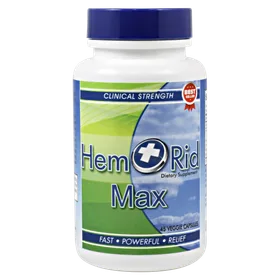
Looking for lasting hemorrhoid relief? HemRid Max works from the inside out — targeting the root cause of hemorrhoids with clinically-tested natural ingredients, not just masking symptoms. Try HemRid Max today →
Step 1: Treat the Hemorrhoids
Treating prolapse, mucus production, and swelling reduces the sensory abnormalities.
Step 2: Break the Moisture Cycle
- Cleanse area and dry thoroughly after bowel movements
- Apply a moisture barrier (zinc oxide paste or petroleum jelly)
- Wear breathable cotton underwear
Step 3: Treat Pruritus Ani Specifically
- Hydrocortisone 1% cream applied to the perianal skin twice daily
- Zinc oxide ointment as a moisture barrier
- Dietary check: Coffee, chocolate, citrus, spicy foods can worsen pruritus ani
HemRid Max supports vascular health and hemorrhoid comfort, reducing the prolapse and discharge that drives the crawling sensation.
References & Clinical Sources
Mechanism of medical hemorrhoid gel in relieving pruritus ani via inhibiting the activation of JAK2/STAT3 signaling pathway. Frontiers in Medicine, 2024. Treatment of intractable pruritus ani. Diseases of the Colon and Rectum, 1990. Pruritus ani. Postgraduate Medicine, 1987.
All sources verified via PubMed (National Library of Medicine).
Related Articles
- Why Do Hemorrhoids Smell?
- Essential Oils for Hemorrhoids: What Actually Works
- Best Sleeping Position for Hemorrhoids
- Is Coffee Bad for Hemorrhoids?
Frequently Asked Questions
Does scratching make it worse?
Yes — always. Scratching damages perianal skin, introduces bacteria, and intensifies the itch-scratch cycle.
Can diet changes reduce the crawling sensation?
Yes — eliminating common dietary triggers can significantly reduce symptoms within 1–2 weeks.
What actually works for hemorrhoids
If you're dealing with pain right now, a topical cream is a great first step — it numbs the area for fast relief. To actually get rid of the problem, HemRid Max works from the inside out to strengthen vein walls and reduce swelling. The best results come from doing both.