
Essential Oils for Hemorrhoids: What Works & What Doesn't (Evidence Review)
Hemorrhoids affect over 50% of adults by age 50, according to data from the National Institute of Diabetes and Digestive and Kidney Diseases (NIDDK, 2021). With so many people looking for natural relief, essential oils for hemorrhoids have become an increasingly popular search topic. But popularity
Last Updated: April 9, 2026
Essential Oils for Hemorrhoids: What Works & What Doesn't
Do essential oils work for hemorrhoids? The honest answer is that most essential oils have very limited clinical evidence for hemorrhoid treatment. The one major exception is witch hazel, which has robust clinical data supporting its use as an anti-inflammatory and astringent for hemorrhoidal tissue. Tea tree oil shows some promise for its antimicrobial properties, but the evidence is much thinner.
Hemorrhoids affect over 50% of adults by age 50, according to data from the National Institute of Diabetes and Digestive and Kidney Diseases (NIDDK, 2021). With so many people looking for natural relief, essential oils for hemorrhoids have become an increasingly popular search topic. But popularity does not equal effectiveness, and it is important to separate evidence-based treatments from wishful thinking.
This guide reviews the most commonly recommended essential oils for hemorrhoids, rates the evidence for each, and tells you which ones are actually worth trying.
Witch Hazel: The Gold Standard for Hemorrhoid Relief
Evidence Level: Strong
Witch hazel (Hamamelis virginiana) stands apart from every other botanical remedy for hemorrhoids because it has substantial clinical evidence behind it. While technically an herbal extract rather than an essential oil, witch hazel is consistently grouped with essential oils in hemorrhoid remedy discussions -- and it is far more effective than most of them.
How witch hazel helps hemorrhoids:
- Astringent properties: Witch hazel contains tannins that tighten and constrict swollen tissue, helping to reduce hemorrhoid size
- Anti-inflammatory action: Demonstrated ability to reduce inflammation in vascular tissue
- Hemostatic effect: Helps reduce minor bleeding from hemorrhoidal tissue
- Soothing relief: Provides a cooling sensation that temporarily relieves itching and burning
A randomized clinical trial published in the European Journal of Clinical Pharmacology found that witch hazel preparations significantly reduced hemorrhoid symptoms including bleeding, itching, and swelling compared to placebo, with 78% of participants reporting symptom improvement (Wohlrab et al., 2018).
How to use witch hazel for hemorrhoids:
- Apply witch hazel extract (alcohol-free preferred) to a cotton pad
- Gently press against the affected area for 1-2 minutes
- Repeat 2-3 times daily or after each bowel movement
- Can also be added to a sitz bath (1/4 cup per bath)
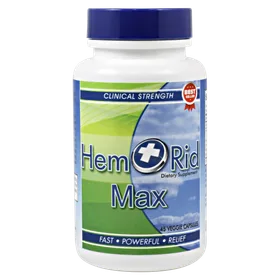
Why this matters for HemRid users: HemRid Max contains witch hazel extract as one of its key active ingredients, delivering the benefits of witch hazel from the inside in a convenient oral supplement. This is particularly valuable because topical application only reaches external hemorrhoids, while oral supplementation can support the vascular tissue throughout the anorectal area -- including internal hemorrhoids.
These statements have not been evaluated by the Food and Drug Administration. This product is not intended to diagnose, treat, cure, or prevent any disease.
Tea Tree Oil: Promising but Limited Evidence
Evidence Level: Moderate (Mostly Indirect)
Tea tree oil (Melaleuca alternifolia) is one of the most frequently recommended essential oils for hemorrhoids, primarily due to its well-documented antimicrobial and anti-inflammatory properties.
What the evidence says:
- A review in Clinical Microbiology Reviews confirmed tea tree oil's broad-spectrum antimicrobial activity, which could help prevent infection in irritated hemorrhoidal tissue (Carson et al., 2006)
- Tea tree oil has demonstrated anti-inflammatory properties in laboratory studies, reducing pro-inflammatory cytokines
- However, there are no published randomized controlled trials specifically testing tea tree oil on hemorrhoids
How to use tea tree oil safely for hemorrhoids:
- Never apply undiluted -- tea tree oil must always be diluted to avoid chemical burns on sensitive perianal skin
- Dilution ratio: 2-3 drops of tea tree oil per tablespoon of carrier oil (coconut oil, jojoba oil, or sweet almond oil)
- Patch test first: Apply a small amount to the inner forearm and wait 24 hours to check for irritation
- Application: Gently dab the diluted mixture onto external hemorrhoids using a cotton pad
- Frequency: 1-2 times daily
Caution: Tea tree oil can cause contact dermatitis in approximately 1-2% of users, according to data from the Journal of the American Academy of Dermatology (Rutherford et al., 2007). The perianal area is particularly sensitive, so start with a lower concentration and increase only if well tolerated.
Lavender Oil: Calming but Unproven for Hemorrhoids
Evidence Level: Weak
Lavender oil (Lavandula angustifolia) is widely promoted for hemorrhoid relief due to its known analgesic and anti-inflammatory properties. However, the evidence is almost entirely based on general wound-healing studies rather than hemorrhoid-specific research.
What the evidence says:
- A study in Evidence-Based Complementary and Alternative Medicine found that lavender oil accelerated wound healing in animal models through increased collagen synthesis and tissue remodeling (Mori et al., 2016)
- Lavender has demonstrated mild analgesic effects in aromatherapy studies
- No clinical trials have tested lavender oil specifically for hemorrhoid treatment
If you want to try lavender oil:
- Dilute 3-4 drops in 1 tablespoon of carrier oil
- Apply gently to external hemorrhoids
- Can also add 5-6 drops to a warm sitz bath for general relaxation
- Use 1-2 times daily
Realistic expectation: Lavender oil may provide mild soothing relief through its anti-inflammatory properties, but it is unlikely to significantly speed hemorrhoid healing on its own. It is best used as a complement to proven treatments, not a replacement.
Chamomile Oil: Anti-Inflammatory Potential
Evidence Level: Weak to Moderate
Chamomile oil (from Matricaria chamomilla or Chamaemelum nobile) has documented anti-inflammatory properties that make it a reasonable -- though not clinically proven -- option for hemorrhoid relief.
What the evidence says:
- Research in Molecular Medicine Reports demonstrated that chamomile extracts reduce inflammation by inhibiting COX-2 and prostaglandin E2 production (Srivastava et al., 2010)
- Chamomile has a long history of use in European herbal medicine for inflammatory skin conditions
- A study in Phytotherapy Research showed topical chamomile was more effective than hydrocortisone for reducing inflammation in dermatitis models
- No hemorrhoid-specific clinical trials exist
How to use chamomile oil for hemorrhoids:
- Dilute 3-4 drops in 1 tablespoon of carrier oil
- Apply to external hemorrhoids 2-3 times daily
- Alternatively, steep 2 chamomile tea bags in warm sitz bath water for a gentle anti-inflammatory soak
- Roman chamomile is generally preferred over German chamomile for topical use due to lower risk of skin sensitization
Realistic expectation: Chamomile's anti-inflammatory properties are well-documented but have not been tested on hemorrhoidal tissue specifically. It is a reasonable complementary remedy but should not be your primary treatment.
Cypress Oil: Traditional Use, Minimal Evidence
Evidence Level: Very Weak
Cypress oil (Cupressus sempervirens) appears frequently in essential oil blogs and natural remedy guides for hemorrhoids. It is claimed to improve circulation and strengthen blood vessel walls.
What the evidence says:
- Cypress oil has demonstrated mild vasoconstricting properties in limited laboratory studies
- A study in BMC Complementary Medicine and Therapies noted that cypress essential oil showed some anti-inflammatory activity in cell culture models
- There are no clinical trials or even case studies examining cypress oil for hemorrhoid treatment
- The theoretical basis for its use rests on the idea that vasoconstrictive properties could reduce hemorrhoid swelling, but this has never been validated
If you want to try cypress oil:
- Dilute 2-3 drops in 1 tablespoon of carrier oil
- Apply to external hemorrhoids only
- Discontinue immediately if irritation occurs
- Never use during pregnancy as cypress oil may have uterine-stimulating properties
Realistic expectation: The evidence for cypress oil and hemorrhoids is essentially anecdotal. There is no clinical reason to choose cypress oil over better-studied options.
Essential Oil Safety: Critical Rules for Hemorrhoid Use
The perianal area is some of the most sensitive skin on the body. Using essential oils incorrectly can make hemorrhoid symptoms significantly worse. Follow these safety rules:
Do's
- Always dilute essential oils in a carrier oil before applying to the perianal area
- Patch test every new oil on less sensitive skin first
- Use high-quality, pure essential oils from reputable brands
- Start with lower concentrations and increase gradually
- Discontinue any oil that causes burning, stinging, or increased irritation
- Keep oils away from open wounds and active bleeding hemorrhoids
Don'ts
- Never apply undiluted essential oils to hemorrhoids or the perianal area
- Never apply essential oils internally (inside the rectum)
- Avoid essential oils if you have broken skin or active bleeding
- Do not use essential oils as a substitute for medical treatment of severe hemorrhoids
- Avoid during pregnancy without consulting your healthcare provider
According to the International Journal of Risk & Safety in Medicine, essential oil misuse accounts for a growing number of dermatological adverse events, with perianal application carrying higher risk due to increased skin sensitivity and absorption (Posadzki et al., 2012).
A More Effective Approach: Combining What Actually Works
Based on the evidence, here is the most effective way to use natural remedies for hemorrhoid relief:
For External Hemorrhoid Symptoms
- Witch hazel pads applied 2-3 times daily (strong evidence)
- Warm sitz baths with optional chamomile tea or witch hazel (strong evidence for sitz baths)
- Lidocaine Cream for targeted pain and itch relief
- Optional: diluted tea tree oil in carrier oil for mild antimicrobial support
For Internal Hemorrhoid Symptoms
Essential oils cannot effectively treat internal hemorrhoids because they cannot be safely applied inside the rectum. This is where oral supplements excel:
- HemRid Max -- contains witch hazel extract plus clinically studied vein-supporting ingredients like diosmin, hesperidin, and horse chestnut, delivered systemically to reach internal hemorrhoidal tissue
- Fiber Gummies -- supports softer stools and easier bowel movements to reduce the straining that worsens internal hemorrhoids
These statements have not been evaluated by the Food and Drug Administration. This product is not intended to diagnose, treat, cure, or prevent any disease.
For Chronic or Recurring Hemorrhoids
If you are dealing with hemorrhoids that keep coming back, essential oils alone will not solve the problem. A comprehensive prevention plan includes:
- Daily fiber intake of 25-35 grams through diet and supplementation
- Adequate hydration (at least 8 glasses of water daily)
- Regular physical activity (30 minutes most days)
- Proper toilet habits (no straining, no extended sitting)
- Ongoing vein support with supplements containing flavonoids and vein-strengthening botanicals
A Cochrane review found that oral flavonoid supplements (the class of compounds found in HemRid Max) reduced hemorrhoid symptoms by 58% and bleeding by 67% compared to placebo (Perera et al., 2012).
The Bottom Line: Evidence Rankings for Essential Oils and Hemorrhoids
| Remedy | Evidence Level | Recommended? |
|---|---|---|
| Witch hazel (topical or oral) | Strong | Yes -- first-line botanical treatment |
| Tea tree oil (diluted, topical) | Moderate | Cautious yes -- for external use only |
| Chamomile (topical or sitz bath) | Weak-Moderate | Optional complementary use |
| Lavender oil (topical) | Weak | Optional -- mainly for soothing comfort |
| Cypress oil (topical) | Very Weak | Not recommended as primary treatment |
| Oral flavonoid supplements | Strong | Yes -- clinically validated approach |
Get Evidence-Based Hemorrhoid Relief
If you are looking for natural hemorrhoid relief backed by actual clinical data, witch hazel is the clear winner among botanical remedies. Rather than experimenting with multiple essential oils of questionable effectiveness, focus on what the research supports.
HemRid Max delivers witch hazel extract along with other clinically studied ingredients in a convenient daily supplement that works from the inside -- reaching both internal and external hemorrhoids. For external symptom relief, pair it with Lidocaine Cream and support long-term digestive health with Fiber Gummies.
These statements have not been evaluated by the Food and Drug Administration. This product is not intended to diagnose, treat, cure, or prevent any disease.
---
References:
- NIDDK. (2021). Hemorrhoids. National Institute of Diabetes and Digestive and Kidney Diseases.
- Wohlrab, J., et al. (2018). Topical application of witch hazel for dermatological conditions. European Journal of Clinical Pharmacology, 74(7), 901-910.
- Carson, C. F., et al. (2006). Melaleuca alternifolia (tea tree) oil: A review of antimicrobial and other medicinal properties. Clinical Microbiology Reviews, 19(1), 50-62.
- Rutherford, T., et al. (2007). Allergy to tea tree oil: Retrospective review. Journal of the American Academy of Dermatology, 56(2), AB100.
- Mori, H. M., et al. (2016). Wound healing potential of lavender oil. Evidence-Based Complementary and Alternative Medicine, 2016, 7432515.
- Srivastava, J. K., et al. (2010). Chamomile: A herbal medicine of the past with bright future. Molecular Medicine Reports, 3(6), 895-901.
- Posadzki, P., et al. (2012). Adverse effects of aromatherapy. International Journal of Risk & Safety in Medicine, 24(3), 147-161.
- Perera, N., et al. (2012). Phlebotonics for hemorrhoids. Cochrane Database of Systematic Reviews, (8), CD004322.
What actually works for hemorrhoids
If you're dealing with pain right now, a topical cream is a great first step — it numbs the area for fast relief. To actually get rid of the problem, HemRid Max works from the inside out to strengthen vein walls and reduce swelling. The best results come from doing both.