
Want to Get Rid of Your Hemorrhoids? Here's the Step-by-Step Path
If you're asking "how do I actually get rid of my hemorrhoids?" — you're far from alone. Most people want a clear plan, not a pile of scattered tips. This guide lays out the treatment path as a ladder: start at the bottom, and only move up if you need to. Most people never have to climb very far.
If you're asking "how do I actually get rid of my hemorrhoids?" — you're far from alone. Most people want a clear plan, not a pile of scattered tips. This guide lays out the treatment path as a ladder: start at the bottom, and only move up if you need to. Most people never have to climb very far.
First, understand why they happen
Hemorrhoids are swollen veins caused by pressure and straining — most often from constipation, prolonged sitting, pregnancy, or heavy lifting. Getting rid of them means doing two things at once: relieving the current swelling, and removing the pressure that caused it so it doesn't come back.
Step 1: Home care (start here)
The majority of hemorrhoids resolve with consistent home care within one to two weeks:
- Warm sitz baths two to three times a day
- Cold compresses for swelling
- Fiber and water to keep stool soft and stop straining
- Gentle hygiene — no dry paper, no harsh soap
- Short toilet trips and no straining
If you do nothing else, do these consistently — they solve most cases.
Step 2: Over-the-counter relief
If you need faster symptom control, layer in OTC products:
- A lidocaine cream numbs pain on contact
- Witch hazel wipes soothe and reduce irritation
- Short-term hydrocortisone creams can reduce inflammation (follow the label — don't use for more than about a week)
These treat the surface and buy comfort while the deeper changes take effect.
Step 3: Support your veins from the inside
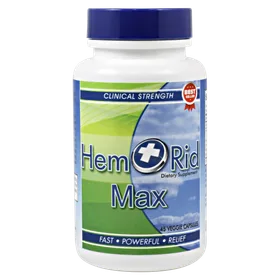
Home care and OTC products relieve symptoms, but they don't strengthen the weakened veins behind hemorrhoids — which is why so many people find their hemorrhoids keep coming back. A daily oral supplement like HemRid Max targets that root cause, using botanicals that support healthy vein tone and circulation from within. Pairing an inside-out supplement with the home care above is what helps many people finally stop the cycle. Not sure which product fits your symptoms? Our 60-second Relief Quiz builds you a personalized plan.
Step 4: Medical procedures (if needed)
If hemorrhoids are severe, persistent, or keep returning despite the steps above, a doctor can offer in-office options:
- Rubber band ligation — a band cuts off the hemorrhoid's blood supply
- Sclerotherapy — an injection shrinks the hemorrhoid
- Infrared coagulation — heat closes off the vein
- Surgery (hemorrhoidectomy) — reserved for large or severe cases
These are effective but usually only necessary for a minority of cases that don't respond to conservative treatment.
When to see a doctor now
Don't wait to climb the ladder if you have heavy or ongoing rectal bleeding, severe pain, a hard and very tender lump, or symptoms that keep getting worse. Bleeding especially should always be checked to rule out other conditions.
The bottom line
Getting rid of hemorrhoids isn't about one magic fix — it's about relieving the swelling and removing the pressure at the same time. Start with home care, add OTC relief and inside-out vein support, and escalate to a doctor only if you need to. For most people, the first three steps are enough.
These statements have not been evaluated by the FDA. This product is not intended to diagnose, treat, cure, or prevent any disease.
What actually works for hemorrhoids
If you're dealing with pain right now, a topical cream is a great first step — it numbs the area for fast relief. To actually get rid of the problem, HemRid Max works from the inside out to strengthen vein walls and reduce swelling. The best results come from doing both.