Hemorrhoid Supplements That Work: Fit, Safety, and When to Stop
If you are looking for hemorrhoid supplements that work, start with the part nobody wants to say out loud: a supplement can be useful and still be the wrong first move. First, name the job in front of you: irritated outside skin, difficult bowel movements, or a familiar flare that keeps returning every few weeks.
A supplement may fit when flares keep coming back around hard stools, straining, long toilet sits, travel, dehydration, or a bowel routine that keeps putting pressure on the area. It is a poor substitute for a numbing cream when the skin is burning right now. It is also a poor substitute for a clinician when bleeding, severe pain, fever, drainage, black stool, dizziness, or new bowel changes show up.
That difference matters. Internal support, fiber, stool habits, creams, wipes, and medical care all do different jobs. The safest buying decision is not "which bottle sounds strongest?" It is "what am I actually trying to fix?"
Persistent bleeding or pain needs a doctor, not a supplement.
Quick answer
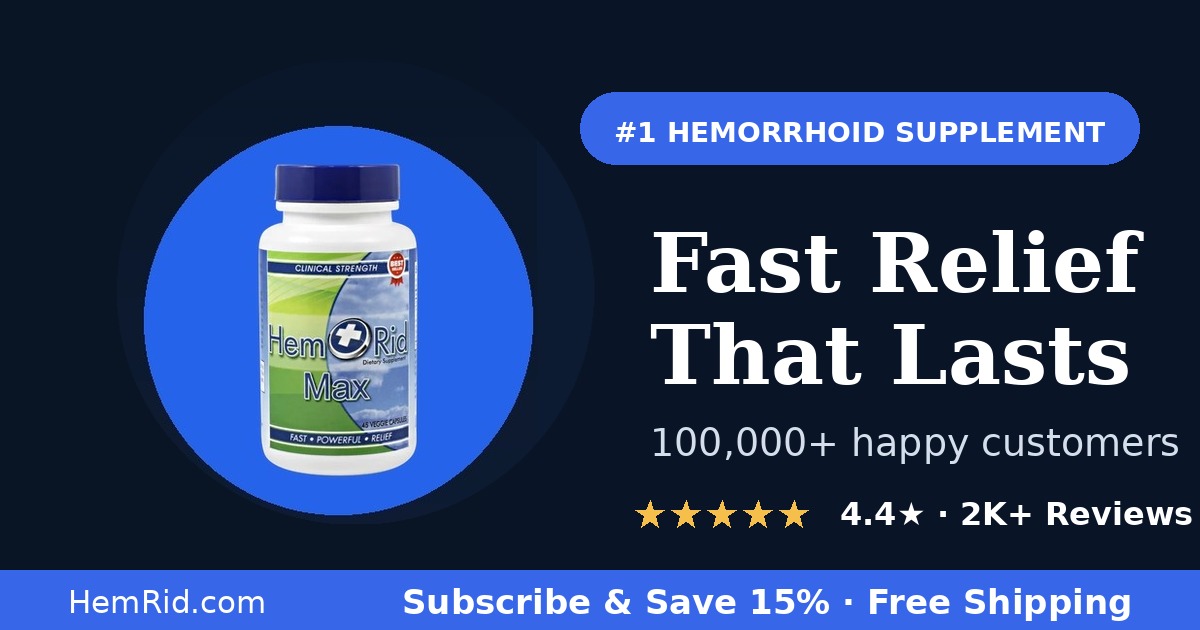
A hemorrhoid supplement is most likely to make sense when your symptoms are familiar and keep circling back with constipation, straining, pressure, or inconsistent bowel movements. HemRid Max may fit that daily internal-support lane. If the main issue is external burning, tenderness, or pain with wiping, HemRid Lidocaine Cream is the more direct temporary-comfort product. If you need both topical comfort and internal support, the Complete Care Bundle may be a better fit than guessing between categories.
A supplement should earn its place in your routine; it should not become a way to postpone care.
What "works" should mean
For hemorrhoid supplements, "works" should not mean instant relief, a cure, or a product that makes every symptom safe to ignore. A better standard is simpler: the product matches the problem, the label makes sense, and the routine around it gives your body a better chance to calm down.
NIDDK explains that hemorrhoids are swollen veins in the anus or lower rectum, and its treatment guidance focuses heavily on fiber, fluids, avoiding straining, and medical review when symptoms do not fit a routine flare. MedlinePlus also flags rectal bleeding, worsening pain, and symptoms that do not improve as reasons to seek care. That is the frame to use before buying anything.
If your main problem is hard stool, a supplement alone may not be enough. You may need more fiber from food, a fiber product, water, shorter bathroom time, and less straining. If your main problem is raw external skin, a pill will not numb that area the way a topical anesthetic can. If your main problem is bleeding, the first job is making sure it is actually from hemorrhoids.
Match the product to the problem
Use the symptom you can name today.
If you feel outside burning or tenderness, topical relief usually makes more sense first. A lidocaine cream can temporarily numb external discomfort. It does not fix constipation, and it does not make hemorrhoids disappear, but it can be a practical tool when wiping, sitting, or walking is uncomfortable.
If flares keep returning after hard stools or straining, internal support may matter more. That is where a product like HemRid Max may fit. It belongs beside bowel-habit work, not instead of it. Think softer stools, fewer long toilet sits, less pushing, steadier hydration, and a routine you can actually follow.
If you have both problems, splitting the jobs is often clearer than hunting for one magic product. Use topical comfort for surface symptoms and internal support for repeat-flare support, while still watching for warning signs.
Supplement fit table
| Situation | Better first step | Where HemRid may fit |
|---|---|---|
| Burning, itching, or tenderness on the outside | Temporary topical comfort and gentle cleaning | Lidocaine cream may fit short-term external discomfort |
| Flares after constipation or straining | Softer stools, shorter bathroom time, internal support | HemRid Max may fit a daily routine |
| Burning plus recurring pressure | Treat the outside symptom and the repeat trigger separately | Complete Care Bundle may fit both jobs |
| Bright red blood after a hard stool | Monitor only if mild and clearly linked to straining, but get checked if it repeats | Do not use a supplement to explain away bleeding |
| Severe pain, heavy bleeding, clots, fever, pus, drainage, black stool, or dizziness | Medical care | Product shopping should wait |
Ingredients and label checks
Read the label before you read the sales page. Look for serving size, directions, ingredient amounts, warnings, allergens, and whether the product is a supplement, a topical medicine, a wipe, or something else entirely. Categories matter because safety questions change by category.
A topical cream raises questions about broken skin, application limits, skin irritation, and external use. A supplement raises questions about medications, pregnancy, breastfeeding, allergies, stomach sensitivity, chronic conditions, and whether you are stacking multiple products with overlapping ingredients.
Do not double the serving because symptoms are annoying. Do not combine several hemorrhoid supplements unless a clinician has reviewed them. More ingredients can make it harder to know what helped and what caused a reaction.
When fiber is the real issue
You may look for hemorrhoid supplements when the more basic problem is stool consistency. If stools are hard, bulky in a bad way, or difficult to pass, the pressure keeps re-irritating the area. In that case, fiber and water may be more important than a specialty supplement.
NIDDK's treatment page discusses fiber and fluids because easier bowel movements can reduce straining. Harvard Health gives similar self-care guidance, including fiber, fluids, and avoiding long sits on the toilet. Fiber can cause gas or bloating if you add too much too fast. But if straining is the trigger, do not skip the stool problem and expect a supplement to carry the whole routine.
If you are comparing categories, read HemRid Max vs Fiber Supplements and Do Hemorrhoid Supplements Work?. Those two resources can help when you are trying to separate fiber support from other internal-support products.
When a cream is the better first buy
A supplement is not the fastest answer for surface pain. If the outside tissue burns after wiping, stings when you sit, or feels tender with movement, topical comfort may be the more honest first step. HemRid Lidocaine Cream is for temporary local numbing. That is a narrow job, but it is a real one.
This is where supplement expectations can go sideways. You buy internal support, then expect it to behave like a cream within minutes. That is not a fair test. A cream and a supplement do different work.
For more product-category comparison, see HemRid Max vs Hemorrhoid Creams, Hemorrhoid Wipes vs Cream, and Best Hemorrhoid Creams.
Safety checks before using a supplement
Ask a clinician before using a hemorrhoid supplement if you are pregnant, trying to become pregnant, postpartum, breastfeeding, taking blood thinners, scheduled for surgery, managing liver disease, kidney disease, heart disease, inflammatory bowel disease, diabetes, immune problems, or taking daily prescriptions. Also ask first if you have a history of supplement reactions or allergies to plant ingredients.
Stop and get medical advice if you notice a rash, dizziness, swelling, breathing trouble, severe stomach upset, itching that feels different from the hemorrhoid itch, or any reaction that worries you. Seek urgent care for trouble breathing, facial swelling, fainting, heavy rectal bleeding, severe rectal pain, fever, pus, drainage, black stool, blood mixed into stool, or a hard painful lump that is getting worse.
What if a hemorrhoid pops or bursts?
A hemorrhoid can seem to pop or burst because that is what it can look like when blood or fluid suddenly appears. Often, the story is pressure, irritated tissue, or a thrombosed external hemorrhoid that starts bleeding after pressure builds. Do not squeeze it, lance it, or try to drain it at home.
Small bright red streaks on toilet paper after straining can happen with hemorrhoids. Heavy bleeding, clots, black stool, dizziness, blood mixed into stool, severe pain, fever, pus, drainage, or bleeding that keeps coming back needs medical care. A supplement is not the answer to a bleeding event until the warning-sign question is settled.
A simple way to choose
Choose HemRid Max when the flare is familiar, recurring, and tied to pressure, straining, or bowel habits. Choose HemRid Lidocaine Cream when the outside area hurts right now and temporary numbing is the job. Consider the Complete Care Bundle when you need both paths and your symptoms are familiar enough for self-care.
If the flare feels new, severe, strange, or tied to bleeding you cannot clearly explain, stop shopping and get checked. That is not overreacting. It is how you avoid treating the wrong problem.
Bottom line
Hemorrhoid supplements that work are not magic pills. They are products that fit the right problem. Use them for internal support when recurring flares and bowel habits are part of the picture. Use topical products when the outside tissue needs temporary comfort. Keep the words pop and burst for what you actually see, but take bleeding seriously. If symptoms are severe, unusual, or not improving, the next step is medical care, not a bigger supplement stack.
Frequently Asked Questions
Do hemorrhoid supplements actually work?
They may help when recurring flares are tied to hard stools, straining, pressure, or bowel routine. They are not cures, and they do not replace medical care for bleeding, severe pain, fever, drainage, or symptoms that do not improve.
When does HemRid Max make sense?
HemRid Max may make sense when flares are familiar and keep returning around constipation, straining, or pressure. It fits internal support over time, especially beside fiber, fluids, shorter bathroom time, and less straining.
When is hemorrhoid cream better than a supplement?
A cream may be better when the main issue is external burning, itching, tenderness, or pain with wiping. A supplement will not numb irritated outside skin the way a topical anesthetic can.
Can I use a supplement and a cream together?
These paths can work together because they do different jobs. Read both labels, avoid stacking multiple medicated products, and ask a clinician first if you are pregnant, breastfeeding, taking blood thinners, using prescriptions, or managing a chronic condition.
What if a hemorrhoid pops or bursts?
Do not squeeze or drain it at home. Small bright red streaks after straining can happen with hemorrhoids, but heavy bleeding, clots, dizziness, black stool, severe pain, fever, pus, drainage, or blood mixed into stool needs medical care.
References
- NIDDK hemorrhoids overview: https://www.niddk.nih.gov/health-information/digestive-diseases/hemorrhoids
- NIDDK hemorrhoid treatment guidance: https://www.niddk.nih.gov/health-information/digestive-diseases/hemorrhoids/treatment
- MedlinePlus hemorrhoids: https://medlineplus.gov/hemorrhoids.html
- Cleveland Clinic hemorrhoids symptoms and care: https://my.clevelandclinic.org/health/diseases/15120-hemorrhoids
- Harvard Health hemorrhoids and self-care: https://www.health.harvard.edu/diseases-and-conditions/hemorrhoids_and_what_to_do_about_them
- American Family Physician hemorrhoids review: https://www.aafp.org/pubs/afp/issues/2018/0201/p172.html
Ready for relief?
Try HemRid Max — fast-acting hemorrhoid relief from the inside out.
Try HemRid Max →