Best Hemorrhoid Pills: What Should You Take First?
Hemorrhoid pills are usually a better fit for recurring flare-ups than for same-day burning, itching, or tenderness. If the outside area hurts right now, start with topical comfort. If flares keep coming back with hard stool, straining, or long toilet sessions, then a supplement may belong in the plan.
Persistent bleeding or pain needs a doctor, not a supplement.
Quick answer
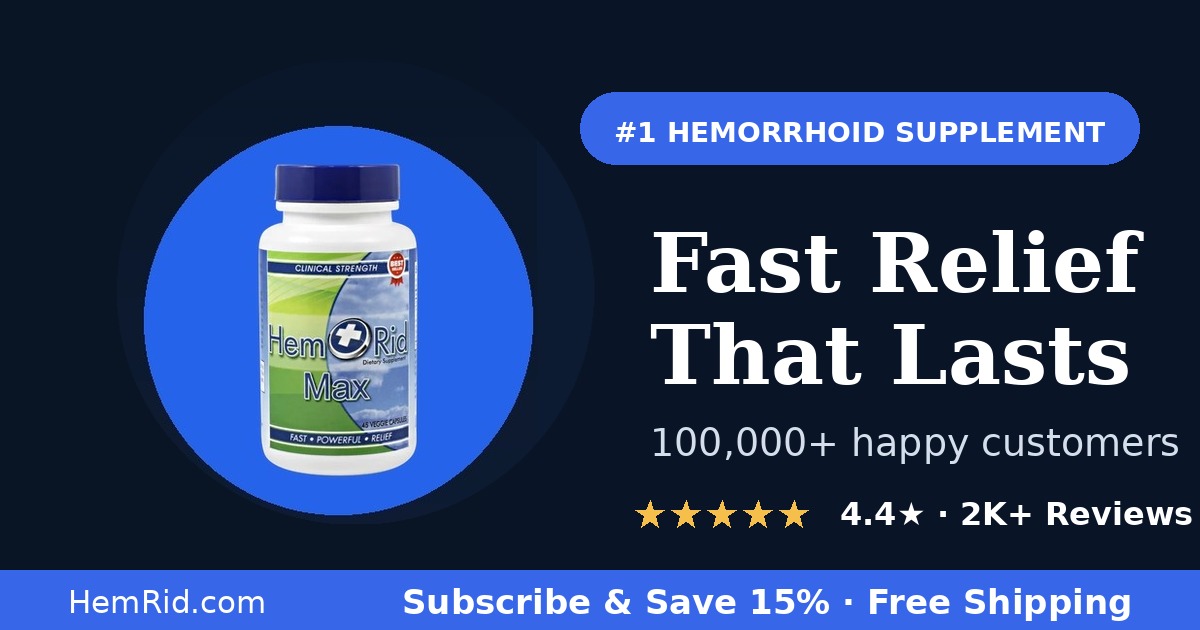
The best hemorrhoid pill is the one that fits the problem you are trying to solve. Fiber is usually the first oral option when stool is hard or bowel movements take effort. HemRid Max fits recurring flare-ups where internal support, pressure, and bowel habits are part of the picture. A cream such as HemRid Lidocaine Cream fits temporary outside burning, stinging, itching, or tenderness. The Complete Care Bundle makes sense only when you need both outside comfort and recurring internal support. Rectal bleeding, severe pain, fever, pus, drainage, black stool, blood mixed into stool, dizziness, or unexplained weight loss should stop the supplement comparison and move you toward medical care.
| What you notice | First oral option to consider | Better topical comparison | Safety check |
|---|---|---|---|
| Hard stool or straining | Fiber, fluids, toilet habit changes | Not the main need | Increase fiber gradually |
| Recurring flare-ups | HemRid Max or internal support | Cream only for outside comfort | Check medication interactions |
| Burning, itching, tenderness | Not a same-day pill problem | HemRid Lidocaine Cream | External use only |
| Mixed recurring and outside symptoms | Complete Care Bundle | Bundle only if both jobs are needed | Do not stack products blindly |
| Bleeding or severe pain | Do not self-treat with pills | Clinician evaluation | Rule out non-hemorrhoid causes |
Start with bowel movements, not the supplement shelf
When you compare hemorrhoid pills, start with a simpler question: are flares coming back because stool is hard, pressure is high, or toilet habits keep irritating the area?
The NIDDK hemorrhoid treatment information puts fiber, fluids, and avoiding straining at the center of home care. That matters because many pill comparisons skip the boring part. If bowel movements are hard or you sit on the toilet for a long time, another capsule may not fix the trigger.
A fiber product is often the first oral comparison when constipation or hard stool is the obvious issue. It is not glamorous, but it can make bowel movements easier to pass. Increase fiber slowly and drink enough fluids, because jumping too fast can cause gas, bloating, or cramps.
The timing matters too. If your stool changes for the better but the outside area still burns, the next comparison is topical comfort. If stool improves and flares still return, then internal support deserves a closer look. That simple order prevents you from buying three products for one symptom.
For a direct comparison, read HemRid Max vs Fiber Supplements. Fiber and HemRid Max are not identical products. Fiber mainly helps stool consistency. HemRid Max is positioned for recurring hemorrhoid support, so the fit depends on what keeps driving your flares.
When HemRid Max belongs in the comparison
HemRid Max makes the most sense when symptoms are recurring rather than isolated. If you keep getting flare-ups even after short-term topical products calm the outside area, it is reasonable to compare an internal-support supplement with your bowel-habit plan.
That does not make it an emergency product. HemRid Max is not a numbing cream, and it should not be used to explain bleeding, severe pain, or a rapidly worsening lump. Its role is the recurring-flare side of the routine, especially when pressure, hard stool, straining, or long toilet time are part of the story.
If you want the ingredient-level version, read HemRid Max Ingredients. If you take daily medication or have a medical condition, check HemRid Max Side Effects and ask a clinician before adding a supplement.
When a cream should come before pills
If your main problem is outside burning, itching, stinging, or tenderness, a pill is usually the wrong starting point. You are dealing with surface discomfort. A topical product can target that area more directly.
HemRid Lidocaine Cream fits temporary outside comfort when the label directions fit your situation. It is not a cure. It does not replace medical care for bleeding or severe pain. It is simply a better match when the immediate problem is irritated outside skin.
For that decision, compare Hemorrhoid Cream vs Supplement and Best Hemorrhoid Cream for Pain and Itching. The split is practical: use a cream for short-term local comfort, and compare oral support when flares keep returning.
When the Complete Care Bundle makes sense
The Complete Care Bundle fits when you have two jobs to handle: outside discomfort now and recurring flare-ups over time. The cream side helps with temporary topical comfort. The internal-support side is for the recurring pattern around pressure, stool, and flare frequency.
Do not buy a bundle just because symptoms feel frustrating. If you only need cleanup after bowel movements, a bundle is probably more than you need. If you only need a short-use topical product for a mild outside flare, start there. If symptoms are severe, worsening, or bloody, do not use a bundle to delay medical care.
For a wider product comparison, see Best OTC Hemorrhoid Medicine. OTC options include creams, protectants, wipes, suppositories, fiber, and supplements. They do different jobs, so ranking them as if they are interchangeable usually leads to overbuying.
Supplement safety checks before you buy
Supplements can interact with medications, medical conditions, and surgery plans. The NCCIH dietary supplement safety resource and FDA dietary supplement information are both clear that supplement labels need careful reading.
Ask a clinician first if you take blood thinners, blood pressure medication, diabetes medication, heart medication, stimulants, or several daily prescriptions. Also ask first if you are pregnant, nursing, preparing for surgery, or treating a diagnosed bowel condition.
Do not combine several oral products just because each label sounds mild. Fiber, stool softeners, herbal formulas, and OTC medicines can overlap in uncomfortable ways. A simple plan is easier to judge and easier to stop if something irritates your body.
Red flags that pills should not cover up
The NIDDK hemorrhoids overview, MedlinePlus hemorrhoids, and Harvard Health hemorrhoids resource all treat bleeding and severe symptoms carefully. That is the line to respect.
Get medical guidance for rectal bleeding, severe pain, fever, pus or drainage, black stool, blood mixed into stool, dizziness, unexplained weight loss, a lump that is very painful, or symptoms that keep returning despite correct OTC use. Also get checked if you are not sure the problem is hemorrhoids.
A hemorrhoid pill can be part of a plan for recurring flares. It should not be a way to avoid a diagnosis when symptoms are new, intense, or changing.
How to choose the first thing to take
If stool is hard, start with fiber, water, and less toilet time. If outside skin is burning or tender, compare a topical product first. If flares keep coming back after you address stool and surface comfort, compare HemRid Max for recurring internal support. If you need both topical comfort and recurring support, compare the Complete Care Bundle.
It is a calm way to compare options without chasing every label claim. The point is to match the product to the job before you swallow another capsule.
Source notes
Source notes used for this update: NIDDK hemorrhoid treatment information, NIDDK hemorrhoids overview, MedlinePlus hemorrhoids, NCCIH dietary supplements safety, FDA dietary supplement information, Harvard Health hemorrhoids, and DailyMed label database.
Frequently Asked Questions
What is the best hemorrhoid pill to take first?
If stool is hard or bowel movements take effort, fiber is usually the first oral option to consider. If flare-ups keep returning after bowel habits are addressed, HemRid Max may be a better comparison for internal support.
Is HemRid Max better than fiber for hemorrhoids?
They do different jobs. Fiber mainly supports stool consistency. HemRid Max is positioned for recurring hemorrhoid support. The better fit depends on whether hard stool, recurring flares, or outside discomfort is the main issue.
Should I use a hemorrhoid cream or pills first?
Use the symptom to decide. Creams fit temporary outside burning, itching, stinging, or tenderness. Pills or supplements fit recurring support, stool-related triggers, or longer-term flare patterns.
Can I take hemorrhoid pills with other medication?
Ask a clinician first if you take blood thinners, blood pressure medicine, diabetes medicine, heart medication, stimulants, or several daily prescriptions. Supplements can interact with medications.
When should I avoid treating hemorrhoids with pills?
Do not use pills to cover rectal bleeding, severe pain, fever, drainage, black stool, blood mixed into stool, dizziness, unexplained weight loss, or a rapidly worsening lump. Get medical guidance.
References
- NIDDK hemorrhoid treatment information: https://www.niddk.nih.gov/health-information/digestive-diseases/hemorrhoids/treatment
- NIDDK hemorrhoids overview: https://www.niddk.nih.gov/health-information/digestive-diseases/hemorrhoids
- MedlinePlus hemorrhoids: https://medlineplus.gov/hemorrhoids.html
- NCCIH dietary supplements safety: https://www.nccih.nih.gov/health/using-dietary-supplements-wisely
- FDA dietary supplement information: https://www.fda.gov/food/dietary-supplements/information-consumers-using-dietary-supplements
- Harvard Health hemorrhoids: https://www.health.harvard.edu/diseases-and-conditions/hemorrhoids_and_what_to_do_about_them
- DailyMed label database: https://dailymed.nlm.nih.gov/dailymed/
Ready for relief?
Try HemRid Max — fast-acting hemorrhoid relief from the inside out.
Try HemRid Max →