Best Hemorrhoid Treatment for Swelling: Pressure, Pain, and Safety Fit
If swelling is the part you keep noticing, first pay attention to what comes with it: pressure, tenderness, itching, bleeding, or a hard painful lump. A cream can calm surface discomfort. It cannot make every swollen hemorrhoid disappear, and it cannot explain bleeding or a firm lump that suddenly hurts. If the swelling showed up after hard stool or straining, the pressure trigger matters as much as the tender skin.
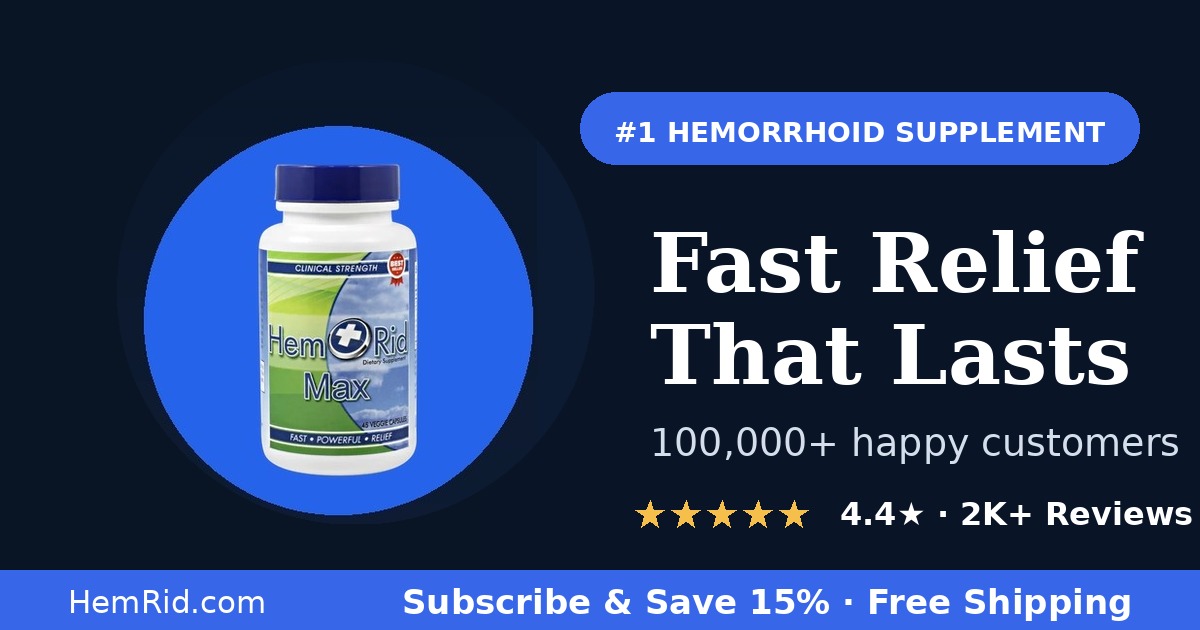
HemRid Lidocaine Cream fits temporary external comfort when swollen tissue also burns, stings, or feels tender. HemRid Max fits the internal support side when hard stool, straining, and repeat flares keep coming back. The Complete Care Bundle fits when you want topical comfort plus daily internal support instead of pretending one product does every job.
Persistent bleeding or pain needs a doctor, not a supplement.
Quick answer
For hemorrhoid swelling, match the next step to what the swelling is doing. External swelling with burning or tenderness usually points toward topical comfort. Swelling tied to hard stool, straining, long toilet sitting, or repeat flares needs bowel habit changes and sometimes internal support. Severe pain, heavy bleeding, black stool, fever, pus, dizziness, or a hard painful lump should be checked instead of managed like a normal home-care problem.
| What you notice | Better first move | Why |
|---|---|---|
| Puffy external tissue with tenderness | Topical comfort | A numbing cream can calm surface pain temporarily |
| Swelling after hard stool or straining | Fiber, fluids, and bathroom changes | Less straining can reduce pressure on irritated veins |
| Swelling plus repeat flares | Internal support comparison | A supplement may fit between flares, not as an emergency fix |
| Swelling with heavy bleeding or severe pain | Medical care | Product testing can delay care for the wrong problem |
| Swelling that seems to pop or burst | Bleeding check first | The issue is usually irritated tissue, clotting, or bleeding risk, not something to squeeze or drain |
What swelling usually means
Hemorrhoids are swollen veins around the anus or lower rectum. The NIDDK hemorrhoids overview explains that they can be internal or external, and symptoms can include pain, itching, swelling, and bleeding. That matters because the same word, swelling, can call for different next steps depending on where the discomfort is and what else is happening.
A small external flare after constipation is different from sudden severe pain with a firm lump. Mild puffiness after wiping is different from blood mixed into stool. Treat the trigger, not just the word swelling.
For a straightforward product comparison, Best Hemorrhoid Creams is useful when you are deciding among lidocaine, hydrocortisone, barrier products, and other topical options. If you already tried a cream and nothing changed, Hemorrhoid Cream Not Working can help you decide whether the issue is ingredient fit, stool pressure, time, or a medical red flag.
When topical comfort fits
Topical comfort fits best when swollen external tissue is sore, irritated, burning, or tender. Lidocaine is a numbing ingredient, so the job is temporary comfort on the surface. It is not a cure for hemorrhoids, a fix for constipation, or a reason to ignore bleeding.
That is where HemRid Lidocaine Cream makes the most sense. Use it for the outside discomfort you can actually feel: burning, stinging, tenderness, rawness, or pain from friction. Do not expect it to fix stool hardness or make a recurring flare vanish overnight.
The NIDDK treatment information keeps home care tied to fiber, fluids, avoiding straining, and medicine for symptoms. That is the honest split: a cream may help how the flare feels, while bowel habits affect the pressure that keeps the area angry.
When internal support belongs in the conversation
Swelling that keeps coming back after hard stool, long toilet sitting, heavy lifting, travel, or low fiber weeks needs more than a stronger cream. If pressure during bowel movements keeps restarting the flare, the routine has to include stool consistency and daily habits.
HemRid Max fits the internal support comparison when flares repeat and you are already paying attention to the basics. It is not a same-hour numbing product. It does not stop heavy bleeding or diagnose rectal pain. It belongs beside hydration, fiber, bathroom timing, and common-sense label checks.
If you are comparing a topical product and a supplement, Do Hemorrhoid Supplements Work? gives the slower-support side in more detail. Hemorrhoids Keep Coming Back is the better read when the same flare keeps showing up after straining, travel, diarrhea, or sitting too long.
What not to do with a swollen hemorrhoid
Do not squeeze it. Do not try to pop it. If a hemorrhoid seems to pop or burst, what you are usually noticing is bleeding, a clot-related change, or irritated skin breaking open. The safer move is to check the amount of blood, pain level, and other symptoms instead of treating it like a pimple.
Light bleeding with a known hemorrhoid still deserves caution if it repeats. Heavy bleeding, dizziness, black stool, fever, pus, drainage, worsening pain, or a hard painful lump needs medical care. The MedlinePlus hemorrhoids page and Cleveland Clinic hemorrhoids resource both tie self-care to symptom severity and getting checked when symptoms are unusual or severe.
Also be careful with stacking products. More ointment is not always better. Steroid creams have label limits. Numbing products should be used as directed. Supplements need medication, pregnancy, bleeding-history, and chronic-condition checks. If the situation feels different from your usual flare, do not cover it with another product and hope.
How to choose a HemRid option
Choose HemRid Lidocaine Cream when outside pain, burning, or tenderness is the main thing you want to calm today. Choose HemRid Max when repeat flares and internal support are the bigger comparison. Choose the Complete Care Bundle when you want both roles in one routine: topical comfort during the flare and internal support between flares.
That does not replace fiber, fluids, or better bathroom habits. If stool is hard, dry, or painful to pass, fix that part too. If diarrhea or frequent wiping is the trigger, the plan changes again. Swelling is the signal, but the trigger decides what you should compare.
Best OTC Hemorrhoid Medicine can help when you are comparing creams, wipes, suppositories, stool-support products, and supplements across categories. Use that broader comparison if you are not sure whether the problem is surface discomfort, stool pressure, or recurrence.
When to stop shopping and get checked
Get medical guidance for heavy or repeated bleeding, blood mixed into stool, black stool, dizziness, fever, pus, drainage, unexplained weight loss, sudden bowel habit changes, severe pain, or a hard painful lump. Swelling with those symptoms should not be treated as routine home care.
The NHS piles advice recommends care when symptoms do not improve or bleeding is present. That is the practical rule here too. Use products for normal, familiar, mild flares. Get help when the swelling is new, intense, bleeding heavily, or not acting like your usual hemorrhoid.
For routine swelling, keep the plan simple: calm outside pain if it is there, reduce straining if stool is the trigger, and consider internal support only when repeat flares keep coming back. A stronger label does not help if it is aimed at the wrong job.
Frequently Asked Questions
What helps swollen hemorrhoids fastest?
For external swelling with burning, soreness, or tenderness, a lidocaine hemorrhoid cream may provide temporary surface comfort. It does not cure hemorrhoids or fix constipation.
Can HemRid Lidocaine Cream shrink swelling?
HemRid Lidocaine Cream is for temporary external numbing and comfort. It can help the swollen area feel less painful, but it is not a shrinking cure or a bleeding treatment.
When does HemRid Max fit hemorrhoid swelling?
HemRid Max fits the internal support conversation when swelling is part of a recurring flare pattern tied to pressure, stool issues, or straining. It is not a same-hour pain reliever.
Can a swollen hemorrhoid pop or burst?
Hemorrhoids can bleed or change suddenly, but you should not try to pop or squeeze one. Heavy bleeding, severe pain, dizziness, fever, drainage, or a hard painful lump needs medical care.
When should swelling be checked by a doctor?
Get checked for heavy or repeated bleeding, black stool, dizziness, fever, pus, severe pain, unexplained weight loss, sudden bowel habit changes, or a hard painful lump.
References
- NIDDK hemorrhoids overview: https://www.niddk.nih.gov/health-information/digestive-diseases/hemorrhoids
- NIDDK hemorrhoid treatment information: https://www.niddk.nih.gov/health-information/digestive-diseases/hemorrhoids/treatment
- MedlinePlus hemorrhoids: https://medlineplus.gov/hemorrhoids.html
- Cleveland Clinic hemorrhoids resource: https://my.clevelandclinic.org/health/diseases/15120-hemorrhoids
- NHS piles hemorrhoids: https://www.nhs.uk/conditions/piles-haemorrhoids/
Ready for relief?
Try HemRid Max — fast-acting hemorrhoid relief from the inside out.
Try HemRid Max →