Best OTC Hemorrhoid Medicine: Match the Product to the Symptom
June 2026 buying rule: the best OTC hemorrhoid medicine is the one that matches the first problem you need to calm, not the box with the loudest relief claim.
Fast burning, itching, wiping irritation, hard stool, and repeat flare-ups ask for different choices. A numbing cream can help surface discomfort. A barrier can protect raw outside skin. Fiber or stool-softening support can make bowel movements easier to pass. A supplement may belong in a slower routine for recurring flares, but it should not be used to explain bleeding or severe pain.
Persistent bleeding or pain needs a doctor, not a supplement.
Quick answer
For sharp outside burning or tenderness, lidocaine is usually the most direct OTC medicine category to compare. For short-term itching, hydrocortisone may fit if the label allows it. For wiping irritation, witch hazel pads or a barrier product may help cleanup and skin comfort. For repeat flares tied to hard stool or long toilet sitting, stool habits and internal support matter more than another topical layer.
| Main problem | OTC category to compare first | Why it fits | Watch-out |
|---|---|---|---|
| Outside burning or tenderness | Lidocaine hemorrhoid cream | Temporary numbing for surface discomfort | Follow the Drug Facts label |
| Itching with inflamed skin | Hydrocortisone cream | Short-term itch and inflammation relief | Do not keep using steroids without guidance |
| Raw skin after wiping | Witch hazel pads or barrier cream | Cleanup and outside skin comfort | Stop if stinging or rash gets worse |
| Hard stool or straining | Fiber, fluids, stool-softener discussion | Less strain can reduce flare triggers | Bleeding still needs medical advice |
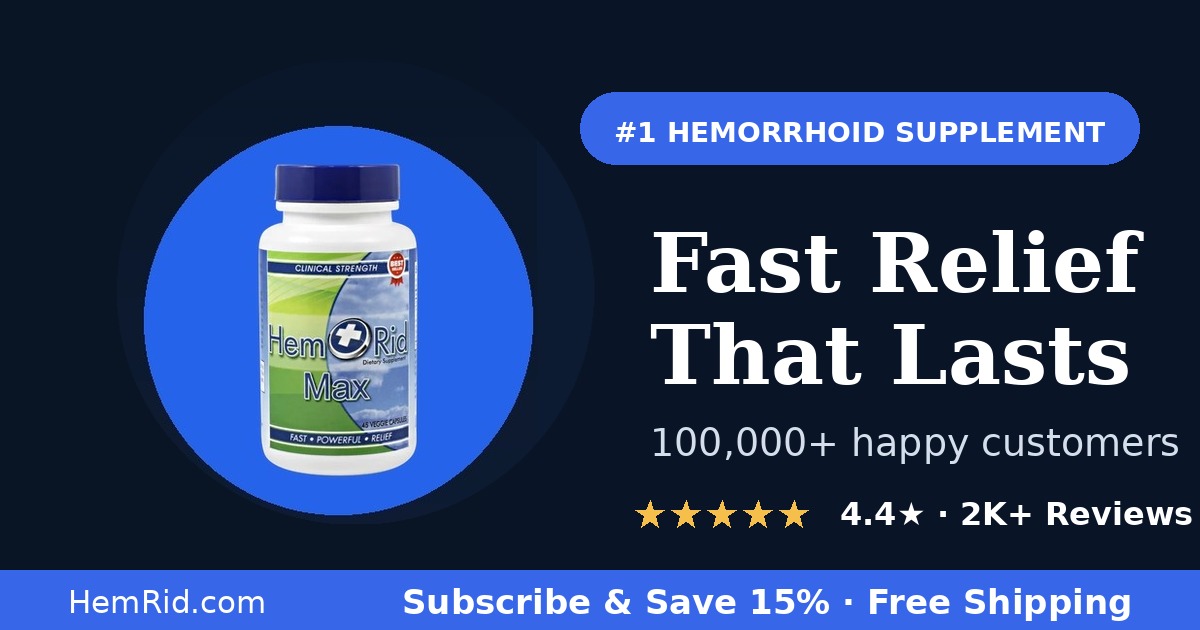
| Flares that keep returning | HemRid Max or routine support | Slower support for recurring flare patterns | Not a fast numbing product |
Start with what hurts most
If you choose by brand first, you can end up using the wrong category. Hemorrhoid creams, pads, suppositories, stool softeners, and supplements are not interchangeable. The FDA OTC medicine label resource is useful because it shows why active ingredients, directions, warnings, and stop-use language matter more than front-label promises.
Start with the symptom you can describe in plain words. Is the outside skin burning? Is the itch the main issue? Is cleanup making the area raw? Are bowel movements hard? Are flares returning after travel, lifting, low fiber meals, or long toilet sitting? That answer should point the first comparison.
The MedlinePlus hemorrhoids resource and NIDDK hemorrhoid treatment information both keep hemorrhoid care tied to symptoms, stool habits, and medical attention when warning signs show up. OTC products can help comfort, but they cannot diagnose rectal bleeding.
Lidocaine when pain or burning is the issue
Lidocaine makes sense when the main problem is temporary outside pain, burning, stinging, or tenderness. That is why HemRid Lidocaine Cream is the most direct HemRid fit for surface discomfort. It is not meant to fix constipation, shrink every hemorrhoid, or replace a clinician when symptoms are severe.
Check the Drug Facts label before you apply any lidocaine product. Look for the active ingredient, strength, where it can be used, how often it can be applied, and when to stop. The DailyMed lidocaine topical label search shows how different lidocaine products can have different directions and warnings.
If you are comparing ingredients, Hemorrhoid Cream Ingredients and Best Hemorrhoid Creams are better next reads than stacking several creams at once. Too many products can irritate the same outside skin you are trying to calm.
Hydrocortisone, witch hazel, and barrier products
Hydrocortisone may fit short-term itching or inflamed outside skin when the label allows it. It is not a forever product. If you need a steroid cream for more than the label window, or symptoms return as soon as you stop, that is a reason to step back and ask why the area stays irritated.
Witch hazel pads may fit cleanup, mild cooling, and wiping-related irritation. They are less direct for deep pain or a hard lump. If a pad burns, stings, dries the area out, or makes itching worse, stop using it. Fragrance, alcohol, menthol, and extra botanicals can be rough on sensitive anal skin.
Barrier products can help when moisture, stool residue, sweat, or rubbing keeps the outside skin raw. They protect the skin surface. They do not numb pain or address hard stool. If you are trying to decide between cleanup and active relief, Hemorrhoid Cream Not Working and HemRid Max vs Hemorrhoid Creams can help sort the category instead of adding another layer.
Fiber, stool softeners, and recurring flare support
If every bowel movement feels difficult, a stronger cream is probably not the whole answer. The NIDDK constipation treatment information connects constipation care with fiber, fluids, physical activity, and medicine questions when needed. Less straining can reduce one of the common triggers behind hemorrhoid flares.
Fiber supplements and stool softeners are different from pain creams. They work through bowel habits, not surface numbing. If you are already using medication, are pregnant, have kidney disease, have bowel disease, or have symptoms that changed suddenly, ask a clinician or pharmacist before adding stool products.
A stool-focused option also takes patience. You may not feel the same same-day change you get from a numbing cream, but reducing hard stool and straining can make future flares less chaotic. Keep water intake, bathroom timing, and product labels in the same conversation instead of treating each bowel movement as a separate emergency.
HemRid Max belongs in the recurring-support lane. It may be a better comparison when flares keep coming back around hard stool, low fiber intake, long sitting, travel, or lifting. It is not a lidocaine cream, not a stool softener, and not an emergency answer for bleeding. For deeper comparison, read Do Hemorrhoid Supplements Work?, HemRid Max vs Fiber Supplements, and Hemorrhoids Keep Coming Back.
When the Complete Care Bundle makes more sense
The Complete Care Bundle may make sense when you want topical comfort and internal recurring support in the same routine. The important part is using each product for its job. Cream is for temporary surface discomfort. HemRid Max is for slower recurring support. Neither should be used to ignore warning signs.
This is where product fit matters. If you are dealing with burning after a bowel movement, start with the topical comfort question. If you are dealing with repeat flares after hard stool, start with the bowel-habit question. If both are true, a two-part routine may be easier to understand than bouncing between random creams, pads, and pills.
A simple routine is usually safer than a crowded one. Do not combine multiple numbing products, steroid products, suppositories, pads, and supplements just because they are available without a prescription. More products can mean more irritation, more confusion, and a harder time knowing what helped.
If your symptoms are mild and familiar, choose the category that matches the problem you can feel today. If symptoms are severe, new, or unusual, do not troubleshoot with another OTC product.
Red flags before you buy anything else
Get medical guidance for rectal bleeding that is new, heavy, repeated, or mixed into stool. Get checked for severe pain, fever, drainage, black stool, dizziness, unexplained weight loss, bowel changes, or a hard painful lump. The Harvard Health hemorrhoids overview and Cleveland Clinic hemorrhoids overview both describe why hemorrhoid-like symptoms can still need a proper exam.
This is especially important if you are pregnant, breastfeeding, using blood thinners, managing diabetes, immunosuppression, inflammatory bowel disease, liver disease, kidney disease, or using prescription rectal medication. OTC does not mean risk-free.
A practical shopping rule
Buy for the job. Lidocaine for temporary outside burning or tenderness. Hydrocortisone for short-term itch when the label fits. Witch hazel or a barrier for cleanup and raw outside skin. Fiber, stool habits, and internal support when flares keep returning around hard stool or straining.
If the same symptoms keep coming back, track bowel movements, toilet time, diet changes, lifting, travel, and product use for a week. That record is more useful than guessing from the medicine aisle again.
Source notes
Source notes used for this update: MedlinePlus hemorrhoids, NIDDK hemorrhoid treatment information, NIDDK constipation treatment information, FDA OTC medicine label resource, DailyMed lidocaine topical label search, Harvard Health hemorrhoids overview, and Cleveland Clinic hemorrhoids overview.
Frequently Asked Questions
What is the best OTC hemorrhoid medicine?
The best OTC hemorrhoid medicine depends on the symptom. Lidocaine fits temporary outside burning or tenderness, hydrocortisone fits short-term itching when the label allows it, and fiber or stool-habit support fits recurring flares tied to straining.
Is lidocaine or hydrocortisone better for hemorrhoids?
Lidocaine is usually the better comparison for temporary surface pain, burning, or tenderness. Hydrocortisone is more relevant for short-term itching or inflamed outside skin, but it should not be used beyond the label window without medical guidance.
When should I use HemRid Max instead of a cream?
HemRid Max fits slower recurring support when flares seem tied to hard stool, straining, low fiber intake, travel, lifting, or long toilet sitting. A cream fits temporary outside discomfort better.
Can OTC hemorrhoid medicine stop bleeding?
No OTC hemorrhoid product should be used to explain or ignore rectal bleeding. New, heavy, repeated, or stool-mixed bleeding needs medical guidance.
Does the Complete Care Bundle replace medical care?
No. The Complete Care Bundle can combine topical comfort and internal recurring support, but severe pain, fever, drainage, black stool, dizziness, bowel changes, or persistent bleeding should be checked by a clinician.
References
- MedlinePlus hemorrhoids: https://medlineplus.gov/hemorrhoids.html
- NIDDK hemorrhoid treatment information: https://www.niddk.nih.gov/health-information/digestive-diseases/hemorrhoids/treatment
- NIDDK constipation treatment information: https://www.niddk.nih.gov/health-information/digestive-diseases/constipation/treatment
- FDA OTC medicine label resource: https://www.fda.gov/drugs/buying-using-medicine-safely/understanding-over-counter-medicines
- DailyMed lidocaine topical label search: https://dailymed.nlm.nih.gov/dailymed/search.cfm?query=lidocaine+hemorrhoid
- Harvard Health hemorrhoids overview: https://www.health.harvard.edu/diseases-and-conditions/hemorrhoids_and_what_to_do_about_them
- Cleveland Clinic hemorrhoids overview: https://my.clevelandclinic.org/health/diseases/15120-hemorrhoids
Ready for relief?
Try HemRid Max — fast-acting hemorrhoid relief from the inside out.
Try HemRid Max →