
What Do Hemorrhoids Look Like? Visual Guide by Type (2026)
If you have been searching for "what does a hemorrhoid look like" or looking for hemorrhoid pictures to compare with your own symptoms, you are not alone. According to research published in the *World Journal of Gastroenterology*, hemorrhoids affect approximately 4.4% of the general population at an
Last Updated: April 9, 2026
What Do Hemorrhoids Look Like? Visual Guide by Type
What do hemorrhoids look like? In most cases, external hemorrhoids appear as small, skin-colored or slightly darker lumps around the anal opening, while internal hemorrhoids are typically not visible from the outside. Thrombosed hemorrhoids are distinct -- they appear as firm, blue or purple lumps that are often painful to the touch.
If you have been searching for "what does a hemorrhoid look like" or looking for hemorrhoid pictures to compare with your own symptoms, you are not alone. According to research published in the World Journal of Gastroenterology, hemorrhoids affect approximately 4.4% of the general population at any given time, though lifetime prevalence may exceed 50% in adults over age 50 (Lohsiriwat, 2012). Knowing what hemorrhoids look like is the first step toward proper identification and treatment.
This guide provides detailed visual descriptions of every hemorrhoid type so you can better understand what you are dealing with -- and when it is time to see a doctor.
What Does a Hemorrhoid Look Like on the Outside?
External hemorrhoids are the most visually identifiable type because they form beneath the skin around the anus, where you can see and feel them.
Typical appearance of external hemorrhoids:
- Shape: Small, rounded, or slightly irregular lumps or bumps
- Color: Usually skin-colored, pink, or slightly darker than surrounding skin
- Texture: Soft and compressible, similar to a small grape beneath the skin
- Size: Ranges from the size of a pea to the size of a marble, though larger ones can develop
- Location: Found around the anal opening, often at the 3 o'clock, 7 o'clock, or 11 o'clock positions when viewed in the lithotomy position
You might notice external hemorrhoids more easily during a flare-up. After a bowel movement, straining, or sitting for extended periods, they may swell noticeably and become uncomfortable.
What Do Internal Hemorrhoids Look Like?
Internal hemorrhoids form inside the rectum, above the dentate line, and are not visible from the outside unless they have prolapsed and pushed through the anal opening.
Key characteristics of internal hemorrhoids:
- Visibility: Cannot be seen externally in most cases
- Primary sign: Bright red blood on toilet paper, in the toilet bowl, or on the stool surface
- Pain level: Usually painless because the tissue above the dentate line has few pain-sensing nerve endings
- Detection: Typically diagnosed through anoscopy or digital rectal exam by a healthcare provider
If you are experiencing painless rectal bleeding but cannot see or feel anything unusual around the anus, internal hemorrhoids are the most likely explanation. However, it is important to have any rectal bleeding evaluated by a healthcare provider to rule out other conditions.
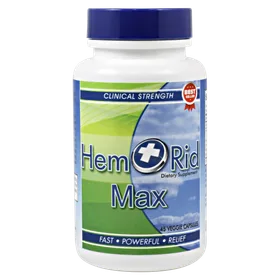
For mild internal hemorrhoid symptoms like occasional bleeding and discomfort, many people find relief with oral supplements. HemRid Max is formulated with ingredients that support healthy blood flow and vein integrity from the inside, which can be particularly useful for internal hemorrhoids you cannot treat topically.
These statements have not been evaluated by the Food and Drug Administration. This product is not intended to diagnose, treat, cure, or prevent any disease.
What Does a Thrombosed Hemorrhoid Look Like?
Thrombosed hemorrhoids have a very distinct appearance that sets them apart from regular hemorrhoids. A thrombosed hemorrhoid occurs when a blood clot forms inside an external hemorrhoid.
Visual characteristics of thrombosed hemorrhoids:
- Color: Dark blue, purple, or deep maroon -- distinctly different from the surrounding skin
- Texture: Firm and hard to the touch, unlike the soft texture of a regular hemorrhoid
- Shape: A well-defined, round or oval lump
- Size: Often swollen to the size of a grape or larger
- Surrounding area: The skin around the lump is often stretched, shiny, and inflamed
- Sensation: Intensely painful, particularly during the first 48-72 hours
The pain from a thrombosed hemorrhoid is often described as a sudden onset of severe, constant pain in the anal area. If you notice a firm, dark-colored lump that appeared suddenly and is extremely painful, you are very likely looking at a thrombosed hemorrhoid.
Important: Thrombosed hemorrhoids that are extremely painful within the first 72 hours may benefit from in-office excision by a doctor. After 72 hours, the clot typically begins to resolve on its own over 2-3 weeks.
What Do Prolapsed Hemorrhoids Look Like?
Prolapsed hemorrhoids are internal hemorrhoids that have pushed through the anal opening. Their appearance varies significantly depending on the grade of prolapse.
Grade I Prolapsed Hemorrhoids
- Appearance: Not visible externally
- Behavior: Bleed during bowel movements but do not protrude
- What you see: Only blood, no visible tissue
Grade II Prolapsed Hemorrhoids
- Appearance: Soft, reddish-pink tissue that protrudes during straining
- Behavior: Pushes out during bowel movements but retracts on its own
- What you see: Briefly visible, moist, pink or reddish tissue during or right after a bowel movement
- Texture: Wet, spongy, and mucus-covered
Grade III Prolapsed Hemorrhoids
- Appearance: Protruding pink or dark pink tissue that hangs outside the anus
- Behavior: Must be manually pushed back inside
- What you see: A noticeable bulge of soft, moist tissue after bowel movements or straining
- Size: Can be considerable, sometimes described as a "rosette" of tissue
Grade IV Prolapsed Hemorrhoids
- Appearance: Permanently protruding tissue that cannot be pushed back in
- Behavior: Remains outside the anus at all times
- What you see: A constant, visible mass of dark pink to purplish tissue
- Complications: May become strangulated with blood supply cut off, turning dark purple or black
For Grade I and II prolapsed hemorrhoids, conservative treatment is often effective. HemRid Max combined with dietary fiber supplementation like Fiber Gummies can help reduce symptoms and prevent progression.
These statements have not been evaluated by the Food and Drug Administration. This product is not intended to diagnose, treat, cure, or prevent any disease.
What Do Hemorrhoid Skin Tags Look Like?
After a hemorrhoid heals -- particularly a thrombosed hemorrhoid -- it can leave behind a skin tag. These are frequently mistaken for active hemorrhoids.
Appearance of hemorrhoid skin tags:
- Color: Skin-colored, matching the surrounding perianal skin
- Texture: Soft, painless, and pliable
- Shape: Small, flat or slightly raised flaps of excess skin
- Size: Usually small, ranging from a few millimeters to about a centimeter
- Sensation: No pain, itching, or bleeding unless irritated by hygiene difficulties
How to Tell Hemorrhoids Apart from Other Conditions
Hemorrhoids can be confused with several other anal conditions. Here is how they differ visually:
Hemorrhoids vs. Anal Fissures
- Hemorrhoids: Visible lumps or swelling around the anus
- Anal fissures: A small tear or crack in the anal lining; may not be visible externally but causes sharp, cutting pain during bowel movements
Hemorrhoids vs. Anal Warts
- Hemorrhoids: Smooth, rounded lumps; skin-colored to blue-purple
- Anal warts: Cauliflower-like, rough-textured growths; caused by HPV
Hemorrhoids vs. Rectal Prolapse
- Hemorrhoids: Segmental tissue protrusion with visible ridges
- Rectal prolapse: Circumferential, concentric rings of tissue; involves the full rectal wall
Hemorrhoids vs. Perianal Abscess
- Hemorrhoids: Gradual onset, soft unless thrombosed
- Perianal abscess: Red, hot, very tender, fluctuant (feels like fluid beneath the skin); often accompanied by fever
When to See a Doctor About Hemorrhoid Appearance
While most hemorrhoids can be identified and managed at home, certain visual signs warrant prompt medical evaluation:
- Dark purple or black tissue: May indicate a strangulated hemorrhoid with compromised blood supply -- seek immediate care
- Persistent bleeding: Any rectal bleeding lasting more than a week should be evaluated
- Rapidly growing lump: Unusual growth patterns should be examined to rule out other conditions
- Tissue that cannot be pushed back in: Grade IV prolapse may need medical or surgical intervention
- Signs of infection: Increased redness, warmth, swelling, pus, or fever around a hemorrhoid
Treating Hemorrhoids Based on Their Appearance
The appearance of your hemorrhoids often guides the best treatment approach:
For soft, skin-colored external hemorrhoids: Topical treatments like Lidocaine Cream provide targeted pain and itch relief. Combine with warm sitz baths for best results.
For mild internal hemorrhoids with bleeding only: Oral supplements like HemRid Max work from the inside to support vein health and reduce bleeding. Increasing fiber intake with Fiber Gummies helps soften stools and reduce straining.
For thrombosed hemorrhoids: Pain management with topical lidocaine cream and oral supplements while the clot resolves. See a doctor within 72 hours if pain is severe.
For Grade III-IV prolapsed hemorrhoids: Medical evaluation is recommended. Procedures such as rubber band ligation, sclerotherapy, or surgical hemorrhoidectomy may be necessary.
These statements have not been evaluated by the Food and Drug Administration. This product is not intended to diagnose, treat, cure, or prevent any disease.
Frequently Asked Questions About Hemorrhoid Appearance
Can you see hemorrhoids yourself?
External hemorrhoids and prolapsed internal hemorrhoids can be seen or felt by using a hand mirror. Internal hemorrhoids that have not prolapsed cannot be seen without medical instruments.
Are hemorrhoids always visible?
No. Internal hemorrhoids are not visible externally unless they prolapse. Many people have hemorrhoids without any visible signs -- only symptoms like bleeding or discomfort.
What color are hemorrhoids?
Normal hemorrhoids are skin-colored to pinkish. Thrombosed hemorrhoids are blue, purple, or dark maroon. Prolapsed hemorrhoids tend to be pink or reddish and moist in appearance.
Should I be worried about a lump near my anus?
A soft, skin-colored lump is most likely a hemorrhoid or skin tag. However, any new, persistent, or unusual lump should be evaluated by a healthcare provider to rule out other conditions.
Find the Right Hemorrhoid Relief for Your Symptoms
Understanding what hemorrhoids look like helps you identify what type you are dealing with and choose the right treatment. External hemorrhoids appear as soft lumps around the anus, thrombosed hemorrhoids are firm and dark-colored, and prolapsed hemorrhoids present as protruding pink tissue. When in doubt, consult a healthcare provider -- especially if you notice dark-colored tissue, persistent bleeding, or symptoms that do not improve with home treatment.
For everyday hemorrhoid support, HemRid Max provides targeted relief with clinically studied ingredients including witch hazel extract, horse chestnut, and diosmin to support healthy veins from the inside out. For external symptom relief, Lidocaine Cream delivers fast-acting topical comfort.
These statements have not been evaluated by the Food and Drug Administration. This product is not intended to diagnose, treat, cure, or prevent any disease.
---
References:
- Lohsiriwat, V. (2012). Hemorrhoids: From basic pathophysiology to clinical management. World Journal of Gastroenterology, 18(17), 2009-2017.
- Godeberge, P., et al. (2020). Hemorrhoidal disease and chronic venous insufficiency. Diseases of the Colon & Rectum, 63(8), 1076-1083.
- Greenspon, J., et al. (2004). Thrombosed external hemorrhoids: Outcome after conservative or surgical management. Techniques in Coloproctology, 8(2), 108-111.
- Simillis, C., et al. (2015). Systematic review and network meta-analysis comparing clinical outcomes and effectiveness of surgical treatments for hemorrhoids. British Journal of Surgery, 102(13), 1603-1618.
- Aigner, F., et al. (2018). Revised morphology and hemodynamics of the anorectal vascular plexus. Clinics in Colon and Rectal Surgery, 31(1), 7-16.
Ready for relief?
Try HemRid Max — doctor-recommended hemorrhoid relief from the inside out.
Try HemRid Max →