
Best Fiber Supplement for Hemorrhoids: Guide

Yet most Americans consume only about 15 grams of fiber daily — far short of the 25-35 grams recommended by the American Heart Association and every major health organization. Closing this fiber gap is the most impactful thing you can do for your hemorrhoid health.
Last Updated: April 10, 2026 | Medically Reviewed by the HemRid Medical Team
Quick answer: The best fiber for hemorrhoids is psyllium husk — the most-studied soluble fiber, shown to cut bleeding and symptoms by roughly 50% in clinical trials. If powder or capsules are hard to stick with, a great-tasting daily option like HemRid Fiber Gummies or the HemRid Fiber Supplement makes hitting the 25–35g daily target easier. Whichever you choose, increase fiber gradually and drink plenty of water.
Fiber supplementation is the single most recommended treatment for hemorrhoid prevention and management, supported by decades of clinical research and endorsed by virtually every gastroenterologist. The right fiber supplement can reduce bleeding, itching, and prolapse by 50% or more according to published meta-analyses.
Yet most Americans consume only about 15 grams of fiber daily — far short of the 25-35 grams recommended by the American Heart Association and every major health organization. Closing this fiber gap is the most impactful thing you can do for your hemorrhoid health.
Why Fiber Matters for Hemorrhoids
Fiber helps hemorrhoids through several mechanisms:
1. Softer Stools
Fiber absorbs water and swells in the digestive tract, creating softer, bulkier stools that pass more easily. This directly reduces the straining that is the primary mechanical cause of hemorrhoid development and worsening.
2. Faster Transit Time
Fiber decreases colonic transit time — the time it takes for food to move through the digestive tract. This prevents stool from sitting in the colon too long and becoming hard and dry.
3. Reduced Straining
A comprehensive meta-analysis published in The American Journal of Gastroenterology analyzed seven clinical trials and found that fiber supplementation reduced hemorrhoid symptoms by 53% and bleeding by 50% compared to placebo. The primary mechanism was reduced straining.
4. Healthier Gut Microbiome
Certain fibers (prebiotics) feed beneficial gut bacteria, promoting a healthy microbiome that supports regular, comfortable bowel movements.
Types of Fiber Supplements
Not all fiber supplements are created equal. Here is a breakdown of the major types:
Psyllium Husk (Metamucil, Konsyl)
Psyllium is a soluble fiber derived from the seeds of the Plantago ovata plant. It is the most extensively studied fiber for hemorrhoid management.
How it works: Psyllium absorbs up to 10 times its weight in water, forming a gel-like substance that softens stool and adds bulk.
Pros:
- Most clinical evidence for hemorrhoid benefit
- Highly effective at normalizing bowel movements
- Also lowers cholesterol and helps regulate blood sugar
- Available in powder, capsule, and wafer forms
Cons:
- Powder forms can have an unpleasant, gritty texture
- Must be mixed with adequate water (8+ oz) to prevent choking or intestinal blockage
- Can cause significant bloating and gas, especially during the first 1-2 weeks
- Some people find the daily preparation inconvenient
Dosing for hemorrhoids: Start with 3.4 grams (one tablespoon of powder) once daily, mixed with at least 8 ounces of water. Gradually increase to 3.4 grams twice daily over 1-2 weeks.
Methylcellulose (Citrucel)
Methylcellulose is a semi-synthetic soluble fiber that is less likely to cause gas and bloating than psyllium.
How it works: Similar to psyllium, it absorbs water and adds bulk to stool, but it does not ferment in the gut to the same degree.
Pros:
- Less gas and bloating than psyllium
- Non-allergenic
- Available in powder and caplet forms
- Mixes more smoothly than psyllium
Cons:
- Slightly less clinical evidence specifically for hemorrhoids
- Caplet form requires taking multiple pills
- Does not provide prebiotic benefits (does not feed gut bacteria)
Dosing for hemorrhoids: 2 grams (one tablespoon of powder) one to three times daily with 8 ounces of water.
Inulin and Chicory Root Fiber
Inulin is a prebiotic soluble fiber found naturally in chicory root, artichokes, and garlic.
How it works: Inulin is not digested in the upper GI tract and ferments in the colon, feeding beneficial bacteria and increasing stool bulk.
Pros:
- Strong prebiotic properties — supports gut microbiome health
- Found in many gummy and chewable fiber products
- Pleasant taste
- Easy to take
Cons:
- Can cause significant gas and bloating in higher doses
- May not provide as much stool-bulking effect as psyllium
- Some people are very sensitive to the fermentation effects
Wheat Dextrin (Benefiber)
Wheat dextrin is a soluble fiber derived from wheat starch.
How it works: Dissolves completely in liquid and adds some bulk to stool as it ferments in the colon.
Pros:
- Dissolves completely — no texture or taste change
- Can be added to any beverage or soft food
- Easy to incorporate into daily routine
Cons:
- Less bulking effect than psyllium
- Not suitable for people with gluten sensitivity (though it is processed to remove gluten, trace amounts may remain)
- Limited clinical data specifically for hemorrhoid management
Gummy Fiber Supplements
Gummy fiber supplements, typically based on inulin, chicory root fiber, or soluble corn fiber, have become increasingly popular due to their convenience and taste.
HemRid Fiber Gummies are specifically formulated for hemorrhoid sufferers, providing an effective dose of fiber in a great-tasting, easy-to-take gummy format.*
Pros:
- Excellent taste and compliance — you will actually take them every day
- No mixing, no water needed at the time of consumption
- Easy to carry and take on the go
- No gritty texture
Cons:
- Generally provide less fiber per serving than psyllium powder (but consistency of use often compensates)
- Contain some sugar or sugar alcohols
- May not be suitable for strict low-sugar diets
Our Recommendation: Best Fiber for Hemorrhoids
For most hemorrhoid sufferers, we recommend a two-pronged approach:
- Daily gummy fiber — HemRid Fiber Gummies for consistent, effortless daily fiber supplementation. The convenience and taste make daily compliance nearly automatic.*
- High-fiber diet — Combine supplementation with fiber-rich whole foods to reach the 25-35 gram daily target
If you prefer a powder-based supplement and are not bothered by the texture, psyllium husk remains the gold standard for hemorrhoid-specific fiber therapy.
Best High-Fiber Foods for Hemorrhoids
Supplements work best when combined with a fiber-rich diet. Top choices include:
| Food | Serving Size | Fiber (grams) |
|---|---|---|
| Split peas (cooked) | 1 cup | 16.3 |
| Lentils (cooked) | 1 cup | 15.6 |
| Black beans (cooked) | 1 cup | 15.0 |
| Artichoke (cooked) | 1 medium | 10.3 |
| Raspberries | 1 cup | 8.0 |
| Pear (with skin) | 1 medium | 5.5 |
| Broccoli (cooked) | 1 cup | 5.1 |
| Oatmeal (cooked) | 1 cup | 4.0 |
| Apple (with skin) | 1 medium | 4.4 |
| Chia seeds | 1 tablespoon | 5.5 |
How to Start a Fiber Regimen Without Misery
The number one reason people abandon fiber supplementation is starting too aggressively and experiencing uncomfortable bloating and gas. Follow this gradual approach:
Week 1: Add one serving of fiber supplement daily (or 5-7 extra grams of fiber from food). Increase water intake by at least 16 ounces.
Week 2: Add a second serving or increase food-based fiber by another 5 grams. Continue increasing water.
Week 3: Reach your full target dose. Your gut microbiome has had time to adjust, and gas and bloating should be minimal.
Ongoing: Maintain consistent daily fiber intake. Consistency is more important than exact amounts — a steady 25 grams daily is better than alternating between 10 and 40 grams.
Critical Rule: Always Increase Water with Fiber
Fiber without adequate water can actually worsen constipation. For every additional 5 grams of fiber, drink at least one extra glass (8 ounces) of water. Aim for a minimum of 64 ounces of total daily water intake.
Combining Fiber with Other Hemorrhoid Treatments
Fiber supplementation works best as part of a comprehensive hemorrhoid management plan:
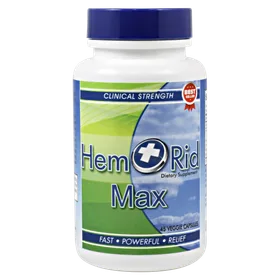
- Fiber + HemRid Max — Fiber addresses the mechanical cause (straining) while HemRid Max supports vein health from within*
- Fiber + topical treatments — Fiber prevents worsening while topical products provide symptom relief for current flare-ups
- Fiber + exercise — Physical activity enhances fiber's effectiveness by promoting colonic motility
- Fiber + proper bathroom habits — Even with perfect stool consistency, prolonged toilet sitting and poor positioning can still cause hemorrhoids
Fiber Supplement Safety
Fiber supplements are among the safest over-the-counter products available, but keep these precautions in mind:
- Start slowly to minimize gas and bloating
- Take with adequate water to prevent intestinal blockage
- Space fiber supplements 2 hours from medications — fiber can reduce absorption of certain drugs
- Consult your doctor if you have a history of bowel obstruction, strictures, or difficulty swallowing
- Choose appropriate types if you have specific dietary restrictions (gluten sensitivity, diabetes, etc.)
Key Takeaways
- Fiber supplementation reduces hemorrhoid symptoms by approximately 50% according to clinical research
- Psyllium husk has the most evidence, but gummy fiber supplements offer superior compliance
- Start slowly and always increase water intake alongside fiber
- Aim for 25-35 grams of total daily fiber from food and supplements combined
- Fiber works best as part of a comprehensive approach including supplements, hydration, exercise, and proper bathroom habits
*These statements have not been evaluated by the Food and Drug Administration. This product is not intended to diagnose, treat, cure, or prevent any disease.
What actually works for hemorrhoids
If you're dealing with pain right now, a topical cream is a great first step — it numbs the area for fast relief. To actually get rid of the problem, HemRid Max works from the inside out to strengthen vein walls and reduce swelling. The best results come from doing both.