
Hemorrhoids vs Colon Cancer: How to Tell the Difference (2026 Guide)
That said, colorectal cancer IS the third most common cancer in the US, and its symptoms can overlap with hemorrhoids. This guide will help you understand the key differences — and when you absolutely need to see a doctor.
Reviewed by the HemRid Medical Team | Last updated: April 2026
Blood in your stool is scary. Your first thought might be cancer — and it's important to take rectal bleeding seriously. But the reality is that hemorrhoids are the most common cause of rectal bleeding, affecting roughly half of adults by age 50.
That said, colorectal cancer IS the third most common cancer in the US, and its symptoms can overlap with hemorrhoids. This guide will help you understand the key differences — and when you absolutely need to see a doctor.
Disclaimer: This article is for informational purposes only and is NOT a substitute for professional medical advice. If you have rectal bleeding, please consult your doctor for proper evaluation.
Hemorrhoids vs Colon Cancer: Key Differences
Symptom/Feature Hemorrhoids Colorectal Cancer
Blood color Bright red Dark red, maroon, or black (tarry)
Blood location On toilet paper, on stool surface, in toilet bowl Mixed into stool
Pain Local pain at anus, worse with sitting/BM Abdominal cramping, rectal pressure
Bowel habit changes No significant changes Persistent changes (constipation/diarrhea lasting 4+ weeks)
Stool shape Normal Thin, narrow, or ribbon-like stools
Weight loss No Unexplained weight loss
Fatigue No Persistent fatigue (from anemia)
Lump External lump you can feel at anus Usually no external lump
Itching Common Uncommon
Age group Any age (peaks 45-65) Risk increases after 45 (but rising in younger adults)
Response to treatment Improves with OTC treatment in 1-2 weeks Does NOT improve with hemorrhoid treatment
Understanding the Blood: The Most Important Clue
The color and pattern of bleeding is the most helpful initial indicator:
Likely Hemorrhoids
- Bright red blood — fresh blood that hasn't traveled far through the digestive tract
- Blood on toilet paper when wiping
- Blood dripping into the toilet bowl (separate from stool)
- Blood coating the outside of stool (not mixed in)
- Bleeding that occurs during or right after a bowel movement
- Bleeding that stops on its own within minutes
Warrants Medical Evaluation
- Dark red, maroon, or black blood — suggests bleeding higher in the colon
- Blood mixed INTO the stool (not just on the surface)
- Black, tarry stools (melena) — indicates upper GI bleeding
- Persistent bleeding that doesn't stop with hemorrhoid treatment
- Increasing frequency of bleeding episodes
Red Flags: When to See a Doctor Immediately
See a doctor as soon as possible if you have rectal bleeding PLUS any of these:
- Unexplained weight loss (10+ pounds without trying)
- Persistent change in bowel habits lasting more than 4 weeks
- Thin or narrow stools (pencil-thin)
- Feeling that your bowel doesn't empty completely
- Abdominal pain or cramping that doesn't go away
- Persistent fatigue or weakness (sign of anemia from chronic bleeding)
- Iron deficiency anemia found on blood work
- Family history of colorectal cancer or polyps
- Age 45+ and never had a colonoscopy
- Bleeding that doesn't improve after 2 weeks of hemorrhoid treatment
Colorectal Cancer Screening Guidelines
The American Cancer Society recommends colorectal cancer screening starting at age 45 for average-risk adults. Earlier if you have:
- Family history of colorectal cancer or advanced polyps
- Personal history of inflammatory bowel disease (IBD)
- Personal history of radiation to the abdomen or pelvis
- Known genetic syndromes (Lynch syndrome, FAP)
Screening options:
- Colonoscopy every 10 years (gold standard)
- Cologuard (stool DNA test) every 3 years
- FIT test (fecal immunochemical test) yearly
- CT colonography every 5 years
What to Do Right Now
If Symptoms Point Toward Hemorrhoids
Start treatment and monitor for 2 weeks:
- Follow our hemorrhoid treatment guide
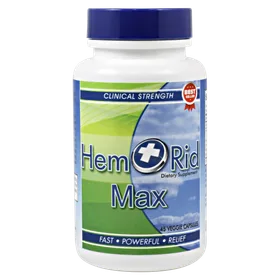
- Try HemRid Max for root cause support + topical cream for symptoms
- Increase fiber intake and water
- Sitz baths 2-3 times daily
- If symptoms improve → likely hemorrhoids
- If symptoms DON'T improve after 2 weeks → see your doctor
If Any Red Flags Are Present
See your doctor promptly. Don't assume it's hemorrhoids. A doctor can perform a physical exam, digital rectal exam, and order a colonoscopy if needed. Early detection of colorectal cancer dramatically improves outcomes — the 5-year survival rate for stage I colon cancer is over 90%.
The Bottom Line
Rectal bleeding is almost always hemorrhoids — but "almost always" isn't "always." The smart approach is:
- Don't panic — hemorrhoids are far more likely than cancer
- Start hemorrhoid treatment immediately
- Watch for red flags (weight loss, bowel changes, dark blood, fatigue)
- See a doctor if symptoms don't improve in 2 weeks or ANY red flags appear
- Get your colonoscopy at age 45 (or earlier if high risk)
Frequently Asked Questions
How do I know if rectal bleeding is hemorrhoids or cancer?
Hemorrhoid bleeding is typically bright red, appears on toilet paper or the stool surface, and improves with treatment. Cancer-related bleeding tends to be darker (maroon or black), is mixed into the stool, and comes with other symptoms like weight loss, bowel habit changes, or fatigue. When in doubt, always see your doctor.
Can hemorrhoids turn into cancer?
No. Hemorrhoids are swollen veins and cannot become cancerous. They are completely benign. However, hemorrhoids and colorectal cancer can coexist — having hemorrhoids doesn't protect you from cancer. This is why screening remains important.
Should I get a colonoscopy for hemorrhoids?
A colonoscopy isn't usually needed if your symptoms are clearly hemorrhoid-related and respond to treatment. However, your doctor may recommend one if: you're 45+ and haven't been screened, you have persistent bleeding that doesn't respond to treatment, or you have risk factors for colorectal cancer.
At what age should I worry about colorectal cancer?
Screening is recommended starting at age 45 for average-risk adults. However, colorectal cancer rates are rising in younger adults — cases in people under 50 have increased 44% since the mid-1990s. If you have concerning symptoms at any age, see a doctor regardless of screening guidelines.
What does colon cancer poop look like?
Possible signs include: thin/narrow stools (pencil-thin), dark red or maroon-colored blood mixed into stool, black tarry stools, persistent constipation or diarrhea, and a feeling of incomplete bowel movements. Normal stool doesn't rule out cancer, and abnormal stool doesn't confirm it — only a colonoscopy can diagnose colorectal cancer.
What actually works for hemorrhoids
If you're dealing with pain right now, a topical cream is a great first step — it numbs the area for fast relief. To actually get rid of the problem, HemRid Max works from the inside out to strengthen vein walls and reduce swelling. The best results come from doing both.