Hemorrhoid Suppositories vs Cream: Internal Pressure or External Relief?
If you are choosing between a hemorrhoid suppository and a cream, first locate the symptom you actually feel. You do not need the strongest-sounding product. You need the one that reaches the irritated area without making cleanup, sitting, or the next bowel movement harder. A suppository is usually aimed inside the anal canal or lower rectum. A cream is usually easier to use on outside burning, itching, soreness, tenderness, or raw skin after wiping.
That does not mean one is automatically stronger. It means they reach different places. If the flare feels deep, pressurized, or mostly internal, a suppository may seem logical. If the outside skin burns when you sit, clean up, sweat, or wipe, a cream is usually the more direct topical choice.
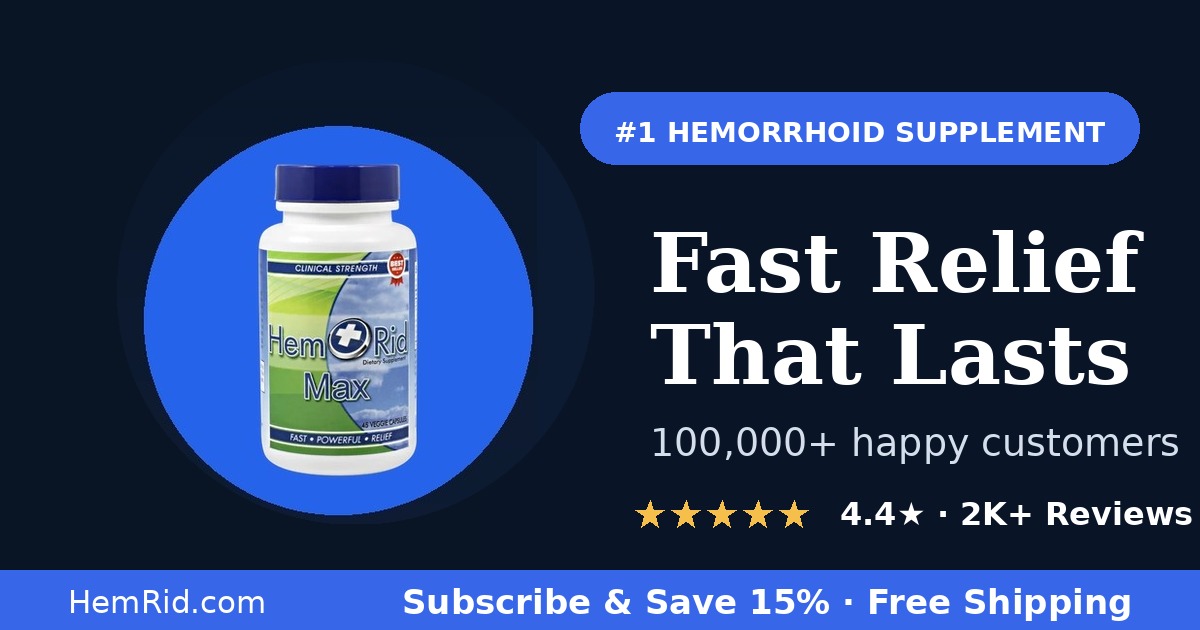
HemRid Lidocaine Cream may fit short-term outside burning, stinging, soreness, tenderness, or pain after gentle cleanup. HemRid Max fits a different problem: repeat flares tied to hard stool, straining, dehydration, long toilet sitting, and recurring pressure. Neither replaces medical care for heavy bleeding, fever, pus, severe pain, or a lump that keeps getting worse.
Persistent bleeding or pain needs a doctor, not a supplement.
Quick answer
Suppositories may make sense when the discomfort feels internal or when a clinician has recommended that route. Creams may make more sense when the outside area burns, itches, stings, or feels raw. The better choice depends on location, symptom, active ingredient, and whether bleeding or severe pain is involved.
| What you feel | Better starting point | Why |
|---|---|---|
| Outside burning after wiping | Cream | Easier to apply to irritated skin |
| Itchy outside skin | Cream or wipe, depending on label | The product touches the area that itches |
| Deep pressure after bowel movements | Suppository may be considered | It is made for internal placement |
| Hard painful outside lump | Neither as the whole plan | Possible clot needs caution |
| Repeat flares after constipation | Trigger support matters | Topicals do not fix hard stool |
Do not force a suppository if the outside area is swollen, cracked, or too painful to touch. Do not keep reapplying cream all day if bleeding or severe pain is changing. Match the product to the problem and get checked when symptoms do not fit a mild familiar flare.
Why location matters
The NIDDK hemorrhoids overview describes hemorrhoids as swollen veins around the anus or lower rectum. That location difference is why a cream and a suppository can feel so different.
External symptoms are easier to reach with a cream. You can place a small amount on the irritated outside skin when the label allows it. That can help when the main issue is burning, soreness, tenderness, itching, or pain from wiping and friction.
Internal symptoms are harder to judge on your own. A suppository sits inside, so it may be used for discomfort that feels higher or for a clinician-directed plan. But internal pressure, bleeding, or fullness can also come from causes that are not hemorrhoids. If bleeding keeps returning, do not keep treating it as a product-choice problem.
When a cream is the cleaner fit
A cream is often the better fit when you can point to the exact outside area that hurts. If wiping burns, sitting rubs the skin, sweat makes the area sting, or underwear friction keeps the flare angry, external cream placement is simpler than inserting a suppository.
HemRid Lidocaine Cream fits temporary external comfort when the outside area burns, stings, aches, or feels tender. Lidocaine is a numbing ingredient, so the goal is short-term surface relief, not fixing constipation or repeated bleeding.
Creams can still be misused. More product does not mean faster healing. Fragrance, rough wiping, frequent mirror checks, and stacking multiple products can irritate the skin. If the main issue is itching, Best Hemorrhoid Treatment for Itching explains how moisture, wiping, inflammation, and product irritation can overlap.
When a suppository may make sense
A suppository may make sense when the discomfort feels internal and the label or clinician guidance matches what you are treating. Some shoppers reach for suppositories when they feel pressure after bowel movements or irritation that does not seem to be on the outside skin.
The MedlinePlus hemorrhoids page lists creams, suppositories, and warm baths among common symptom-care options, but it also says to contact a health care provider for rectal bleeding or severe pain. That warning matters because an internal product should not become a way to ignore bleeding.
If insertion hurts, stop. Do not push through sharp pain. Do not insert anything if you suspect an injury, infection, severe swelling, or a hard painful outside lump. A product that technically fits the symptom is still the wrong move if using it makes the area worse.
If constipation or hard stool keeps restarting the flare
Topical products can help comfort. They do not make the next bowel movement easier. If hard stool, straining, dehydration, travel, long toilet sitting, or low fiber keeps setting off the same flare, you need to work on the trigger too.
The NIDDK constipation treatment page explains why fiber, fluids, and activity are common first steps for constipation. In hemorrhoid terms, softer stool can mean less scraping, less pressure, and less panic after the next bathroom trip.
If this is the pattern, read Hemorrhoids After Constipation and Hemorrhoids Keep Coming Back. If you want topical comfort plus daily support, compare the Complete Care Bundle.
Bleeding, clots, and pop or burst worries
A small bright red streak after hard stool can happen with hemorrhoids, but bleeding should not be brushed off forever. The NCBI Bookshelf rectal bleeding overview explains why amount, color, associated symptoms, and medical history change the level of concern.
Get checked for heavy bleeding, repeated bleeding, dark stool, blood mixed into stool, dizziness, weakness, fever, pus, drainage, unexplained weight loss, bowel-habit changes, or severe pain. Get care sooner if you are pregnant, postpartum, taking blood thinners, have inflammatory bowel disease, or have colon-polyp or colorectal-cancer risk.
Do not pop, squeeze, cut, or drain a hemorrhoid. If a hard outside lump feels like it burst or leaked, rinse gently, apply light pressure if bleeding is minor, and get help if pain or bleeding is more than mild. For the direct question, read Can Hemorrhoids Pop or Burst?. For a hard painful lump, read Thrombosed Hemorrhoid.
Where HemRid fits
HemRid Lidocaine Cream fits the external-comfort side of the decision. It may help when the outside area burns, stings, aches, or feels tender after wiping, sweating, sitting, or friction. Use it only as directed and do not use it as a substitute for care when bleeding, infection signs, or severe pain are present.
HemRid Max fits the recurring-trigger side. It makes more sense when flares keep coming back around hard stool, straining, dehydration, long sitting, lifting, or repeat pressure. It does not numb the outside skin and it is not emergency care.
If you are trying to decide between topical relief and internal support, HemRid Max vs Hemorrhoid Creams is the better comparison.
Bottom line
Choose a suppository when the discomfort is internal and the product label fits that use. Choose a cream when the outside area burns, itches, stings, or feels raw. If the same flare keeps coming back, work on stool and pressure triggers too. If bleeding, severe pain, fever, pus, or a worsening lump shows up, stop treating it as a simple product decision.
Frequently Asked Questions
Are hemorrhoid suppositories better than cream?
Not automatically. Suppositories may fit internal discomfort, while cream is usually easier for outside burning, itching, soreness, tenderness, or raw skin.
When should I use hemorrhoid cream instead?
Cream may fit when the outside area burns, stings, aches, itches, or feels tender after wiping, sitting, sweating, or friction.
When should I avoid a suppository?
Avoid forcing a suppository if insertion causes sharp pain, severe swelling, suspected injury, infection signs, or a hard painful outside lump.
What if hemorrhoids keep coming back?
If flares keep returning after hard stool, straining, dehydration, or long toilet sitting, stool and pressure triggers matter more than another topical product alone.
When does HemRid fit?
HemRid Lidocaine Cream may fit temporary external pain or burning. HemRid Max may fit repeat flares tied to hard stool, straining, dehydration, long sitting, and recurring pressure.
References
- NIDDK hemorrhoids overview: https://www.niddk.nih.gov/health-information/digestive-diseases/hemorrhoids
- MedlinePlus hemorrhoids: https://medlineplus.gov/hemorrhoids.html
- NIDDK constipation treatment information: https://www.niddk.nih.gov/health-information/digestive-diseases/constipation/treatment
- NCBI Bookshelf rectal bleeding overview: https://www.ncbi.nlm.nih.gov/books/NBK525963/
- NIDDK hemorrhoid treatment information: https://www.niddk.nih.gov/health-information/digestive-diseases/hemorrhoids/treatment
Ready for relief?
Try HemRid Max — fast-acting hemorrhoid relief from the inside out.
Try HemRid Max →