Aloe Vera for Hemorrhoids: Cooling Relief, Skin Limits, and Safety
Aloe vera may feel cooling on irritated external skin, but HemRid Lidocaine Cream fits better when you need temporary numbing for burning, stinging, soreness, or tenderness. If you are reaching for aloe, you are probably trying to calm burning, rawness, or wipe-related irritation without putting something harsh on sensitive skin. That is a reasonable instinct. The limit is that aloe mainly belongs to surface comfort, not deep hemorrhoid treatment.
A plain aloe gel can feel soothing because it is cool and light. It may be a better fit when your skin around the anus feels rubbed, dry, or irritated after bathroom trips. It is a poor fit when you have severe pain, a hard lump, ongoing bleeding, pus, fever, or symptoms that keep coming back because stool is hard and every bowel movement takes too much pressure.
If a hemorrhoid feels like it popped or burst, use plain language about what happened. Hemorrhoids can bleed, especially after wiping or a bowel movement. Bright red blood can happen with hemorrhoids, but new bleeding, heavy bleeding, repeated bleeding, dark stool, dizziness, or blood mixed into stool needs medical guidance. Do not squeeze a lump or try to drain anything at home.
Persistent bleeding or pain needs a doctor, not a supplement.
The MedlinePlus hemorrhoids resource lists pain, itching, swelling, and bleeding as common hemorrhoid symptoms. The NIDDK treatment resource keeps home care tied to fiber, fluids, bowel habits, and medical treatment when symptoms do not settle. Aloe may make skin feel calmer, but it does not replace that larger stool and pressure work.
Quick answer
Aloe vera may help with mild external irritation, rubbing, or a hot raw feeling around hemorrhoids. Use a plain product externally, stop if it burns or worsens irritation, and do not use aloe as a workaround for bleeding, severe pain, infection signs, or a hard painful lump. If pain is your main issue, aloe may feel too weak. If repeat flares keep showing up, daily bowel support matters more than another gel.
| What you feel | Aloe fit | Better next step to consider |
|---|---|---|
| Mild raw skin after wiping | May feel cooling | Gentler cleaning and less friction |
| Burning tenderness | May soothe a little | Lidocaine-style topical comfort |
| Strong itch and inflamed skin | May not be enough | Short-term label-directed itch relief |
| Repeat flares after hard stool | Too narrow by itself | Fiber, fluids, toilet habit changes |
| Bleeding, severe pain, fever, drainage | Do not rely on aloe | Medical guidance |
What aloe can and cannot do
Aloe is usually used for surface skin comfort. Around hemorrhoids, the most realistic job is calming mild external irritation after wiping, sweating, sitting, or frequent bowel movements. It may feel cooling because many aloe gels are water-based and light on the skin.
That does not mean aloe shrinks hemorrhoids. It does not numb the area like lidocaine. It does not work like hydrocortisone for inflamed itching. It does not form a heavy barrier like zinc oxide or petroleum jelly. It also does not change stool consistency, bathroom strain, or long toilet sits. If those triggers are still there, the next flare may show up even if the skin feels better for a while.
For topical ingredient context, read Hemorrhoid Cream Ingredients. It separates numbing ingredients, itch-relief ingredients, barriers, and shelf claims. If you are comparing skin protectants, Zinc Oxide vs Petroleum Jelly for Hemorrhoids is the better guide for raw skin that needs a stronger shield.
Check the label before using aloe near hemorrhoids
The word aloe on the front of a bottle is not enough. Check the full ingredient list. Avoid products with fragrance, menthol, harsh alcohols, exfoliating acids, essential oils, dyes, or cosmetic add-ons that can sting around anal tissue. A product that feels fine on an arm can feel awful on irritated perianal skin.
Use a small external amount first. Do not push aloe inside the rectum unless a clinician specifically tells you to use that exact product that way. Do not put aloe on deep cracks, worsening open skin, pus, spreading rash, or an area that looks infected. If it burns, itches more, or makes the skin feel wetter and more irritated, wash it off gently and stop.
The FDA OTC medicine label guide is useful even when the product seems simple. Directions, warnings, and stop-use language matter more than front-label comfort claims.
When lidocaine, hydrocortisone, or a barrier fits better
Aloe is mild. That can be a benefit if harsh products have bothered your skin, but mild also means it may not do enough.
If external burning, stinging, soreness, or tenderness is the main problem, HemRid Lidocaine Cream is the HemRid topical option for temporary numbing comfort. Lidocaine is not a cure either, but it is built for pain signals in a way aloe is not. Follow the label and avoid using numbing cream on worsening, infected, or severely broken skin unless a clinician tells you to.
If itch and inflamed skin are the worst part, hydrocortisone may come up. That is a short-term label-directed option, not something to keep using forever because the skin is sensitive. Read Lidocaine Cream vs Hydrocortisone for Hemorrhoids if you are choosing between pain relief and itch relief.
If wiping and moisture keep rubbing the skin raw, a protectant may make more sense than aloe. Hemorrhoid Ointment vs Cream explains the difference between greasy protection and active symptom relief.
Fix the trigger while you calm the skin
Skin comfort matters, but hemorrhoids usually do not flare only because the skin got cranky. Hard stool, straining, sitting too long on the toilet, diarrhea, dehydration, travel, heavy lifting, and repeated wiping can all keep the area irritated.
Start with the boring fixes that actually change the next bathroom trip. Drink enough fluid for your body and climate. Add fiber gradually if your diet is low in it. Do not sit and scroll on the toilet. Try not to strain. Use gentle cleaning and pat dry when possible. A warm sitz bath can also calm the area after a rough bowel movement.
The Cleveland Clinic hemorrhoids overview notes that care can range from home steps to procedures depending on severity. That is why a gel is only one tool. If the pressure keeps coming back, the surface keeps getting irritated.
Where HemRid Max and the bundle fit
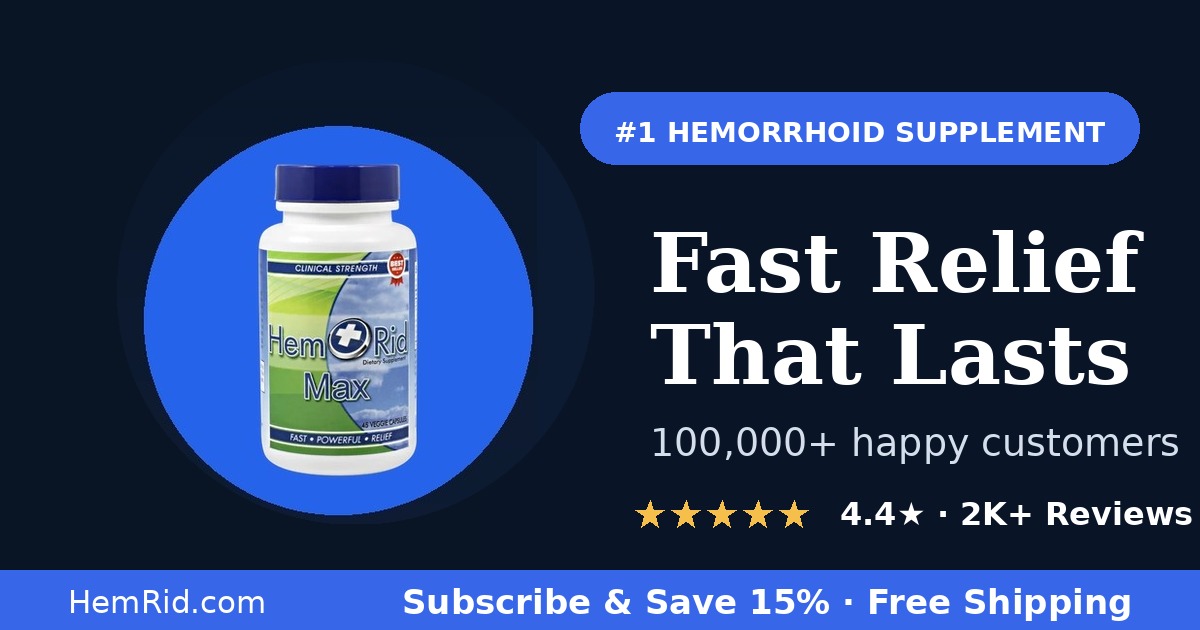
HemRid Max is an oral supplement, not aloe, lidocaine, hydrocortisone, or a barrier cream. It fits familiar repeat flares where bowel routine, straining, travel, low fiber, or hard stool keeps showing up. It is not for emergency bleeding, severe pain, infection signs, or a lump that may need medical care.
Ask a clinician or pharmacist before using HemRid Max if you take blood thinners, blood pressure medicine, diabetes medicine, heart medication, stimulants, or several daily medications. Ask first if you are pregnant, breastfeeding, managing kidney disease, liver disease, heart disease, or a bowel condition. The NCCIH supplement safety guide is a useful reminder that supplements can still have side effects and interactions.
If you want topical comfort and daily support together, compare the Complete Care Bundle. The lidocaine cream side is for temporary external discomfort. The supplement side fits familiar repeat flares when medication and health-condition cautions check out. Aloe can still be used separately for mild skin comfort if your skin tolerates it, but it should not be the whole plan if symptoms keep returning.
Red flags to take seriously
Stop self-treating and get medical guidance for rectal bleeding that is new, heavy, repeated, or mixed into stool. Get checked for black stool, dizziness, fever, pus, drainage, severe pain, unexplained weight loss, sudden bowel habit changes, anemia symptoms, or a hard painful lump that is getting worse.
Aloe vera is not silly. It just has a small job. Use it for mild external skin comfort if the label is clean and your skin tolerates it. Do not ask it to do the work of pain relief, infection care, clot care, bowel support, or a medical exam.
Frequently Asked Questions
Is aloe vera good for hemorrhoids?
Aloe vera may help mild external skin irritation feel cooler or calmer. It does not shrink hemorrhoids, numb severe pain, or fix constipation and straining.
Can I put aloe vera on hemorrhoids?
Use only a plain product externally, follow the label, and stop if it burns or worsens irritation. Do not apply aloe to infected-looking skin, deep cracks, severe pain, or ongoing bleeding without medical guidance.
Does aloe vera shrink hemorrhoids?
No. Aloe vera is mainly a skin-comfort option. It does not shrink hemorrhoids or treat the bowel-pressure trigger behind many flares.
When does HemRid Lidocaine Cream fit better than aloe?
HemRid Lidocaine Cream fits temporary topical comfort when external burning, stinging, soreness, or tenderness is the main problem.
When should I see a doctor instead of using aloe?
Get medical guidance for new or repeated bleeding, heavy bleeding, black stool, dizziness, fever, drainage, severe pain, unexplained weight loss, bowel habit changes, or a hard painful lump.
References
- MedlinePlus hemorrhoids: https://medlineplus.gov/hemorrhoids.html
- NIDDK hemorrhoid treatment information: https://www.niddk.nih.gov/health-information/digestive-diseases/hemorrhoids/treatment
- FDA OTC medicine label guide: https://www.fda.gov/drugs/buying-using-medicine-safely/understanding-over-counter-medicines
- Cleveland Clinic hemorrhoids overview: https://my.clevelandclinic.org/health/diseases/15120-hemorrhoids
- NCCIH Using Dietary Supplements Wisely: https://www.nccih.nih.gov/health/using-dietary-supplements-wisely
Ready for relief?
Try HemRid Max — fast-acting hemorrhoid relief from the inside out.
Try HemRid Max →