Preparation H Not Working? Match the Next Step to the Symptom
As of June 2026, the next step after Preparation H fails is to match the active ingredient to the symptom that is still bothering you. If the product you tried did not help, do not just keep applying more. Check what active ingredient you used, what symptom is still present, and whether the problem is really a simple hemorrhoid flare.
Preparation H is a brand family, not one single treatment. Some versions focus on temporary shrinking or irritation relief. Some include hydrocortisone for itching. Some are wipes or barriers. That matters because pain, itch, swelling, bleeding, constipation, and a hard painful lump are not the same buying problem.
Before you buy the next tube, give yourself a two-minute label check. You want the active ingredient, the use, the warning section, and the time limit. That small pause helps you avoid doubling up on the same category while the symptom you care about stays unchanged.
Quick answer
If Preparation H is not working, the usual reason is a mismatch between the product and the symptom. A cream aimed at itching may not do much for hard stools or repeated straining. A wipe may help cleanup but not numb external tenderness. A shrinking claim does not fix bleeding from an unknown cause. Match the next product to the active ingredient you actually need, and get medical guidance for bleeding, severe pain, black stool, fever, drainage, or symptoms that keep worsening.
First, identify what you already used
Look at the FDA Drug Facts label, not just the front of the box. The active ingredient tells you what the product is trying to do. Hydrocortisone is usually used for short-term itch and inflammation. Lidocaine is used for temporary numbing. Zinc oxide, petrolatum, mineral oil, or similar barrier ingredients are used to protect irritated skin. Witch hazel pads are mostly a cleanup and cooling category.
That label check prevents a common mistake: switching from one version of Preparation H to another version that works the same way. If itching is gone but burning remains, you may need a different category. If pain is deep, sudden, or severe, another OTC cream may not be the right answer.
Match the next step to the symptom
| If this is still the main issue | What to compare next | Why it matters |
|---|---|---|
| External burning or tenderness | Lidocaine hemorrhoid cream | A numbing active can target surface discomfort temporarily. |
| Itching and irritated skin | Short-term hydrocortisone or barrier protection | Itch may need anti-inflammatory support, protection from moisture, or both. |
| Messy cleanup after bowel movements | Gentle wipes, water rinse, or bidet-style cleanup | Harsh wiping can keep the area irritated even when the product is fine. |
| Hard stools and repeat flares | Fiber, fluids, toilet-time changes, and internal support | Topicals cannot fix the pressure that keeps restarting symptoms. |
| New bleeding, severe pain, or a hard lump | Clinician evaluation | These symptoms need confirmation before you keep self-treating. |
If pain is the problem
Pain is where product fit matters most. A hydrocortisone product may help itch, but it is not the same as a numbing cream. If the pain is external burning, soreness, or tenderness from irritated skin, a lidocaine hemorrhoid cream may be a more direct category to compare.
HemRid Lidocaine Cream fits that temporary topical-comfort lane. Use it only as directed on the label. It can help numb surface discomfort, but it does not diagnose the cause of rectal bleeding, remove a clot, or treat constipation.
If the pain is sudden, severe, or connected to a firm blue or purple lump, do not treat that as a routine irritation problem. A thrombosed external hemorrhoid can be very painful, and a clinician can confirm what is going on and discuss options.
If itching is the problem
Itch can come from hemorrhoid irritation, moisture, stool residue, over-wiping, fragrance, diarrhea, or skin sensitivity. More cream is not always the fix. Sometimes the skin needs gentler cleanup, better drying, and a simple barrier.
Hydrocortisone may help short-term itching, but it is not something to use indefinitely unless a clinician tells you to. MedlinePlus and product labels both point you back to directions and warning language instead of open-ended use. Read the label's time limit. If itch keeps returning, look for the trigger instead of stacking products.
If swelling is the problem
Swelling around the anus can come from external hemorrhoids, prolapse, irritation, or a clot. OTC products may reduce discomfort, but they do not make every swollen lump disappear. If the swelling is new, hard, very painful, growing, draining, or paired with fever, get checked.
If the swelling follows constipation or long bathroom sessions, the better long-term move may be changing stool consistency and toilet habits. A topical can calm the outside while the pressure problem continues underneath.
If symptoms keep coming back
Recurring flares usually need more than a different tube. Straining, sitting on the toilet too long, low fiber intake, dehydration, diarrhea, heavy lifting, pregnancy, and long sitting can keep pressure on the veins around the anus and rectum. NIDDK explains the same pressure-and-bowel-habit connection in plain terms.
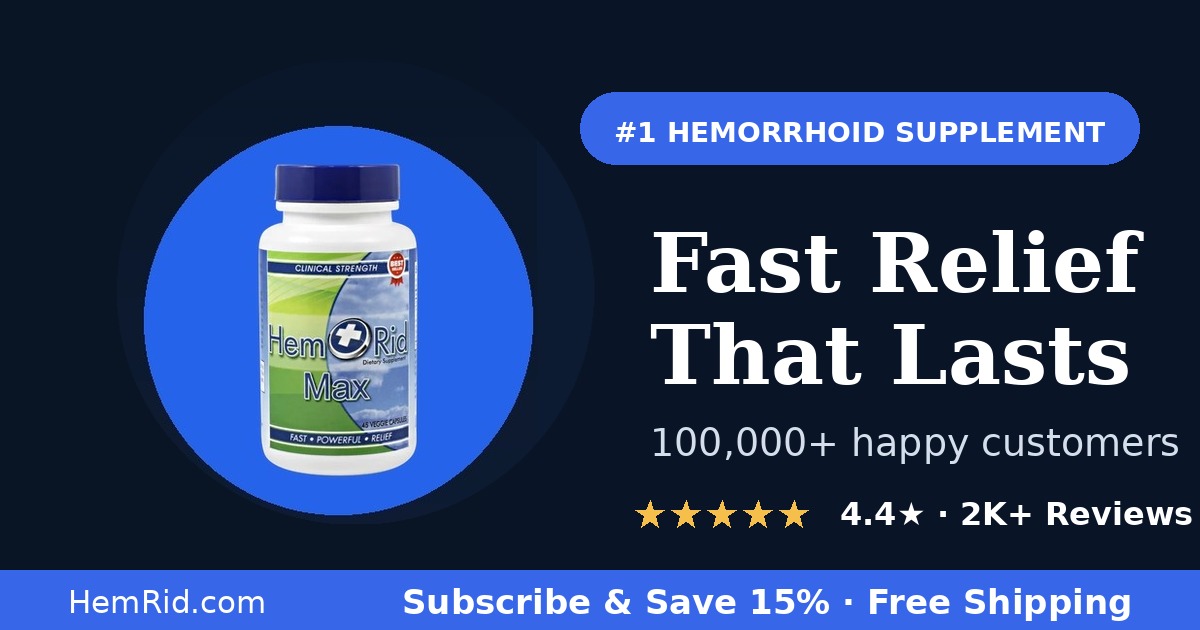
This is where HemRid Max may fit. It is positioned as internal supplement-style support when you are dealing with repeat flares, especially when hard stools, straining, and bathroom habits are part of the picture. It is not a cure and it should not replace medical care when red flags are present. Persistent bleeding or pain needs a doctor, not a supplement.
If you need both temporary topical comfort and internal support, the HemRid Complete Care Bundle is the broader route. The cleaner way to think about it is simple: cream for surface discomfort, internal support for the recurring-flare routine, and clinician care when your symptoms do not fit a mild familiar flare.
When to stop switching products
Do not keep cycling through OTC products if bleeding is heavy, repeated, or mixed into stool. Do not ignore black stool, dizziness, fever, pus, drainage, severe pain, unexplained weight loss, new bowel habit changes, or a lump that keeps growing.
Hemorrhoids are common, but they are not the only cause of anal pain, bleeding, itching, or swelling. Harvard Health gives similar conservative-care advice while still pointing you toward medical care when bleeding or severe symptoms show up. Fissures, abscesses, infections, skin conditions, prolapse, and colorectal conditions can overlap. When your symptoms are new or not improving, confirmation matters.
Product-fit paths on HemRid
If external burning, itching, or tenderness is still the main issue, compare HemRid Lidocaine Cream as a temporary topical numbing option.
If flares keep returning and stool consistency or straining is part of the story, compare HemRid Max as internal support within a broader bowel-habit routine.
If you want topical comfort and internal support together, compare the HemRid Complete Care Bundle. If you are still unsure which category fits, read Hemorrhoid Cream vs Supplement, Best Hemorrhoid Creams, and Hemorrhoids Keep Coming Back before buying another product.
Source notes
The FDA explains how OTC Drug Facts labels list active ingredients, uses, warnings, and directions so shoppers can compare products by function rather than front-label claims. DailyMed and MedlinePlus provide label and patient-use information for hydrocortisone rectal products, including short-term use boundaries and warning language. NIDDK and Harvard Health both emphasize bowel-habit changes, fiber, fluids, and medical evaluation when bleeding or severe symptoms are present.
Frequently Asked Questions
Why is Preparation H not working for me?
The product may not match the symptom. A wipe, barrier, hydrocortisone cream, and numbing cream do different jobs. Check the active ingredient and compare it with the symptom that is still bothering you.
What should I try if Preparation H does not help pain?
If the pain is external burning or tenderness, compare a lidocaine hemorrhoid cream. If pain is severe, sudden, deep, or connected to a hard lump, get medical guidance before switching products.
Can I keep using hydrocortisone until symptoms stop?
Do not use hydrocortisone longer than the label allows unless a clinician tells you to. Ongoing itch or irritation may need a trigger check, barrier protection, or medical evaluation.
Does HemRid replace Preparation H?
HemRid is a different product path. HemRid Lidocaine Cream is for temporary topical numbing, HemRid Max is internal supplement-style support, and the Complete Care Bundle combines topical comfort with internal support.
When should I stop using OTC hemorrhoid products?
Stop self-treating and get checked for heavy or repeated bleeding, black stool, blood mixed into stool, severe pain, fever, drainage, dizziness, unexplained weight loss, new bowel changes, or symptoms that keep worsening.
References
- FDA OTC Drug Facts Label: https://www.fda.gov/drugs/information-consumers-and-patients-drugs/otc-drug-facts-label
- DailyMed Hydrocortisone Rectal Cream Label: https://dailymed.nlm.nih.gov/dailymed/
- MedlinePlus Hydrocortisone Rectal: https://medlineplus.gov/druginfo/meds/a617001.html
- NIDDK Hemorrhoids: https://www.niddk.nih.gov/health-information/digestive-diseases/hemorrhoids
- Harvard Health Hemorrhoids and What to Do About Them: https://www.health.harvard.edu/diseases-and-conditions/hemorrhoids_and_what_to_do_about_them
Ready for relief?
Try HemRid Max — fast-acting hemorrhoid relief from the inside out.
Try HemRid Max →