Postpartum Hemorrhoid Products: Creams, Wipes, Fiber, and Safety Checks
Postpartum hemorrhoid shopping is different because your body may still be healing, bowel movements may be harder than usual, and pregnancy or delivery pressure can leave the anal area tender. Start with the main problem today: outside burning, painful wiping, hard stool, swelling, bleeding, or a flare that keeps returning. A lidocaine cream may fit short-term external discomfort. Fiber, fluids, and stool support may matter more when bathroom trips are the trigger.
If you are pregnant, recently gave birth, breastfeeding, using pain medicine, dealing with a tear or stitches, or unsure whether bleeding is rectal or vaginal, check with your clinician before stacking products. Heavy bleeding, fever, worsening pain, pus, drainage, black stool, blood mixed into stool, dizziness, or symptoms that are not improving need medical guidance.
For safety context, NIDDK and MedlinePlus both describe rectal bleeding and severe pain as symptoms that should not be handled by simply buying another over-the-counter product.
Quick answer
Postpartum hemorrhoid products can help with the right problem, but the fit depends on what you are trying to solve. Lidocaine products are for temporary numbing. Wipes and barrier ointments are mostly about cleanup and friction. Fiber and stool softeners are about making bowel movements easier, not numbing sore external skin. None of these products replace medical care for bleeding, severe pain, fever, drainage, worsening swelling, or symptoms that keep returning.
Persistent bleeding or pain needs a doctor, not a supplement.
What this option may help with
For postpartum hemorrhoids, match the product to the symptom in front of you. A cream that helps with burning may not help much with constipation. A fiber or stool-softener option may support easier bowel movements but will not numb sore external skin. A wipe or barrier product may reduce friction but will not explain bleeding, deep rectal pressure, or pain that feels different from your usual flare.
That is why label reading matters. Check the active ingredient, directions, warnings, age limits, and how long the product is meant to be used. If you are pregnant, recently gave birth, breastfeeding, taking blood thinners, using opioid pain medicine, healing from a tear or stitches, or managing a medical condition, ask a clinician before adding a new rectal product or supplement.
A simple symptom-first way to decide
Use the main symptom to narrow the path:
Burning, itching, or tenderness: Temporary topical comfort, gentle cleaning, and friction control may be the first things to compare.
Hard stools, straining, or long bathroom time: Bowel-habit support, hydration, and fiber usually matter before more product switching.
Repeated flares: A daily routine may make more sense than relying on one wipe, cream, or home remedy.
Bleeding, severe pain, fever, pus, a rapidly worsening lump, or symptoms that do not improve: Get checked instead of trying to solve it with another product.
A mild flare does not always mean urgent care. The pattern should guide the plan. If you keep treating the surface while the trigger keeps repeating, relief may not last.
Postpartum care has one extra rule: do not treat rectal bleeding, vaginal bleeding, stitches, and bowel pain like they are automatically the same problem. If you are not sure where the bleeding is coming from, if pain is getting worse instead of better, or if bowel movements feel sharp like a tear, bring that to your OB, midwife, or clinician instead of trying to cover it with stronger products.
Where HemRid fits
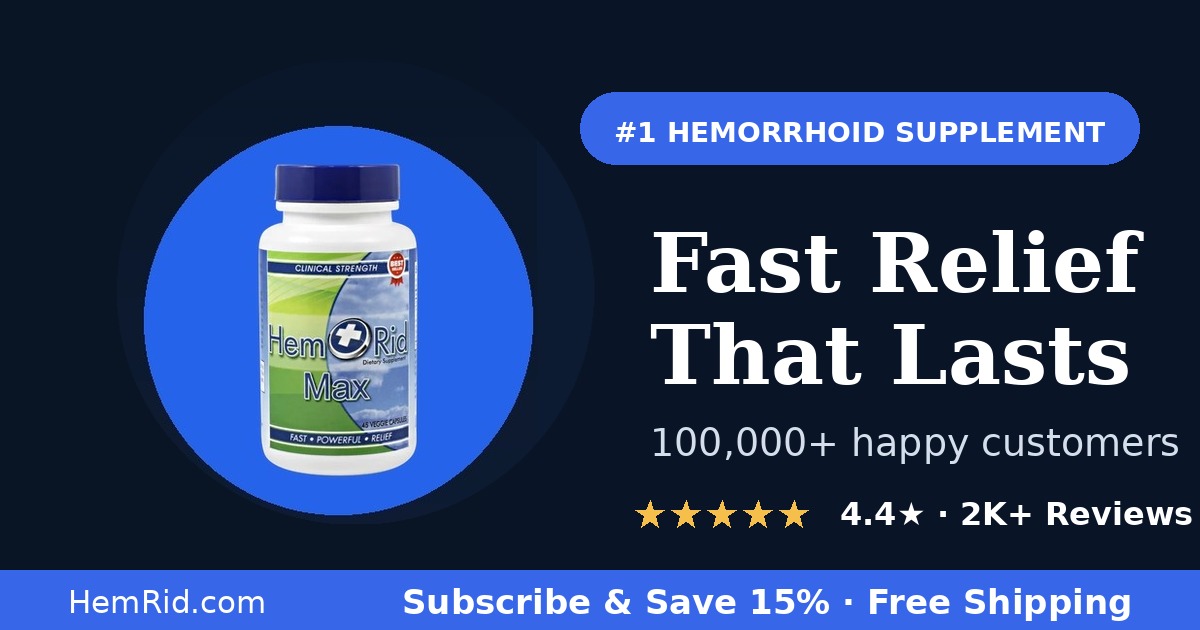
HemRid is most useful when you want to match the option to the symptom instead of buying another random item. If the issue is external burning, itching, or tenderness, HemRid Lidocaine Cream may fit as a temporary topical numbing option used exactly as directed. If the issue is repeated flares, HemRid Max may fit as internal supplement-style support within a daily routine that still includes fiber, fluids, and better bathroom habits.
If you want both topical comfort and internal support, the Complete Care Bundle is worth comparing because it includes both lanes. That does not make it a cure, and it does not replace medical care. It gives you a more specific path than guessing between unrelated products.
If you are still deciding whether your symptoms call for a cream, wipe, supplement, or a clinician visit, compare the best hemorrhoid creams resource and the hemorrhoids keep coming back resource with what you are feeling now.
What to avoid
Do not keep layering products just because one did not work fast enough. Rectal skin is sensitive. Too much wiping, too many medicated products, or using a product longer than the label allows can make irritation worse. Avoid using numbing creams, steroid creams, suppositories, wipes, laxatives, or supplements together without checking directions and ingredient overlap.
Also avoid assuming every rectal symptom is hemorrhoids. A fissure can cause sharp pain after bowel movements. An abscess may cause severe pain, fever, swelling, or drainage. Skin conditions can itch and burn. Bowel conditions can cause bleeding or mucus. If the symptom does not fit your usual pattern, get it checked.
When self-care is reasonable
Conservative self-care may be reasonable when symptoms are mild, familiar, and improving. That usually means gentle cleaning, avoiding straining, keeping stools soft, taking breaks from long sitting, and using a product only as directed. If postpartum flares keep coming back, write down what happened before the flare. Hydration, constipation, diarrhea, iron supplements, opioid pain medicine, long toilet sits, sleep disruption, and bathroom habits can all matter.
Self-care is not reasonable when symptoms are severe, rapidly worsening, or hard to explain. It is also not the right lane for heavy bleeding, black stool, blood mixed into stool, fever, pus, drainage, unexplained weight loss, new bowel changes, or persistent symptoms.
How this compares with common over-the-counter choices
Preparation H, witch hazel pads, and generic creams can be useful for short-term symptom relief, depending on the formula and symptom. They are not all doing the same job.
Preparation H is a broad product family, so the label matters. Witch hazel pads are often used for cooling and cleansing. Lidocaine products focus on temporary numbing. Hydrocortisone products are usually aimed at itching and inflammation but are not meant for unlimited use. Fiber products and stool softeners address bowel movements, not surface pain. If your current product is not matching your symptom, switching brands without changing the strategy may not help much.
For a broader brand comparison, see the HemRid vs Preparation H comparison. If you are thinking about using an unrelated ointment or antibiotic product, read the Neosporin for hemorrhoids safety resource first.
Practical checklist before you buy anything else
Before adding another product, ask yourself:
1) Main symptom: Is the main issue pain, itching, swelling, bleeding, hard stool, loose stool, or recurring flares?
2) Location: Does the symptom feel external, internal, or unclear?
3) Trigger: Did this start after travel, constipation, diarrhea, medication changes, a workout, pregnancy, postpartum recovery, or a long bathroom session?
4) Product history: Have you already used a medicated product longer than the label recommends?
5) Red flags: Are there symptoms that make self-care the wrong move?
Those questions prevent a common mistake: treating every hemorrhoid flare like the same problem.
Care approach by specific symptoms
| Specific symptoms | Care approach to compare | Why it may fit | When to pause self-care |
|---|---|---|---|
| External burning, itching, or tenderness | Lidocaine-style topical comfort | Temporary numbing can help surface discomfort while you reduce friction and follow label directions | Severe pain, fever, drainage, or worsening swelling |
| Recurring flares with hard stools or straining | Fiber, fluids, bathroom routine, and internal support | Repeated pressure often needs more than another surface cream | Bleeding that persists, black stool, or bowel habit changes |
| Mixed external discomfort and repeat flares | Topical comfort plus daily routine support | A two-part plan may fit better than rotating between unrelated products | Symptoms that are new, unusual, or not improving |
| Unclear pain, bleeding, or a hard painful lump | Clinician-first decision | Similar symptoms can come from fissures, abscesses, infection, or other conditions | Heavy bleeding, dizziness, fever, or severe pain |
Use the table as a checkpoint, not a diagnosis. If the specific symptoms are unclear, the next step is not a stronger product. It is a better diagnosis.
Common concerns before choosing an option
Fit comes first. Burning and itching can point toward irritated external tissue, while repeat flare-ups after hard stools may point toward pressure and bowel habits. Bleeding, severe pain, fever, drainage, or symptoms that keep returning deserve a clinician's input instead of another round of self-treatment.
Be careful with product stacking. A cream, wipe, suppository, fiber product, and supplement can overlap in confusing ways, especially if labels include medicated ingredients or if you take prescriptions, use blood thinners, are pregnant or postpartum, or have another health condition. Choose the option that fits the main symptom, follow the label, and avoid using multiple medicated products at the same time unless a healthcare professional says it is appropriate.
Set realistic expectations. Topical comfort products may help short-term surface symptoms, but they do not remove the underlying reasons pressure builds. Internal support products may fit recurring patterns, but they are not a substitute for urgent care when symptoms are severe or unusual.
Bottom line
Postpartum hemorrhoid products deserve a symptom-first decision. If the pattern is mostly external discomfort, a topical option may fit. If the pattern keeps coming back after hard stools or straining, a daily routine with bowel-habit support and internal support may make more sense.
Compare HemRid options and choose the path that matches what you are actually feeling. If the symptom is severe, unusual, bleeding, or persistent, get medical guidance before continuing self-care.
Keep the plan simple: identify the main symptom, reduce the trigger that seems most likely, and use only the option that actually fits. That approach is safer than rotating through every cream, wipe, supplement, and home remedy at the same time.
Frequently Asked Questions
What postpartum hemorrhoid product should I start with?
Start with the main symptom. External burning or tenderness may point toward a temporary topical comfort product. Hard stools or straining point more toward fiber, fluids, stool support, and bathroom-habit changes.
Are hemorrhoid creams safe after birth?
Some topical products may be appropriate, but postpartum details matter. If you are breastfeeding, healing from stitches or a tear, using pain medicine, bleeding, or unsure what the symptom is, ask your OB, midwife, or clinician before stacking products.
When should I choose wipes or a barrier product?
Wipes or barrier products may fit when wiping friction, cleanup, or irritated external skin is the main issue. They do not fix constipation, recurring pressure, or unexplained bleeding.
When does HemRid Max fit better than a cream?
HemRid Max fits recurring familiar flares where pressure, bowel habits, and repeat irritation keep bringing symptoms back over time. It is not a fast numbing product and does not replace urgent care.
When should I see a doctor postpartum?
Get checked for heavy bleeding, bleeding source you cannot identify, severe pain, fever, pus, drainage, black stool, blood mixed into stool, dizziness, worsening swelling, or symptoms that do not improve.
References
- NIDDK: https://www.niddk.nih.gov/health-information/digestive-diseases/hemorrhoids
- NIDDK: https://www.niddk.nih.gov/health-information/digestive-diseases/hemorrhoids/treatment
- NIDDK: https://www.niddk.nih.gov/health-information/digestive-diseases/constipation/treatment
- MedlinePlus: https://medlineplus.gov/druginfo/meds/a603032.html
- MedlinePlus: https://medlineplus.gov/hemorrhoids.html
- NCBI Bookshelf hemorrhoids overview: https://www.ncbi.nlm.nih.gov/books/NBK279467/
- Cleveland Clinic: https://my.clevelandclinic.org/health/diseases/15120-hemorrhoids
- Harvard Health: https://www.health.harvard.edu/diseases-and-conditions/hemorrhoids_and_what_to_do_about_them
- American Family Physician: https://www.aafp.org/pubs/afp/issues/2018/0201/p172.html
- NCBI Bookshelf pruritus ani overview: https://www.ncbi.nlm.nih.gov/books/NBK537182/
- NCBI Bookshelf rectal pain overview: https://www.ncbi.nlm.nih.gov/books/NBK470362/
- NCBI Bookshelf rectal bleeding overview: https://www.ncbi.nlm.nih.gov/books/NBK525963/
Ready for relief?
Try HemRid Max — fast-acting hemorrhoid relief from the inside out.
Try HemRid Max →