Hemorrhoid Ointment vs Cream: Barrier Protection or Active Relief?
If you are comparing hemorrhoid ointment and cream, do not start with the texture alone. Start with what you need the product to do. Ointments are usually heavier and better at coating irritated skin. Creams are usually easier to spread and may be the clearer fit when the formula has an active ingredient for pain, itching, or inflammation.
That difference matters when the flare is external. Raw wiping irritation, burning after a bowel movement, itching near the anal opening, a sore external lump, and tenderness while sitting can feel similar, but they do not always need the same topical. A plain barrier ointment can protect skin. A lidocaine cream can numb surface pain. A hydrocortisone cream may calm itch and inflamed skin for short, label-directed use. None of them fixes hard stool, straining, diarrhea, long toilet sits, or repeated pressure by itself.
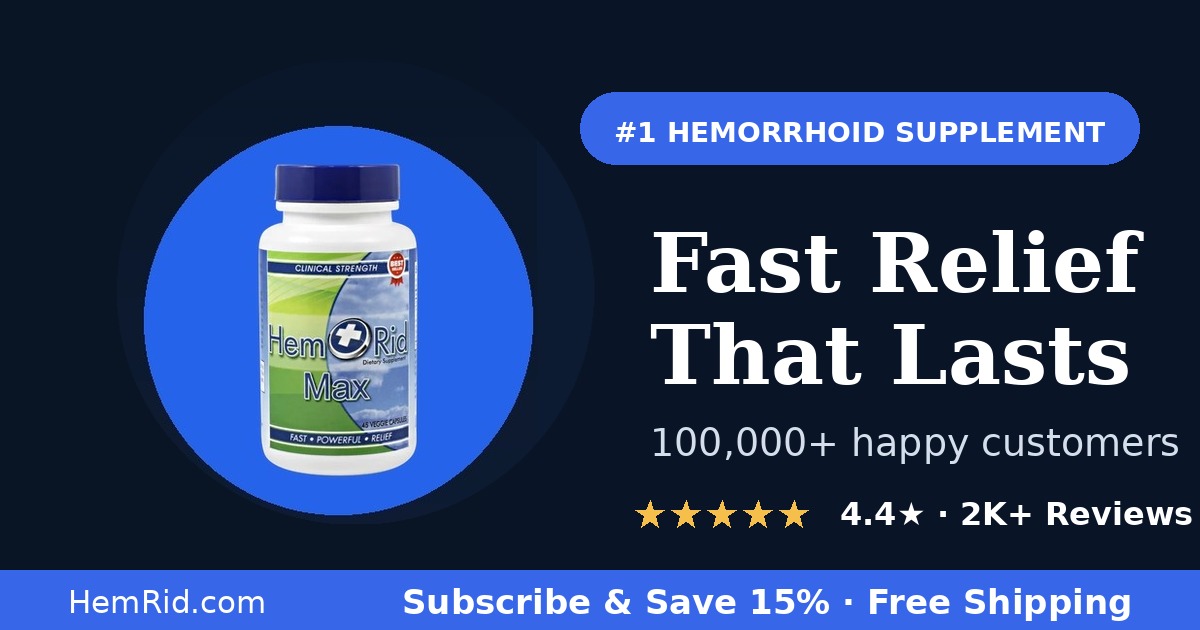
HemRid Lidocaine Cream fits external burning, stinging, and tenderness when topical numbing is the job. HemRid Max fits the daily support side when flares keep coming back around bowel habits and pressure. If you want topical comfort plus internal support, compare the Complete Care Bundle.
Persistent bleeding or pain needs a doctor, not a supplement. Do not keep switching between creams and ointments if bleeding keeps returning or pain is getting worse.
The NIDDK hemorrhoids overview describes hemorrhoids as swollen veins around the anus or lower rectum. The NIDDK treatment page points to fiber, fluids, and bowel habit changes as common self-care steps. MedlinePlus lists pain, itching, swelling, and bleeding as common symptoms. Those basics are why the topical form can help comfort, but the bathroom trigger still matters.
Quick answer
Use an ointment when the main job is coating and protecting irritated outside skin. Use a cream when the main job is easier spreading or active relief for pain, burning, itching, or inflammation. If the symptom is mostly external pain, a lidocaine cream is usually more direct than a plain barrier ointment. If the flare keeps coming back, widen the routine instead of buying another topical.
For Preparation H searches, this same split usually explains the difference: ointment-style formulas tend to feel greasier and more protective, while cream-style formulas often feel lighter. The label matters more than the word on the front. Check the active ingredients, what symptom they are meant to help, and how long the product says to use them.
What ointments do best
A hemorrhoid ointment is usually thicker than a cream. That can be useful when the skin around the anus feels raw from wiping, stool contact, moisture, friction, or diarrhea. A heavier layer can reduce rubbing and help protect irritated skin while the area settles down.
Barrier-style ointments make the most sense when the problem is surface irritation. If every bowel movement leaves the skin burning because stool or wiping keeps touching the same spot, a protective layer may help. If the skin is cracked, bleeding, infected-looking, draining, or severely painful, do not cover the problem and hope it disappears. Get medical guidance.
The tradeoff is feel. Ointments can be greasy, messy, and harder to clean off. It is easy to use more than you need, then trap moisture or irritate the area from repeated wiping. Use a thin layer unless the label says otherwise, and stop if the product stings, burns, or makes itching worse.
What creams do best
A cream is usually lighter and easier to spread. That can help when the uncomfortable spot is on the outside or right at the anal opening. Creams also come in different formulas, so the active ingredient matters.
Lidocaine helps numb external pain, burning, stinging, and tenderness. Hydrocortisone may help short-term itch and inflamed skin, but it is not meant for open-ended daily use. Other creams may focus on swelling, cooling, or general comfort. Read the label instead of assuming every hemorrhoid cream does the same job.
If pain is the loudest symptom, HemRid Lidocaine Cream is the more direct HemRid topical comparison. If itch is the loudest symptom, check whether the product uses hydrocortisone and follow the time limits. If raw cleanup is the issue, Hemorrhoid Wipes vs Cream can help you separate gentle cleaning from active symptom relief.
| What you feel | Ointment may fit when | Cream may fit when |
|---|---|---|
| Raw skin after wiping | You need a protective layer | You need active pain or itch relief |
| Burning or stinging | Friction or stool contact is the trigger | Lidocaine-style numbing is the goal |
| Itch | Moisture or irritation is part of it | Hydrocortisone-style short-term itch relief fits the label |
| Sore external lump | A thin barrier reduces rubbing | A numbing cream targets tenderness |
| Repeated flares | It may protect skin during a flare | It does not fix stool pressure by itself |
When the label matters more than the texture
Two products can both be called hemorrhoid cream and act very differently. Two products can both feel like ointments and still use different active ingredients. The front label tells you the form. The drug facts or supplement facts panel tells you what the product is actually trying to do.
Look for the active ingredient, the symptom it targets, the age limits, the pregnancy or breastfeeding cautions, the maximum number of uses per day, and the stop-use language. Be careful if you are using blood thinners, managing diabetes, dealing with immune issues, already using rectal products, or trying to treat symptoms during pregnancy.
Do not stack multiple numbing creams, steroid creams, medicated wipes, suppositories, and ointments unless the labels allow it or a clinician tells you to. More products can mean more irritation.
If it feels like a hemorrhoid popped or burst
You may use the words pop and burst because bleeding can start suddenly or a painful lump can change fast. Do not squeeze, poke, lance, or try to drain it.
Sometimes bright red blood appears after stool, wiping, pressure, lifting, or a long toilet sit. Sometimes a thrombosed external hemorrhoid changes as swelling shifts. Sometimes the bleeding is from a fissure or another rectal problem, not a hemorrhoid. Use gentle pressure for minor bright red bleeding, clean the area carefully, and watch whether it stops.
Read Can Hemorrhoids Pop or Burst? if that is the exact worry. If the lump is hard, very painful, blue or purple, getting worse, or paired with fever or drainage, read Thrombosed Hemorrhoid and get care if symptoms are severe.
If ointment or cream keeps failing
A topical can calm the outside. It cannot make hard stool soft, shorten toilet sitting, stop repeated straining, or fix diarrhea. If you keep needing the same tube every few weeks, track what happens around the flare.
Look at stool hardness, water intake, fiber intake, long bathroom sessions, wiping, diarrhea, sitting time, heavy lifting, coughing, travel, alcohol, and spicy meals. If hard stool or straining keeps showing up, topical comfort may need to sit beside bowel routine support. HemRid Max belongs in that daily support lane, not as urgent pain relief.
For a bigger comparison, HemRid Max vs Hemorrhoid Creams separates internal support from topical relief. HemRid Max vs Fiber Supplements is useful when hard stool, constipation, or straining is the obvious trigger.
Safety checks before using either one
The Cleveland Clinic hemorrhoids overview notes that hemorrhoids can cause pain, itching, and bleeding, but other anorectal problems can overlap. The FDA dietary supplement Q&A is a useful reminder that supplements are not approved drugs and should not be treated like urgent care.
Get medical guidance for heavy bleeding, bleeding that keeps coming back, black stool, blood mixed into stool, dizziness, fever, pus, drainage, severe pain, unexplained weight loss, anemia symptoms, sudden bowel habit changes, or a hard painful lump that keeps getting worse.
Bottom line
Ointment is usually the better fit when the job is coating and protection. Cream is usually the better fit when the job is active relief for external pain, burning, itching, or inflammation.
If the flare hurts now, compare HemRid Lidocaine Cream. If the flare keeps returning, compare HemRid Max. If you want both in one routine, compare the Complete Care Bundle.
Frequently Asked Questions
Is hemorrhoid ointment or cream better?
It depends on the symptom. Ointment usually fits coating and barrier protection. Cream usually fits active relief for external pain, burning, itching, or inflammation.
When should I use hemorrhoid ointment?
Ointment may fit raw outside skin, friction, moisture irritation, or stool contact when a thin protective layer is the main job.
When should I use hemorrhoid cream?
Cream may fit external burning, stinging, itching, or tenderness, especially when the active ingredient matches that symptom.
Can I use hemorrhoid ointment and cream together?
Do not combine multiple rectal products unless the labels allow it or a clinician tells you to. Stacking products can irritate sensitive skin.
When should I see a doctor instead of using ointment or cream?
Get care for heavy or repeated bleeding, black stool, dizziness, fever, drainage, severe pain, sudden bowel habit changes, or a hard painful lump.
References
- NIDDK hemorrhoids overview: https://www.niddk.nih.gov/health-information/digestive-diseases/hemorrhoids
- NIDDK hemorrhoid treatment information: https://www.niddk.nih.gov/health-information/digestive-diseases/hemorrhoids/treatment
- MedlinePlus hemorrhoids: https://medlineplus.gov/hemorrhoids.html
- Cleveland Clinic hemorrhoids overview: https://my.clevelandclinic.org/health/diseases/15120-hemorrhoids
- FDA dietary supplement consumer Q&A: https://www.fda.gov/food/information-consumers-using-dietary-supplements/questions-and-answers-dietary-supplements
Ready for relief?
Try HemRid Max — fast-acting hemorrhoid relief from the inside out.
Try HemRid Max →