
Diosmin for Hemorrhoids: What the Research Shows (2026 Guide)
If you've researched hemorrhoid supplements, you've likely encountered diosmin. It's the ingredient behind Daflon — the most prescribed hemorrhoid medication in Europe — and the basis for hundreds of clinical studies spanning decades. Here's what the research actually shows.
Last Updated: April 3, 2026 | Medically Reviewed by the HemRid Medical Team
Quick Answer: Diosmin is a citrus-derived bioflavonoid and the single most clinically studied oral ingredient for hemorrhoid management. A Cochrane meta-analysis of 24 randomized controlled trials (2,344 patients) found that diosmin-containing phlebotonics significantly improved hemorrhoid bleeding, itching, discharge, and overall symptoms compared to placebo. It works by improving venous tone, reducing inflammation, and strengthening blood vessel walls.
If you've researched hemorrhoid supplements, you've likely encountered diosmin. It's the ingredient behind Daflon — the most prescribed hemorrhoid medication in Europe — and the basis for hundreds of clinical studies spanning decades. Here's what the research actually shows.
What Is Diosmin?
Diosmin is a naturally occurring flavonoid glycoside found primarily in citrus fruits — particularly in the peels of oranges, lemons, and grapefruits. It belongs to a class of compounds called bioflavonoids, which are plant-derived antioxidants with documented effects on blood vessel health.
In supplement form, diosmin is often combined with its close relative hesperidin (another citrus bioflavonoid). The combination of diosmin + hesperidin — known as micronized purified flavonoid fraction (MPFF) — is the most widely studied phlebotonic formulation in the world.
Both diosmin and hesperidin are classified as phlebotonics — substances that improve venous tone and circulation.
Clinical Evidence: What the Studies Show
The Cochrane Meta-Analysis (Highest Level of Evidence)
Perera N, Liolitsa D, Iype S, et al. (2012) — "Phlebotonics for haemorrhoids." Cochrane Database of Systematic Reviews.
This is the definitive study — a systematic review and meta-analysis analyzing 24 randomized controlled trials with 2,344 hemorrhoid patients.
Results:
- Bleeding: Phlebotonics (primarily diosmin/hesperidin) showed a 67% improvement in bleeding compared to placebo (OR 0.33) - Itching: Significant reduction in pruritus (itching) scores - Discharge: Significant reduction in mucus discharge - Overall symptoms: Statistically significant improvement in overall symptom scores - Pain: Reduced pain and discomfort compared to control groups - Side effects: Generally well-tolerated with mild, infrequent adverse events
The reviewers concluded: "The use of phlebotonics demonstrated a statistically significant beneficial effect for pruritus, bleeding, discharge and leakage, and overall symptom improvement."
Read the full Cochrane review on PubMed →
Additional Key Studies
- Cospite M. (1994) — Double-blind, placebo-controlled trial of MPFF (diosmin/hesperidin) for acute hemorrhoids. Found significant reduction in bleeding, pain, and discharge within 4 days of treatment. PubMed - Ho YH, et al. (1995) — Randomized trial in British Journal of Surgery. MPFF significantly reduced hemorrhoid bleeding episodes. PubMed - Misra MC, Parshad R. (2000) — Randomized trial of MPFF vs placebo for acute hemorrhoid attacks. Showed significant reduction in bleeding duration and severity. PubMed
How Diosmin Works for Hemorrhoids
Diosmin targets hemorrhoids through four complementary mechanisms:
1. Improves Venous Tone
Diosmin inhibits norepinephrine metabolism in vein walls, which enhances venous contraction. Stronger vein contractions mean better blood flow back toward the heart and less blood pooling in hemorrhoid tissue. This directly reduces hemorrhoid swelling.
2. Reduces Inflammation
Diosmin inhibits the production of prostaglandins and thromboxane — inflammatory mediators that cause pain, swelling, and tissue damage. By reducing these chemicals, diosmin eases the pain, itching, and burning of hemorrhoid flare-ups.
3. Strengthens Capillary Walls
Diosmin reduces capillary permeability (the leakiness of small blood vessels), preventing fluid from seeping into surrounding tissue. This anti-edema effect is why diosmin reduces the swelling and puffiness of hemorrhoid tissue.
4. Improves Lymphatic Drainage
Diosmin enhances lymphatic function, helping the body clear excess fluid and inflammatory byproducts from hemorrhoid tissue. Better drainage means faster resolution of swelling.
Diosmin vs Hesperidin: What's the Difference?
Diosmin and hesperidin are closely related citrus bioflavonoids that are often used together:
Property Diosmin Hesperidin
Source Citrus fruit peels (can be synthesized from hesperidin) Citrus fruit peels (especially oranges)
Primary action Venotonic + anti-inflammatory Antioxidant + vascular protection
Most studied form MPFF: 90% diosmin + 10% hesperidin Usually studied in combination with diosmin
Evidence level Strong (Cochrane review) Strong (studied as part of MPFF)
The most clinically studied formulation is MPFF — 90% diosmin and 10% hesperidin, in micronized (very finely ground) form for better absorption. However, hesperidin alone also has documented vascular benefits.
How to Get Diosmin for Hemorrhoids
In Supplements
Diosmin is available in several hemorrhoid supplement formulations:
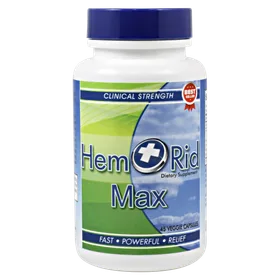
- HemRid Ultra — Our diosmin-based formula specifically designed for hemorrhoid support. Contains diosmin as the primary active ingredient for venous health - HemRid Max — Our flagship 7-ingredient formula containing Hesperidin (diosmin's close relative and synergistic partner) alongside Horse Chestnut, Witch Hazel, Bilberry, Butcher's Broom, Grape Seed Extract, and Vitamin C - Daflon — The pharmaceutical-grade MPFF formulation prescribed widely in Europe. Available OTC in many countries but less commonly found in the United States
In Food
Diosmin occurs naturally in citrus fruits, but in very small amounts — far below the therapeutic doses used in clinical trials. You cannot get clinically relevant diosmin from diet alone.
Dosage
Clinical trials for hemorrhoids typically used:
- Acute hemorrhoids: 1,000mg diosmin/hesperidin three times daily for 4 days, then 1,000mg twice daily for 3 days (the "acute dosing protocol" used in several studies) - Chronic management: 500-1,000mg daily as maintenance
Follow the dosing instructions on your specific supplement product, as formulations and concentrations vary.
Safety and Side Effects
Diosmin has an excellent safety profile based on decades of clinical use:
- Common side effects (mild, infrequent): GI discomfort (stomach upset, nausea, diarrhea), headache - Rare side effects: Dizziness, skin rash - Drug interactions: May interact with blood thinners (warfarin, heparin), antiplatelet drugs, and some medications metabolized by the liver. Consult your doctor if you take any medications
Who Should Consult a Doctor Before Taking Diosmin:
- People taking blood thinners or antiplatelet drugs - Pregnant or breastfeeding women - People with bleeding disorders - People scheduled for surgery (may need to stop 2 weeks before)
Bottom Line
Diosmin has the strongest clinical evidence of any single ingredient for oral hemorrhoid treatment — a Cochrane review of 24 trials with 2,344 patients confirms significant benefits for bleeding, itching, discharge, and overall symptom improvement.
For diosmin-specific supplementation, see HemRid Ultra. For a comprehensive multi-ingredient approach (combining hesperidin with six other clinically studied ingredients), see HemRid Max.
Learn more about the evidence behind all HemRid ingredients on our Clinical Evidence page.
This article is for informational purposes only. Consult a healthcare provider before starting any supplement.
What actually works for hemorrhoids
If you're dealing with pain right now, a topical cream is a great first step — it numbs the area for fast relief. To actually get rid of the problem, HemRid Max works from the inside out to strengthen vein walls and reduce swelling. The best results come from doing both.